
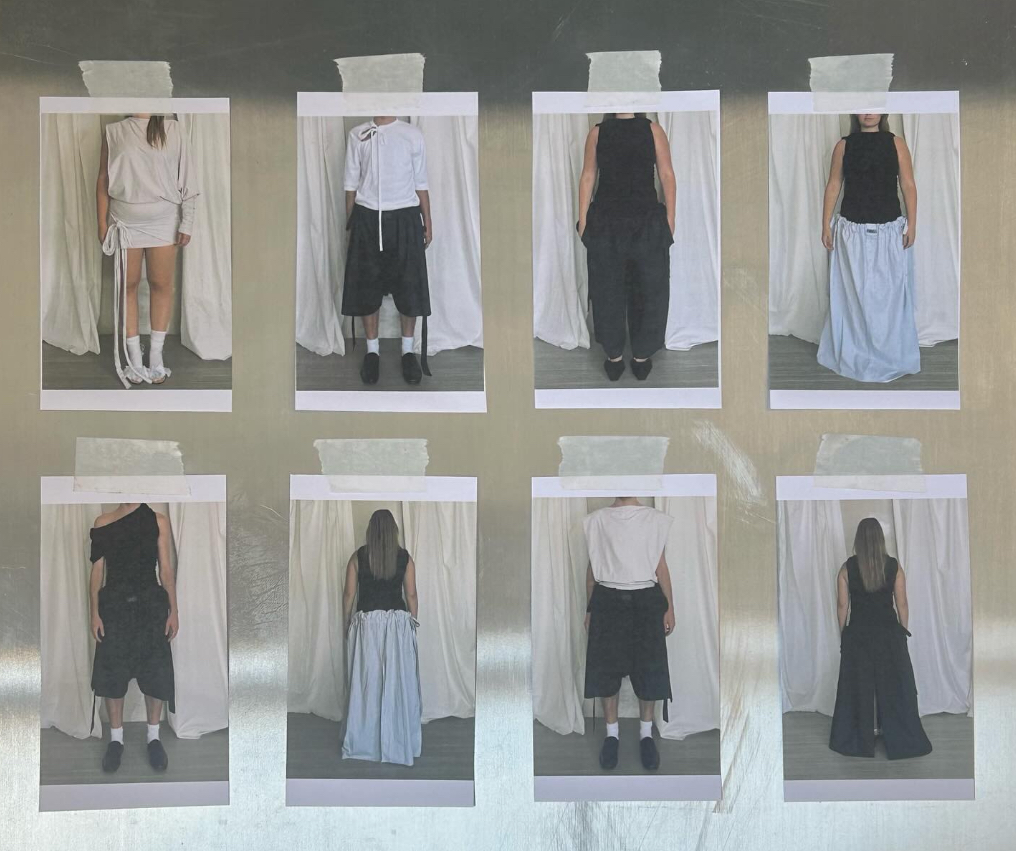
AAA STUDIO BY ARNAU CLIMENT: AN IN-DEPTH INTERVIEW
In this interview, designer Arnau Climent, founder of AAA Studio, shares the origins and evolution of his brand, highlighting the importance of authenticity, experimentation, and creative freedom as pillars of his work. From his early days to his participation in platforms like EGO (MBFWM), Climent reflects on the challenges of maintaining ethical production, balancing commercial appeal with artistic merit, and building a solid identity within independent contemporary fashion.
Laura Fernández: Before we talk about AAA Studio, what are you like as a creator and as a person?
Arnau Climent: I think I’m a pretty normal person: I have my job, my routine, my friends, and my family, like anyone else. But as a creative, I do consider myself a bit more unusual. I’m very observant and curious, so I tend to notice everyday things but see them from a different angle, for example. I’m very drawn to sounds and music; they’re almost always the spark that inspires me. I like to try new things, play with different ideas, and look for unexpected connections between things that, at first glance, seem unrelated. I suppose that mixing that normalcy with a touch of constant curiosity is what makes my creative process a little different.
LF: In the early days of the brand, was there a defining moment that made you think, “This could work”?
AC: Yes, but no. From the beginning, I always had confidence in my vision, in what I was building. However, the real turning point came at an unexpected moment: when I had a mental breakdown. Instead of focusing on whether it would work or not, I simply dedicated myself to creating without expectations, with complete honesty, and without any commercial intent. Paradoxically, it was precisely then that the brand began to connect more strongly with people. I understood that it didn’t depend solely on me, but on what my creations managed to convey and make others feel. That was the moment I confirmed that this could work: when I stopped chasing validation and began to flow with the creative process, letting the community find value in what I shared.
LF: If you had to describe the energy of AAA Studio as an emotion or state of being, what would it be and why?
AC: If I had to describe the energy of AAA Studio as an emotion, I would say it’s freedom. Freedom to be whoever you want, to dress without rules, to play with styles, genders, and ages. For me, clothing shouldn’t impose anything; it has to complement the person, enhance their identity, not pigeonhole them. It’s not a serious or rigid freedom, but a playful one: you can mix elegant with streetwear, classic with the unexpected, and still feel that everything fits you. That’s the feeling I want my clothes to convey: that whoever wears them feels authentic, without limits or labels. In short, AAA Studio is a space where clothing becomes an extension of who you are, and where each person can make it their own in their own way.

LF: You’ve talked about «taking risks» and building from authenticity: how does that ideal fit with the need to survive as an emerging brand?
AC: It’s a big challenge because you have to find a balance between authenticity, creativity, and commercial appeal. At first, I thought that pure creativity was enough, but I realized that, to be sustainable, a brand needs products that connect with the public. In my case, I achieved this with pieces like tracksuits: something recognizable and commercial, but transformed through my vision. ABC Collection, which is closer to commercial appeal, allowed me to reach more people and generate interest in my more daring designs. In this way, commercial appeal acts as a bridge to creativity and gives me the stability to grow as a brand and as a designer.
LF: What artistic, cultural, or musical influences have shaped your aesthetic from the beginning?
AC: The entire spectrum of pop culture has always been a constant source of inspiration for me. However, the projects I consider most interesting and personal have emerged influenced by artists like Sade, Kali Uchis, Billie Eilish, Ariana Grande, and Raye, who have profoundly shaped my understanding of music and aesthetics. I’m practically surrounded by music 24/7, which allows me to constantly absorb a wide variety of sonic and emotional stimuli. This not only shapes my sound, but also the way I conceive the image, narrative, and identity of each project, creating a style that blends sensitivity, modernity, and a touch of introspection.
LF: How would you define AAA Studio’s identity today in contrast to what you envisioned when you started the project?
AC: In the beginning, AAA Studio was more of an experimental laboratory: a space where we tested shapes, textures, and colors without limitations, trying to find our voice and establish our own visual language. The brand’s identity was more intuitive, driven by curiosity and exploration. Currently, AAA Studio has a much more defined and coherent identity. We have consolidated a style that combines contemporary minimalism with unexpected details, and that seeks to connect emotionally with those who wear our pieces. The brand maintains its experimental essence, but now each collection is born from a solid concept and a clear story, which allows us to communicate not only a product, but a specific aesthetic and cultural vision. In other words, we have gone from experimenting with loose ideas to telling a consistent story through fashion, always maintaining the creative freedom that characterizes us.
LF: When you sit down to design a collection, what comes first: the concept, the key garment, the fabrics, or the mood board?
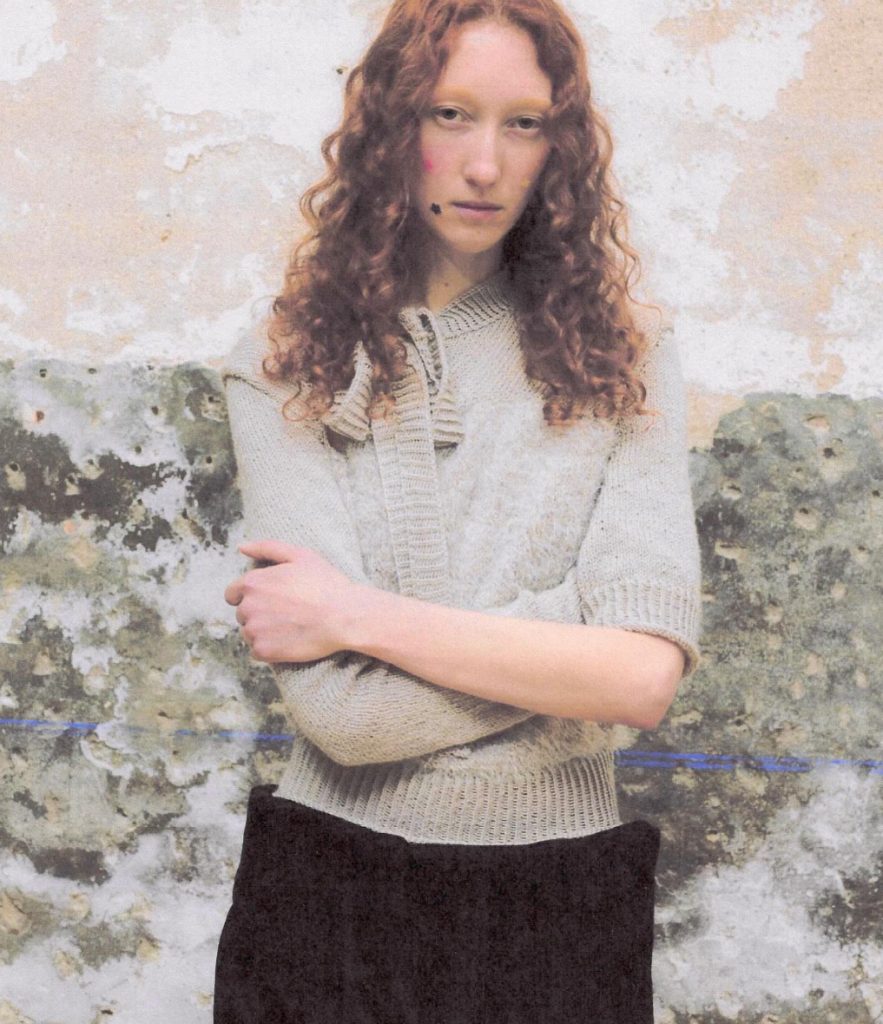
AC: There’s no single methodology for designing a collection; in my case, the process is quite organic and fluid. I don’t limit myself to a pre-established order because I believe that creativity thrives precisely on that freedom. Sometimes the starting point might be a strong concept I want to explore, other times it arises from a key garment that begins to give meaning to the rest, or even from a fabric that inspires me because of its texture, drape, or color. On other occasions, a mood board helps me organize ideas and connect references. I also leave room for spontaneity: I might design influenced by a song, a memory, a mood, or something everyday that surprises me. For me, fashion isn’t about following strict instructions, as if it were assembling furniture, but about allowing intuition and sensitivity to guide the process. This flexibility gives me the opportunity to experiment and take the collection to unexpected places, without being tied to a fixed pattern.
LF: To what extent do you handle the production yourselves, and what do you outsource to workshops?
AC: Believe it or not, I still handle everything myself: design, pattern making, cutting, sewing, logistics, social media, and even accounting. It’s a lot of work, but I like having control over every detail and making sure everything turns out the way I want. That said, I’m lucky to have close friends and family who have supported me from the beginning and help me whenever they can. I don’t work with external workshops for now because I like to maintain the artisanal and personal nature of the process, although I don’t rule out outsourcing in the future to grow a bit more.
LF: The AAA Studio tracksuit has been iconic: how did the idea of a «designer tracksuit» come about, and what differences were you looking for compared to a regular tracksuit?
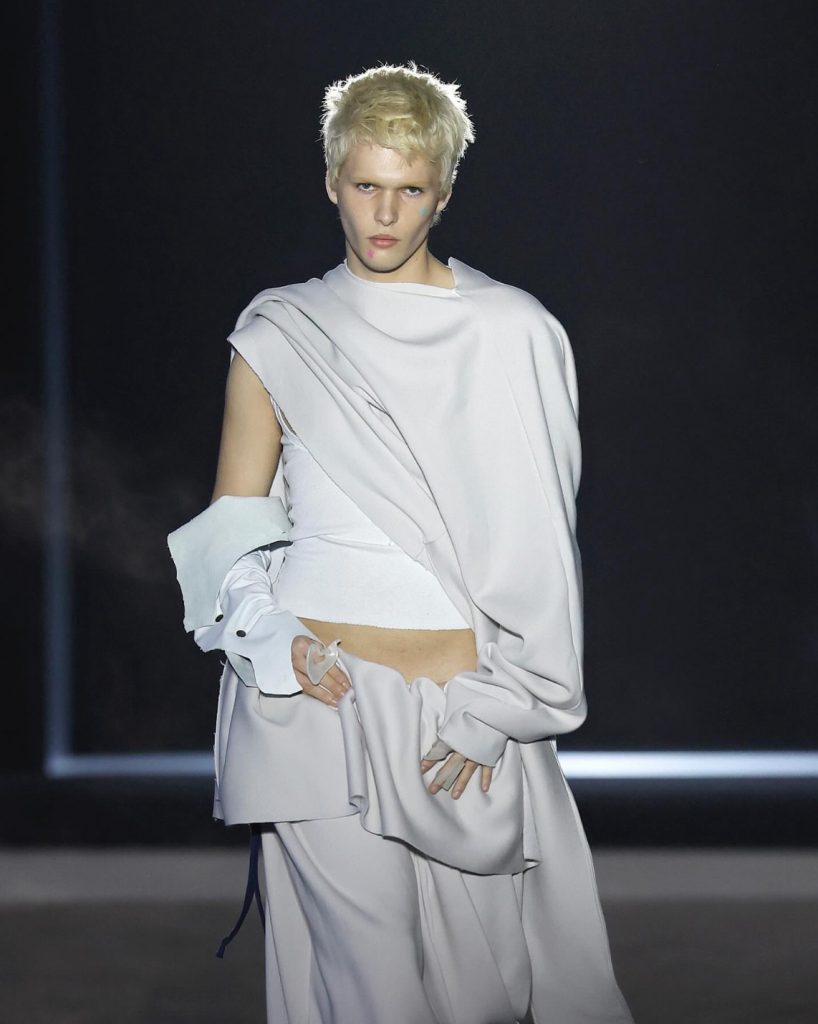
AC: The idea came about somewhat unintentionally. At the end of September last year, I was going through a mental breakdown because I wasn’t doing well personally or professionally. My therapist told me to stop creating for others and to make something just for myself. That’s how the tracksuit came about, without any further thought. When my friends and family saw it, they encouraged me to market it because they felt it had something special. Two weeks later, I had already made 15 samples and a photoshoot for the website. What sets it apart from a regular tracksuit is the intention: it’s not just sportswear, but a comfortable yet stylish garment, designed for everyday wear and also for showing off. We wanted to demonstrate that a tracksuit can have its own identity and style, beyond just being functional.
LF: What’s been the most unexpected anecdote about this tracksuit: when a celebrity wore it or when it appeared in an unexpected context?
AC: Unfortunately, the most unexpected anecdotes related to this tracksuit are tied to projects that haven’t been released yet, so I can’t share them in detail. However, I can say that some situations have arisen that I never would have imagined 🙂
LF: How did you manage the balance between demand, production, and exclusivity when your popularity increased?
AC: The growth was very sudden, and I realized I had to organize myself as if it were a full-time job to meet production and shipping deadlines. From the beginning, I worked on a made-to-order basis, which allowed me to maintain exclusivity and better control resources. However, with the increase in demand, I’m now considering creating a small base stock to expedite deliveries without losing the personalization and essence of the project.
LF: Does the success of the tracksuit limit your ability to design other garments today, or do you want to break free from that label?
AC: Before ABC Collection, I had never worked with tracksuit fabric, and discovering it was a very pleasant surprise. I like it because it offers so many possibilities and goes far beyond the classic sportswear garment. The key to avoiding boredom and pigeonholing is to treat it like any other fabric, exploring new silhouettes, finishes, and combinations that move it away from the conventional. In that sense, the success of the tracksuit doesn’t limit us, but rather motivates us to continue demonstrating that we can transform the everyday into something innovative, while also experimenting with other materials.
LF: When was the first time someone famous or an influencer asked for one of your pieces?
AC: I think the first person I lent a piece to was Martin Urrutia. It was a super exciting moment for me, because seeing someone with such a high profile feel comfortable and authentic wearing my clothes made me feel like I was on the right track. He also thanked me for the gesture, which made the experience even cooler. Then, for example, I was also thrilled to see Judeline in «La Revuelta» wearing my tracksuit; it was incredible to see how someone could wear my design in their own way and have it reflect their own style. In general, I’m always thrilled to see any artist or influencer wearing my clothes; it still surprises me, no matter who they are. I love seeing how each person interprets it and makes it their own, and that motivates me to keep creating with authenticity and passion.
LF: How do you decide who to collaborate with, whether it’s a celebrity, stylist, or influencer?
AC: The decision of who to collaborate with is a fairly organic, but also careful, process. We generally receive proposals from different celebrities, stylists, or influencers, and from there we analyze each case. Beyond the initial impact, we assess whether the collaboration aligns with our values, our aesthetic, and the vision we want to convey as a brand. The proposals are usually very interesting, which is why most of them end up becoming actual collaborations. However, we also take into account factors such as the person’s authenticity, their affinity with our community, and the long-term potential of the project. Ultimately, we aim for each collaboration to be a win-win: that it offers them something unique and that it helps us continue building a solid and coherent identity.
LF: How was your experience presenting at EGO (MBFWM), and what did you learn from it?
AC: It was a really cool experience! It was our first time selling in person, and seeing how people interacted with our clothes was incredibly enriching. Visitors could try them on, touch the fabrics, and appreciate the quality of the materials firsthand—something you can’t fully achieve online. They also got to see the brand in person, and we were able to get to know our audience better and receive direct and invaluable feedback. On a personal and professional level, it taught us the importance of attention to detail in every aspect of the presentation: from the layout and lighting to how we communicated our brand story and values. We also learned to adapt quickly to different types of customers and to convey trust and approachability, which is essential for building lasting connections. This experience definitely motivated us to keep growing and gave us key tools for future in-person presentations and sales.
LF: As you grow, how do you plan to maintain ethical and conscious production in terms of materials and workshops?
AC: We are very aware of our origins and the effort involved in each stage of production. We firmly believe that we cannot be driven by the ambition to “make more to sell more,” because that would compromise our values and our vision. Our goal is to maintain responsible production, choosing sustainable materials, respecting everyone involved in the process, and ensuring fair conditions in all the workshops we work with in the future. As we grow, we will continue to prioritize transparency and quality over quantity. We want every piece we produce to reflect our ethical commitment and environmental awareness. We will maintain a constant dialogue with suppliers and partners to learn and continuously improve, and we will ensure that our growth does not mean abandoning our principles. For us, success is not measured solely in numbers, but in how we positively impact people and the planet.
LF: Do you have plans to open new lines, produce in other countries, or collaborate with emerging workshops?
AC: Yes, of course. As I mentioned before, for now we can manage production ourselves, but if the project grows and becomes more complex, we will certainly consider collaborating with workshops or factories that share our vision and values. Our priority is to maintain local production whenever possible, supporting our community’s economy and ensuring close control over quality and the process. Should we ever produce in other countries, it wouldn’t be something improvised. We would carefully seek out locations that meet high standards: good working conditions, fair wages, and respectful treatment of the people who work there. For us, sustainability isn’t limited to the fabrics; the entire production process, from raw materials to the final product, must be responsible and ethical. We want every piece that comes out of our brand to reflect that commitment.
LF: How do you address the risk of losing your identity as you grow? Are there any «non-negotiable» elements of AAA Studio?
AC: I’m sure AAA Studio won’t lose its identity, because I wouldn’t want to force a collection just to meet deadlines: if I don’t have a clear direction, I prefer to wait. The non-negotiable elements are maintaining a consistent aesthetic, without limiting ourselves to specific genders, and designing adjustable, multi-position garments with inclusive sizing. These pillars ensure that, even as the brand grows, its essence remains intact.
LF: Who is AAA Studio’s ideal customer today, and how has that changed since you started?
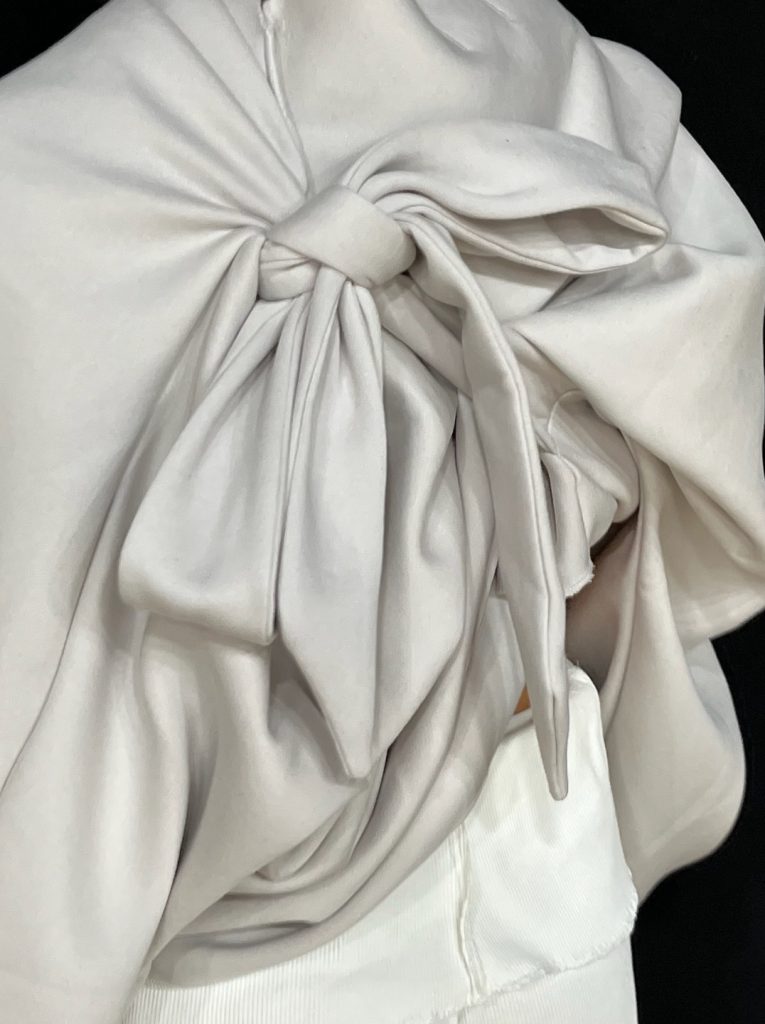
AC: Actually, it hasn’t changed since we began. Although it sounds cliché, I don’t believe in the idea of an «ideal customer» as such. The garments I design aren’t intended for a specific gender, age, or size: they are open, free pieces that each person interprets and makes their own. I like to think that the same garment can suit completely different profiles: from a lady who wears it to brunch and becomes the most elegant person there, to the local girl who incorporates it into her style and remains authentic. That versatility is what interests me most: that clothing doesn’t limit, but rather enhances the identity of the wearer. In that sense, our ideal client isn’t a defined type of person, but anyone who dares to play, reinterpret, and appropriate garments from their own unique perspective.
LF: Which sales channels have given you the best results and why?
AC: The channels that have given us the best results are online sales and promotion through social media. They have allowed us to reach a wider audience, interact directly with customers, and increase brand visibility. Although physical sales remain important, the online channel has generated a higher sales volume and a faster return on investment. Furthermore, social media helps us to better understand our customers and adjust our strategies in real time.
LF: Looking ahead 3–5 years, what do you envision for AAA Studio, and what collaboration or project motivates you as a goal?
AC: AAA Studio hasn’t even been operating for a year, and in this short time, incredible things have already happened. This makes me think that even more surprises and opportunities than I can imagine today could occur in the next 3–5 years, so I don’t like to limit myself to fixed expectations. What I do dream of is continuing to consolidate AAA Studio as a creative space with its own identity, recognized both nationally and internationally. I’m really excited about the idea of collaborating with some of my favorite singers, whether it’s creating the visual concept for a tour, participating in the art direction of a music video, or designing for a major event. As a long-term goal, I would love to take AAA Studio to an international Fashion Week, presenting a strong proposal that combines fashion, art, and music, and that can inspire others.
questions by @lauraafdeez
translated by @alraco43