
SLV FRR BY SILVIA FERRER: AN IN-DEPTH INTERVIEW
In the Spanish fashion scene, each season of EGO MBFWM establishes itself as a showcase for discovering new voices that expand the boundaries of contemporary creation. Among them, one of the most interesting of the latest edition was SLV FRR, the personal project of Silvia Ferrer, who surprises us with an honest and introspective discourse.
Trained in visual arts and illustration before focusing on fashion, Ferrer leads a generation of designers who understand clothing not only as an aesthetic object, but as a vehicle for identity. Her language stems from artistic gesture and intuition to construct her own universe where contradiction, vulnerability, and strength coexist.
Her career, though young, reflects a process of accelerated maturation. After co-founding the brand DiF with her partner Paula, Ferrer embarked on a learning experience based on trial and error, facing the challenges of creating a collective project in a changing and competitive environment. That initial impulse was, as she herself describes it, “taking the plunge”: a dive into the vertigo of creative entrepreneurship. But it was also the seed of something deeper: the need to find her own voice and build a fully personal identity.
Valeria Argüelles: Briefly summarize your journey from the decision to dedicate yourself professionally to fashion to being one of the participants in EGO MBFW.
Silvia Ferrer: I founded the brand with my then-partner Paula; it was a complete leap of faith. As time went on, the level of involvement each of us could bring evolved, eventually leading to me running the brand solo and renaming it SLV FRR to take a much more personal direction. This new path is the one I’ve opened now at EGO MBFWM.
VA: What role did illustration and visual arts play in your path toward fashion design?
SF: On the one hand, they are two skills that obviously facilitate the process. But above all, it’s the multidisciplinary nature of my artistic production that has allowed me to create a brand universe on a more global level. Embracing the fact that my training isn’t solely related to fashion, I think it gives the project a very unique richness.
VA: What cultural references most influenced your creative imagination (film, music, art…) from the beginning of your career?
SF: I’m interested in all things feminine chaos, in everyday life that is both delicate and extreme. Sofia Coppola and Petra Collins were very present in my early years. In fashion, I connect with brands like Coperni, Prada, and Courrèges, in terms of elegance, experimentation, and style, balanced by the more dramatic or audacious details of Glenn Martens or Alexander McQueen. Formally, I’m very inspired by the work of Ángela de la Cruz or John Chamberlain, which is both gestural and conceptual.
VA: Did you do any professional internships during your studies? If so, what did they contribute to your development?
SF: I did an internship at Women’secret, yes, in the textile printing department. They helped me streamline processes, better manage my productivity, and learn where to focus my efforts.
VA: Was there an academic project that you feel was the seed of your current work?
SF: In my fourth year of university, I made a documentary, Carrer Nou number 18, which was about my house and how my family had evolved with it. I’ve always found it very illustrative of where my sensibility and discourse lie. Also, because of its subject matter, it’s like an anchor I can always return to in order to make my vision more coherent.
VA: What did co-founding DiF mean to you, and what was that period like?
SF: DiF was, as I mentioned before, a leap of faith. I was very young, had very little experience in fashion, and almost everything worked by trial and error. As a shared project, it had its challenges, in addition to those of being an emerging brand. In 2023 I decided to go solo, although it wasn’t until a few months ago that I named the project SLV FRR.
VA: What lessons from that first brand would you bring to your current one?
SF: The most important has been trusting my vision. The brand is still a personal project. There’s no point in running it in a way that isn’t 100% aligned with my values.
VA: What challenges did you face when transitioning from a collective project to your own?
SF: Honestly, everything has improved. I do the same work, but I do it solely for myself and without having to justify myself.

VA: How would you briefly define the identity of the SLV FRR brand?
SF: Contradictory, raw, intimate, elevated.
VA: What are your main influences when designing?
SF: A lot of imagery from the internet and my immediate surroundings.
VA: How did the concept for Over come about?
SF: In a conversation with friends about exes and traumas. We were talking about how the three of us had reached the same point of having «outgrown» certain people or situations.
VA: Which garment do you think best summarizes the essence of the collection? Why?
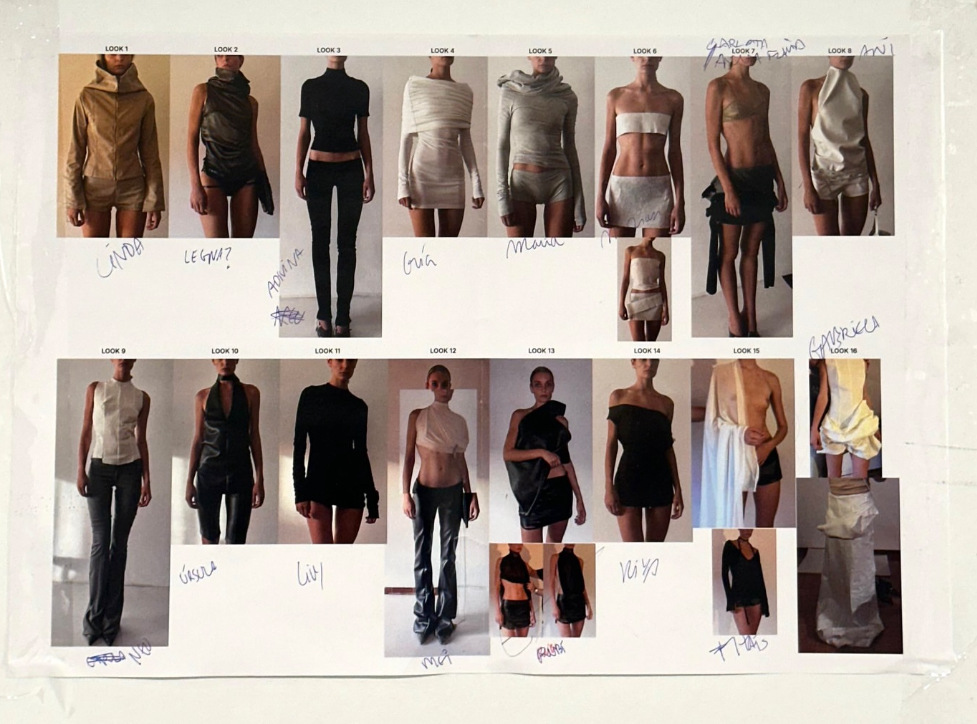
SF: I’d have to name one from each phase. For me, the collection has four stages. Perhaps, if I had to encapsulate everything in a single piece, it would be the halter top from the last look. It embodies suffocation, resilience, and light.
VA: The garments play with constriction and liberation. How did you translate those physical sensations into the pattern making and fabric choices?
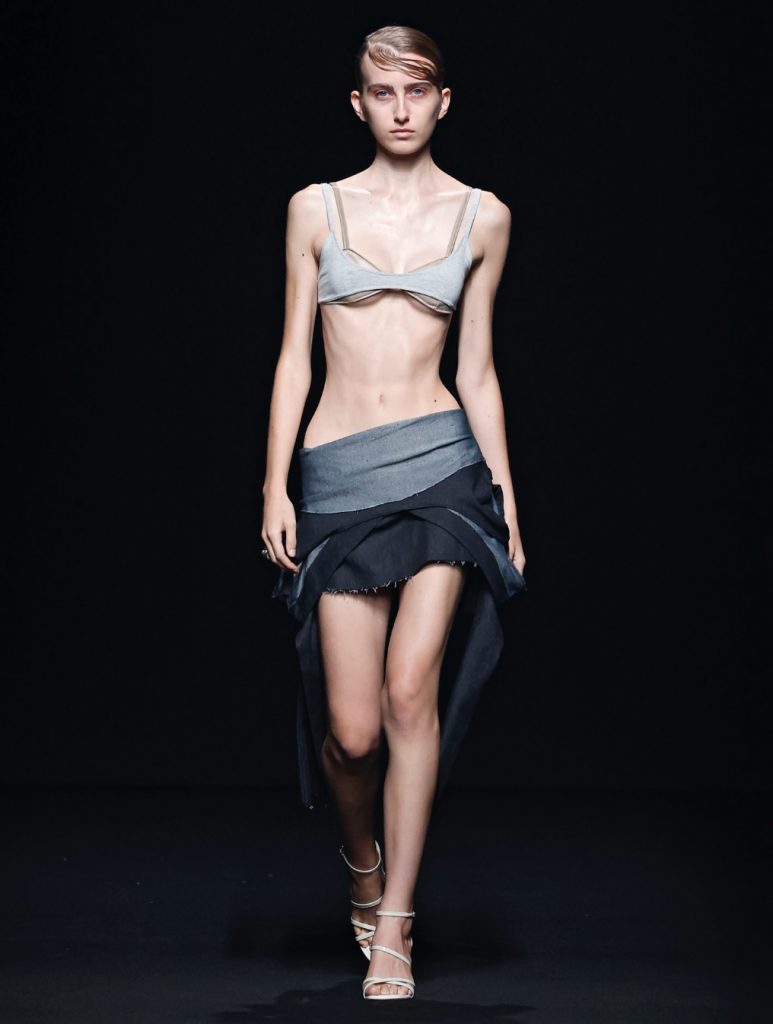
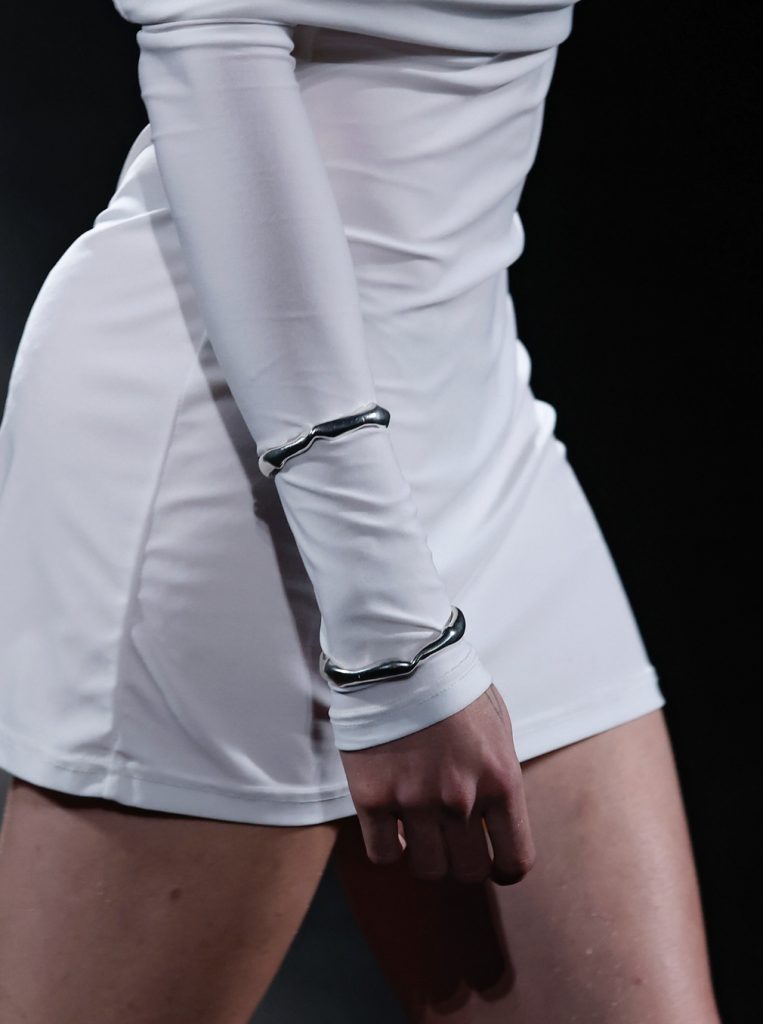
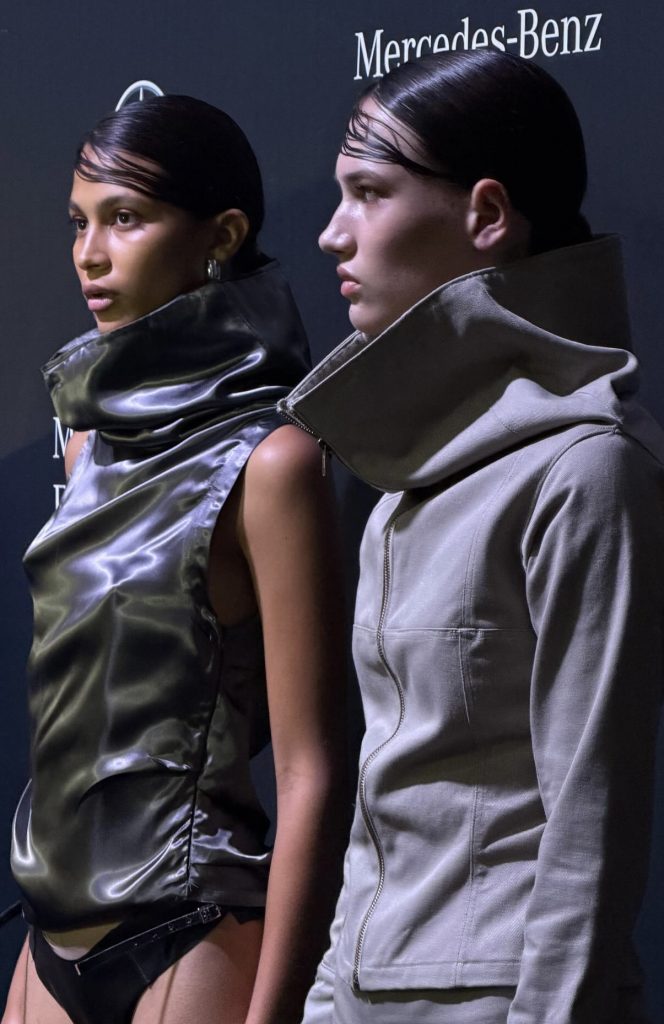
SF: Rigid fabrics like denim or leather in corseted patterns, contrasted with other more fluid or elastic fabrics that allowed for breathing through very deep necklines or garments that revealed more skin.
VA: In Over, you talk about growing beyond what holds you back: what personal or collective experiences did you transform into design elements?
SF: You know, breaking up with people, getting over grief, draining a flooded building, seeing the road that leads you home torn up.
VA: The collection seems to move between several aesthetic references. What are they, and how do you manage to fuse them?
SF: The minimalism of the ’90s and the «indie sleaze» of the 2010s have been the pillars of the collection. The challenge was to fuse them into an aesthetic that was 100% me. A very limited color palette and the use of a clean, boldness in the garments have helped. Also, a mature tone that elevates everything that could be more mundane.
VA: How important was the staging of the show in completing the message of the collection? Were there music, movement, or lighting choices designed to reinforce the narrative?
SF: Blanca Santos’s set and Adrián Revendless’s music transformed the runway into something very cinematic and exciting. They both understood perfectly what I wanted to convey and have been a great fit for the project, creating pieces that are both simple and incredibly powerful.
VA: Do you think this duality between the second skin and the volumes will be something that accompanies you as a personal signature?
SF: Definitely, this is the kind of contrast I’m looking for.
VA: How do you see SLV FRR evolving five years from now?
SF: I hope to maintain a high standard while experimenting with my way of telling stories through the brand.
VA: What project or dream are you most excited about yet?
SF: Taking a vacation.
VA: What advice would you give to someone currently studying fashion?
SF: Find your own voice and what you truly want to contribute to the world.
Questions by @valeriarguelless
translated by @alraco43