
STUDIO CUMBRE BY MICAELA CLUBOURG: AN IN-DEPTH INTERVIEW
Studio Cumbre is a brand founded by Micaela Clubourg, an Argentinian designer currently based in Barcelona. This means that her designs reflect a dialogue between cultures. Each garment is born from a reflection on material, function, and emotion. All of this has allowed Studio Cumbre to develop its own brand language, which combines restraint, coherence, and sophistication through simplicity.
Studio Cumbre’s philosophy rests on the idea of »the elegance of the essential,» where boldness stems from simplicity and the ability to endure. In their world, sustainability is not an adjective, but an integral practice: working with single materials, natural fibers, and artisanal techniques not as ornamentation, but as structure.
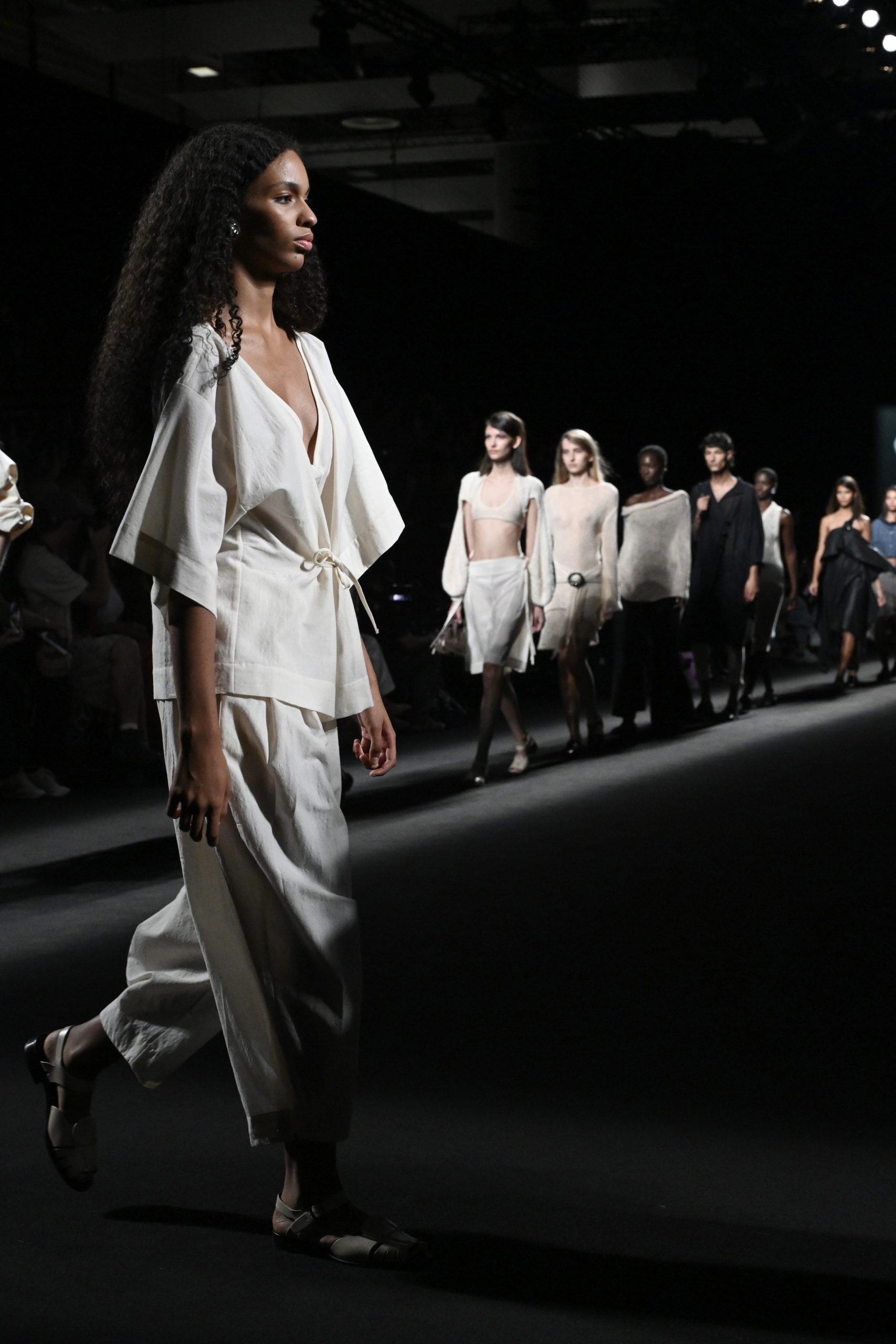
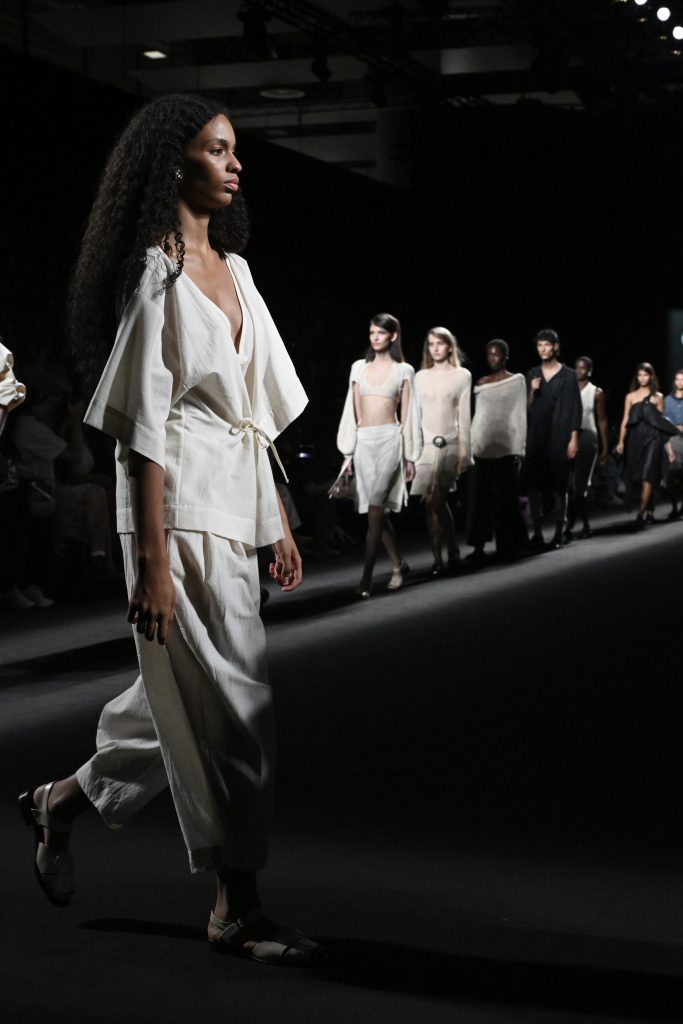
Their collection, «We’ve Been Here Before,» presented at MBFW Madrid, highlights this idea: a manifesto on continuity, belonging, and the value of that which evolves without losing its roots. Cumbre doesn’t seek to dazzle, but to build from coherence, with its focus on the human, the conscious, and the timeless.
Soraya Arce: How would you define the essence of Studio Cumbre?
Micaela Clubourg: Studio Cumbre finds its space between the essential and the contemporary. We seek a balance between material, function, and emotion. We were born from the need to return to simplicity without sacrificing depth. In this edition, the emphasis is on pattern, on the minimal and stripped down. Elegance doesn’t always come from the voluminous or complex, but—quite the opposite—from the sober and essential. We believe that boldness comes from simplicity and comfort. Cumbre doesn’t seek to dazzle, but to endure: it’s not about the new for the sake of newness, but about what is necessary, about what makes sense.
SA: What role does Argentine heritage play in the brand’s overall aesthetic?
MC: My Argentinian heritage is in my perspective: resilience, the beauty of the everyday, and the ability to create in the face of uncertainty. When I arrived in Spain, I found similarities—from the climate of the cities where I lived to the tradition of wool and its many uses. Cumbre was born from the dialogue between European, Eastern, and Latin American aesthetics. Understanding the territory where the brand develops—its customs, its aesthetics, and its references—without losing the knowledge I bring with me is the driving force behind my poetic universe.
SA: Regarding sustainability, what sets you apart from other emerging brands that are also committed to it?
MC: Our focus is on consistency rather than just a label. We don’t see sustainability as an adjective, but as a practice and a way of thinking. We work with a systemic approach: not only the origin or composition of the material, but also the documentation of each step and its impacts. We design for durability and respect the human scale of the process. We favor single materials, natural fibers, and garments that adapt and transform with the body. Often, a garment is discarded because it no longer fits; at Cumbre, we design with permanence in mind, aiming to accompany the evolution of the body and the passage of time. Above all, we strive for each garment to encourage a more conscious relationship with the act of dressing.
SA: “Edition 08: We’ve Been Here Before” is the latest collection presented by Studio Cumbre at MBFW Madrid. What intention or message did you want to convey with this title?
MC: “We’ve Been Here Before” isn’t nostalgia or repetition: it’s a declaration of continuity. It speaks of persistence and evolution through experience. In a world that insists on projecting us forward or anchoring us to the past, choosing to inhabit the present is an act of resistance. The collection recognizes that novelty isn’t always in what’s new, but in how we relive it. The title affirms belonging: to the material, to the body, to the territory, and to the act of making.
SA: You mentioned that it’s not about nostalgia or repetition, but about continuity. How does that translate to the pieces in the collection?
MC: Continuity is expressed in timeless typologies, colors, and materials. At Cumbre, we start with initial patterns that evolve collection after collection. We work for months to optimize the pattern-making and reduce waste; when a pattern works, we don’t discard it season after season: we perfect it. We don’t repeat shapes, we let them mature. The selection of fibers also follows this logic: which ones are always present? That question led us to denim—timeless and utterly versatile—in our case, recycled and locally sourced in Catalonia. It’s an exercise in permanence that finds beauty in consistency. You don’t always see jeans with a white t-shirt at fashion week, but they’re always in your wardrobe.
SA: Do you think you’ve managed to translate Studio Cumbre’s values into this collection?
MC: Yes. This collection consolidates what defines us: understated elegance, a systemic and sustainable approach to its development, and a search for the primal. Designing isn’t about imposing an image, but about ensuring coherence between what is said and what is done. We’ve Been Here Before embodies that philosophy: honest, functional, and simple pieces.
SA: Studio Cumbre is characterized by its collaboration with external artisans. How did you integrate these collaborations into the final garments?
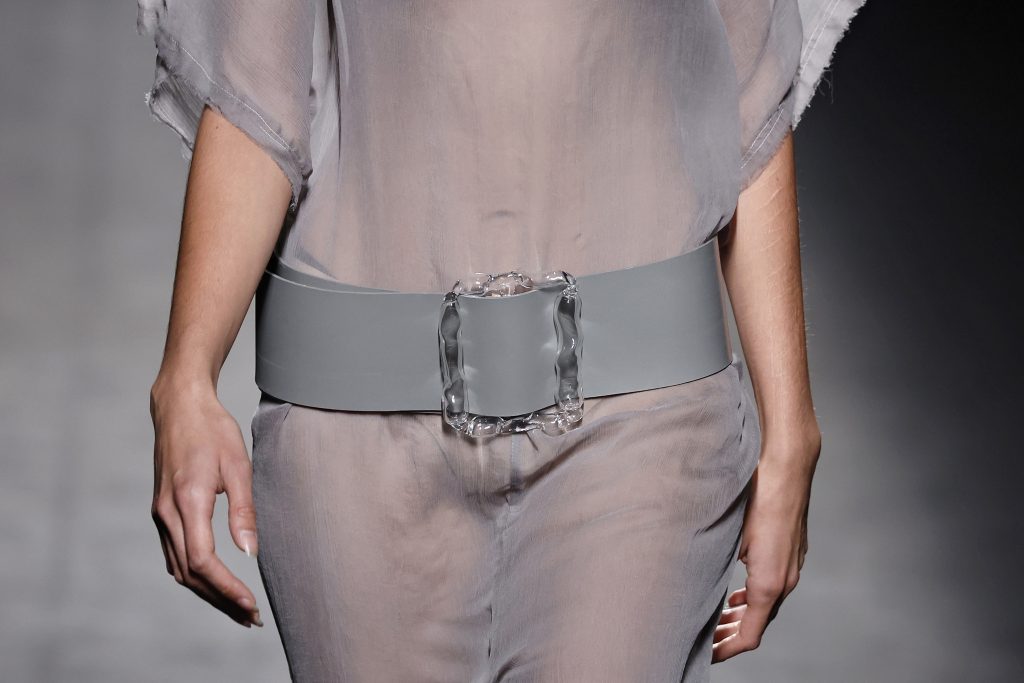
MC: Each collaboration is born from dialogue. The artisanal technique is not decoration; it is a natural extension of the design. In this collection, we worked with artisans from northwest Argentina and with a glass artist in Barcelona. Their influence appears in the finishes, textures, and in how the garment sits on the body. The collaboration is structural: an invisible fabric that sustains the narrative. I call Cumbre a “collaborative house” because we also seek to create the excuse for other people to create: to open spaces for creation beyond the studio walls.
SA: Which piece do you consider the most representative and why?
MC: The recycled denim ensemble is the symbolic core. Denim never goes out of style nor does it belong to a single era. It represents the idea of continuity that runs through the collection: that which persists, that which inhabits the present without fully belonging to any time. It is both everyday and essential.
SA: What has been the biggest challenge in combining natural fibers, neutral tones, and artisanal techniques with innovation?
MC: Maintaining coherence. Sometimes, in the pursuit of innovation, the connection with the material is lost. For us, innovation is a tool, not an end in itself. We integrate technology without displacing the craft, balancing the manual and the digital, optimizing processes—not speeding them up unnecessarily. Innovation lies not only in the tool but also in the intention.
SA: What criteria did you follow to select materials, colors, and finishes?
MC: We started with what we had readily available—lessons learned from the previous collection and local suppliers. We opted for wools, cottons, and linens with a rich texture; for neutrals—raw, stone, sand, and black—that speak of the fiber’s origin and nobility. The finishes are clean, but with a visible human touch—fraying, hand-finished details. The garment isn’t disguised: it’s shown as it is. This material honesty is our foundation.
SA: Is zero-waste still a research topic for you?
MC: Yes, it’s an ongoing journey, an evolving practice. We explore modular pattern making, efficient cutting, and repair and reuse strategies, considering the entire cycle: even the possibility of transforming one garment into another. Dressing responsibly is about imagining possible futures for what already exists.
SA: “Sophistication in simplicity” appeared in the media coverage of the show. How do you define that balance?
MC: For me, elegance is about subtracting and finding proportion. It’s not about embellishment; it’s about giving space to the body and movement. Simplicity isn’t absence: it’s clarity. Like the golden ratio, harmony arises when the relationship between the parts is balanced. When a garment says a lot with very little, when it breathes and is effortlessly worn, true elegance emerges.
SA: In terms of traceability, how do you integrate NFC, blockchain, or other systems so that the consumer knows the origin?
MC: For now, we do it with accessible tools: NFC chips, our own databases, and meticulous record-keeping of each stage. The goal is to make every step of production known so we can better value the garment and its preservation. We apply this especially to hand-knitted pieces to highlight the collaboration and the people behind them. (Our roadmap includes integrating immutable, blockchain-type records as we scale.)
SA: Regarding MBFW Madrid, how did you decide to present this collection on the runway?
MC: Presenting We’ve Been Here Before in Madrid was about asserting our presence: “we are here, and we have been here before.” Madrid is a crossroads of the local and the global, of the classic and the new. It was the place to talk about continuity, belonging, and permanence in motion. And, above all, to declare that we can be a brand with values and a sustainable philosophy that follows an official calendar—a real industry rhythm—without losing those values.
SA: What does EGO represent for you as a platform?
MC: EGO is experimentation and community. A meeting point for those of us who believe in fashion as the language of the present. It’s not just about showcasing a collection, but about sharing processes, questions, and visions. It’s a platform that gives voice to what’s to come and a learning space—thanks to the excellent management and the professional team that sustains it.
SA: Were there any unforeseen events backstage or on the runway that influenced the perception of the collection?
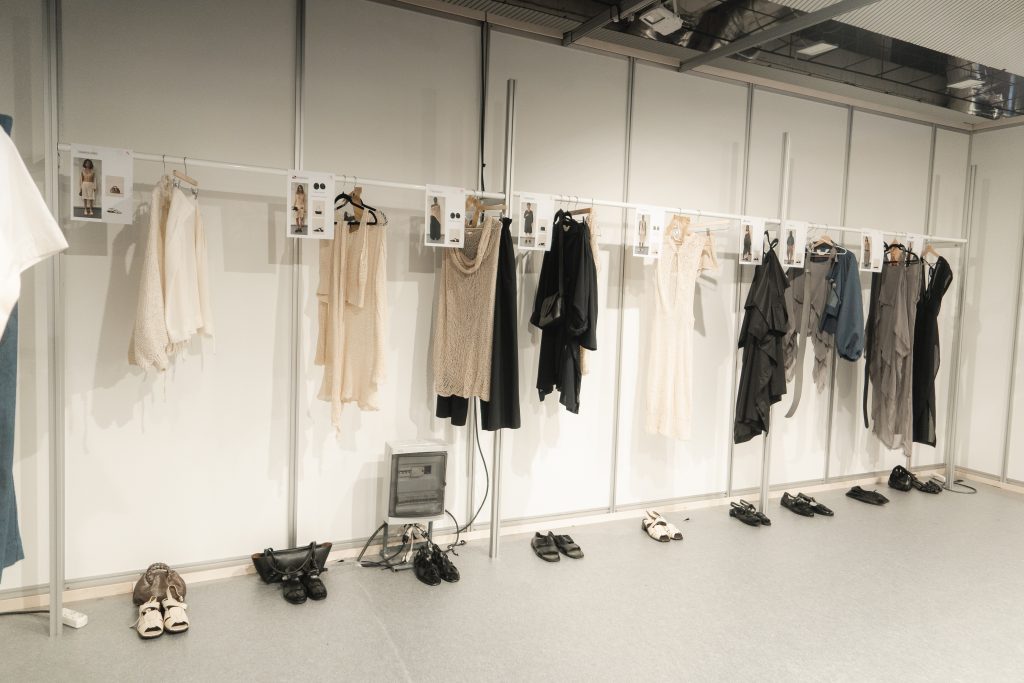
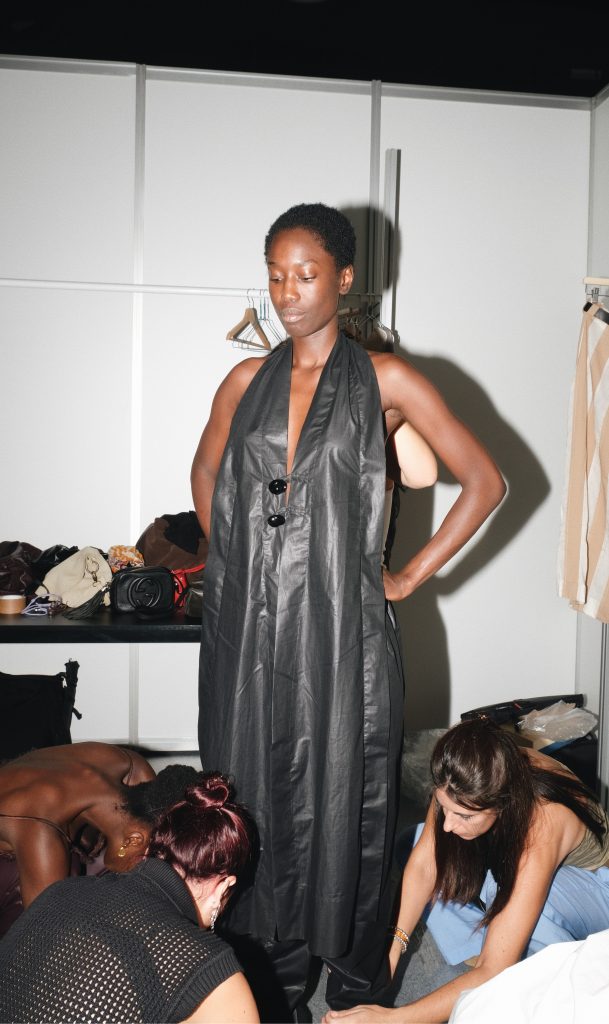
MC: There always are, and they humanize the process. In this edition, the scheduling allowed us to dress the models calmly, without rushing, asking: «Are you comfortable? Is anything bothering you?» For me, knowing how to wear a garment and being comfortable is everything; otherwise, we would betray our vision. That time to build connections transformed the rhythm of the show and, in a way, reflected the spirit of the collection: inhabiting the present, even when it accelerates.
SA: Regarding the future of Studio Cumbre: how do you see the evolution after this collection? Is there a new direction to explore?
MC: This collection marks a point of maturity. I want to delve deeper into the relationship between contemporary traditional craftsmanship and everyday life, and into the parallel between show business and commercialization: creating a runway show, but also selling. Without that balance between art and industry—between passion and economic sustainability—no dream can endure. That’s the path: aesthetic coherence and real viability.
SA: Does the collection mark a turning point in your brand identity?
MC: Yes. We’ve Been Here Before is a synthesis of who we are and a solid foundation for what’s to come. It doesn’t seek to reinvent, but rather to recognize and refine: to look back without nostalgia, to inhabit the present, and to project the future with coherence.
questions by @sorayaarcec
translated by @alraco43