
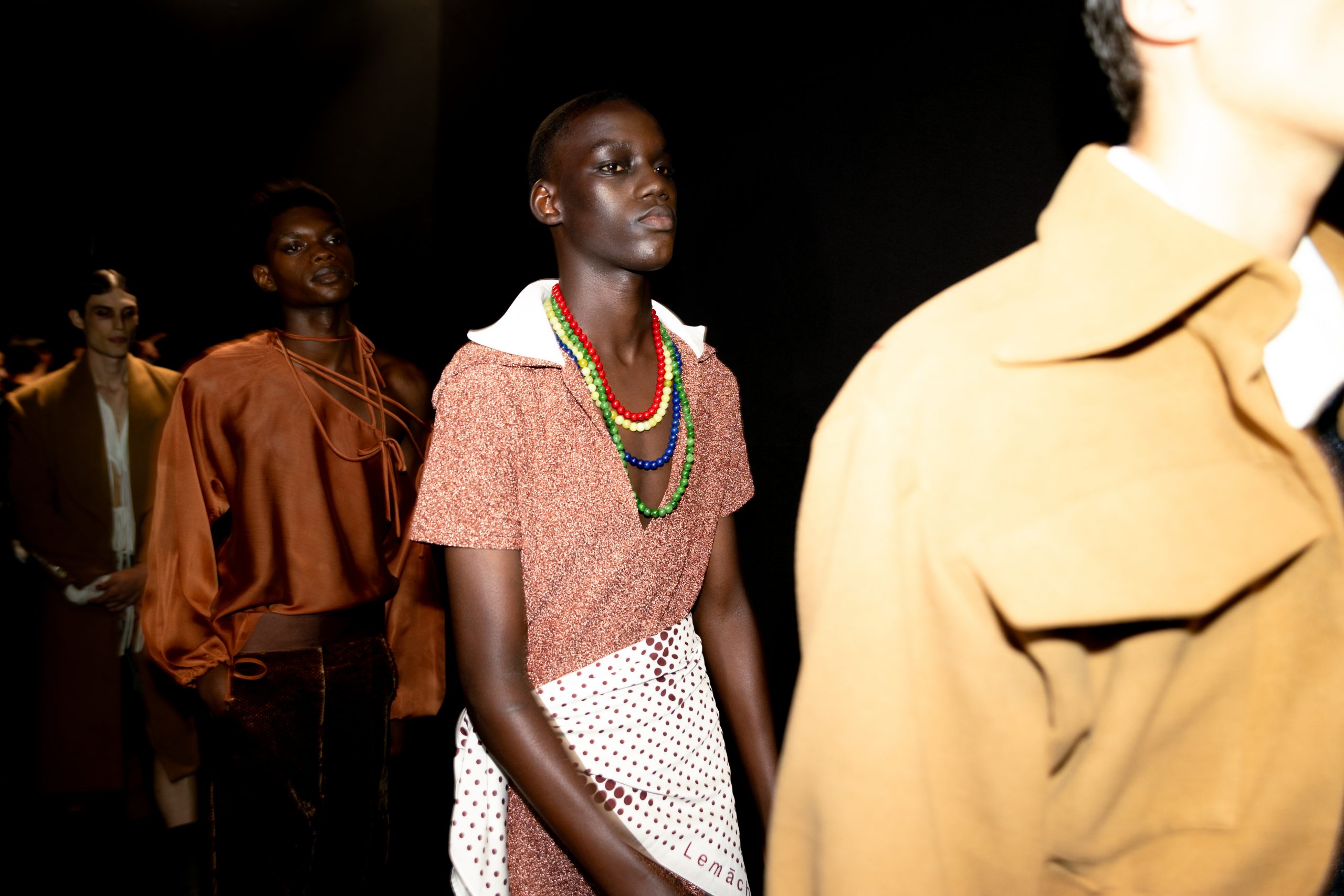
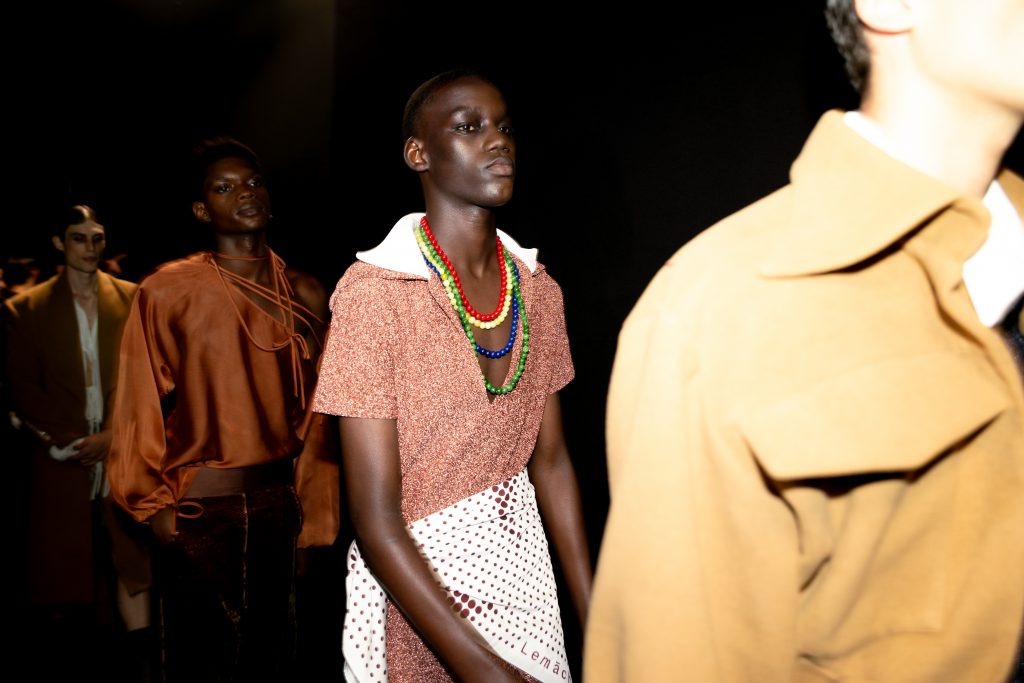
LEMĀCHET BY LUCÍA SÁNCHEZ: AN IN-DEPTH INTERVIEW
In the world of Spanish fashion, few voices resonate with as much authenticity as that of Lucía Sánchez, the mind and heart behind Lemāchet. With a vision that challenges the boundaries of what we understand as menswear, Lucía transforms her emotions, memories, and experiences into collections brimming with sensitivity and purpose. In this interview, the designer shares the origin of her passion, the importance of memory and craftsmanship in her creative process, and how Lemāchet has become not just a brand, but a manifesto of freedom, beauty, and change within the industry.
Marina Rojas: Who is Lucía Sánchez?
Lucía Sánchez: Besides being incredibly cool, she’s a super down-to-earth girl who expresses herself through Lemachet, a brand that aims to change what we currently know as men’s fashion.
MR: Why did you decide to dedicate yourself to fashion? How did what I assume started as a passion become your life?
LS: I often ask myself that, to be honest, but I’d say it’s because I was born for it. I consider fashion my method of expression, something that helps me channel many of the emotions I experience, and of course, it’s my life’s purpose.
MR: What role do your background and small-town life play in your understanding of beauty and fashion?
LS: I suppose everyone’s experiences influence how we understand beauty; I grew up in a small town, and of course, that shaped me. But it’s also true that I don’t know any other way of seeing life, so I can’t really say what makes me different from everyone else.
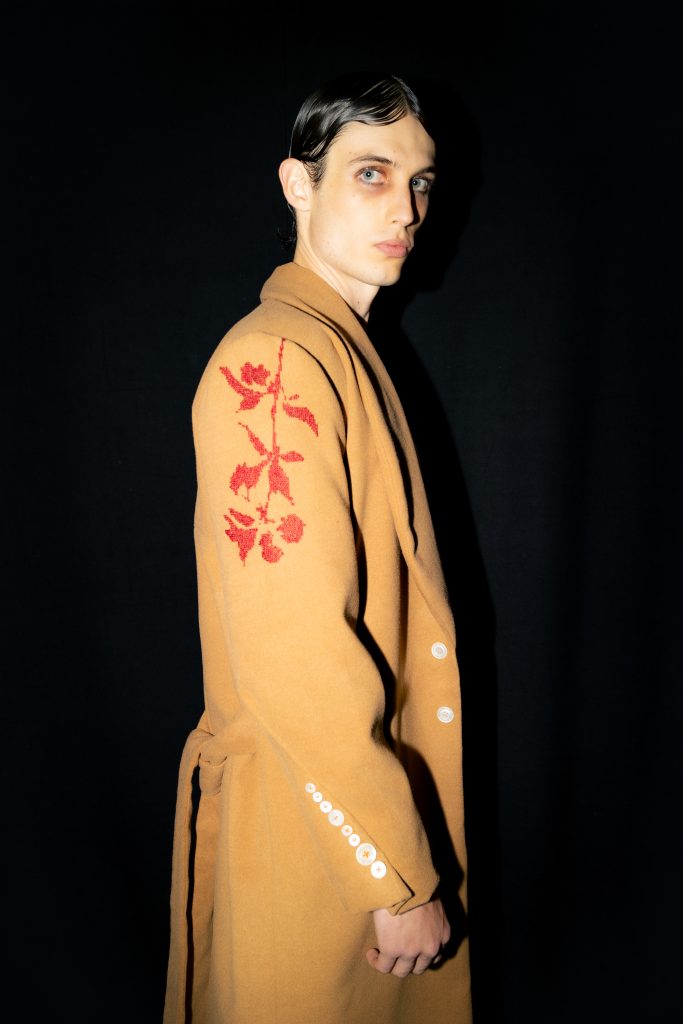
MR: “Catalina” is described as a happy refuge created in childhood. What was the process like of transforming those memories and emotions into a collection?
LS: It was a process full of love. Throughout the entire process, I was incredibly sensitive and excited about the concept I was working on. The ideas came naturally, and they also made perfect sense in my mind. Without a doubt, it has been the collection I’ve enjoyed the most.
MR: Understanding that buttons are a key symbol in this collection, how important are memory and craftsmanship to you in the creative process?
LS: Buttons were my first contact with fashion. When I was little, I spent afternoons with my grandmother, who was a seamstress, and to keep me entertained, she would always give me a piece of fabric and lots of buttons to sew on. Then she would make me a bag with it.
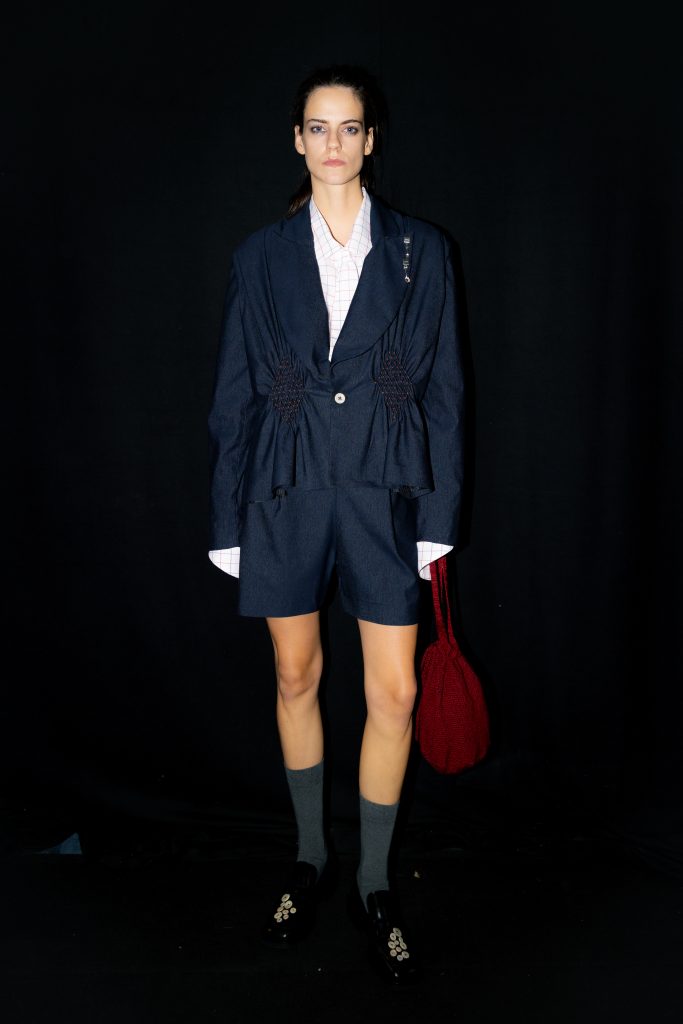
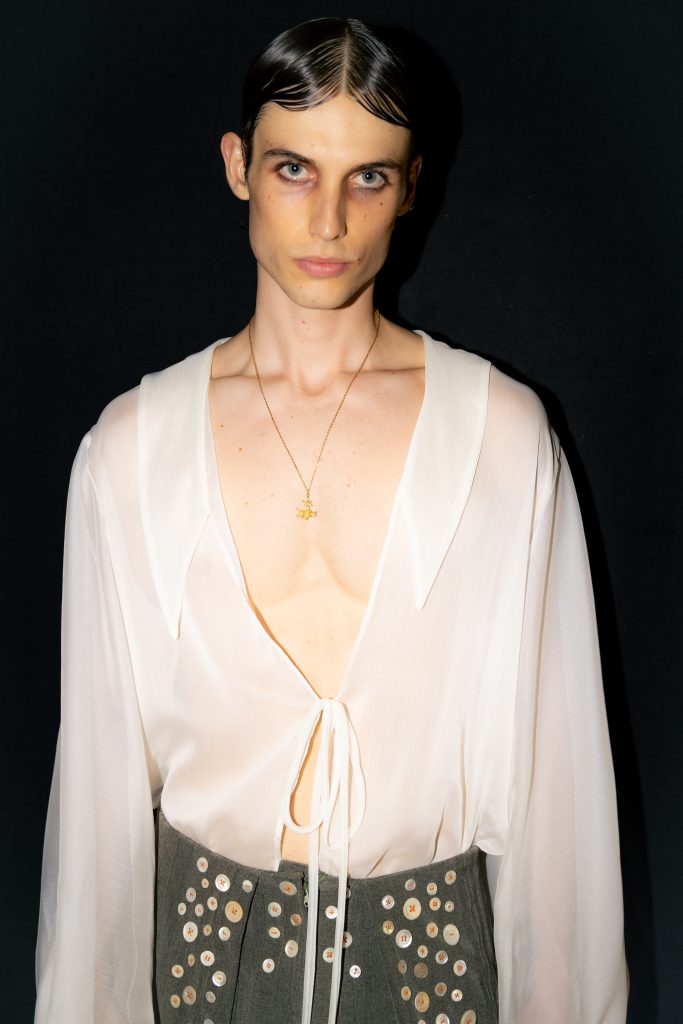
MR: Your work reinterprets the traditional codes of tailoring. What attracts you to that language, and how do you reinterpret it?
LS: I’m drawn to the power of turning it on its head, of seeing it from a different perspective; Sometimes, simply adding a different sleeve or a bow at the back is enough to make a garment stand out from what we already know, but a simple touch can change fashion.
MR: How do you create balance within such an extensive collection? What advice would you give someone to help them understand the rhythm within collections?
LS: To create a collection like this, I always start with several key looks, which help me convey the concept. Once I have the silhouettes, the next step is to define textures and colors. When we have these three points partially defined, we must continue weaving together the colors and silhouettes that the concept/brand itself demands. As you progress, you have to analyze the collection and tweak it as needed. My advice is, don’t be afraid to correct, change, unpick, or modify. Always look for what helps convey the concept, even if you have to start from scratch.
MR: What was your experience like showing at 080 Barcelona? What is most important to you when building a universe on the runway?
LS: Starting with a solid concept and not being afraid to express yourself is the most complex thing, but it’s also the most important for building a universe. We don’t leave anything to chance, from the seating chart music to the last piece of jewelry we place on the models; everything is planned within the same universe. Showing at 080 Barcelona Fashion Week is always incredibly rewarding. For me, they’re like family, and the treatment is always amazing.
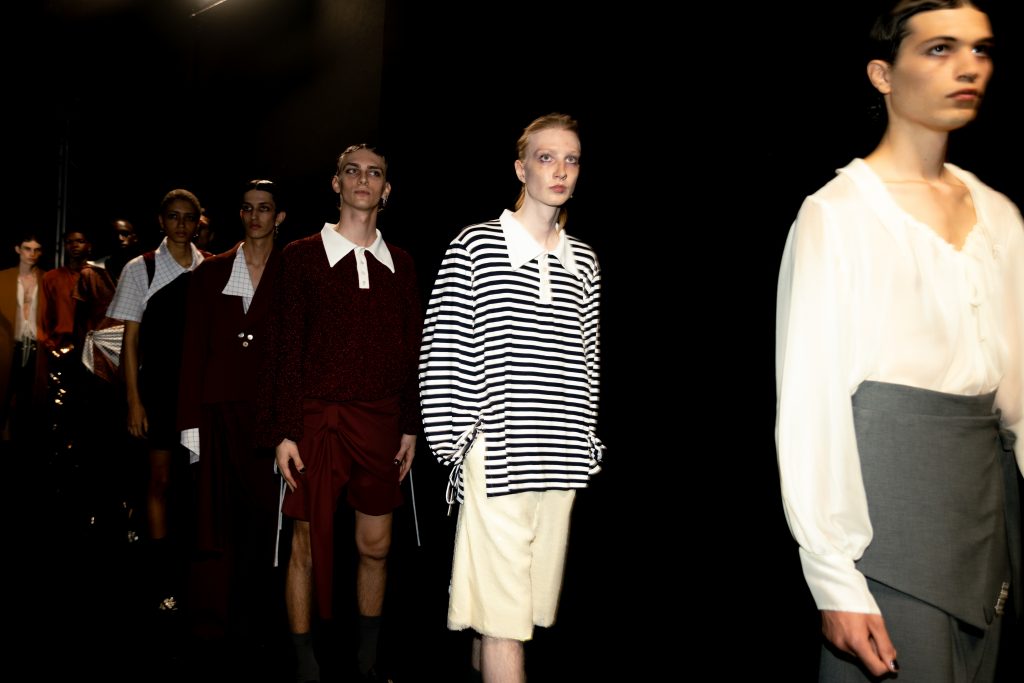
MR: How do you understand elegance and sensitivity in menswear today?
LS: I feel that elegance and sensitivity should be united, within or outside of menswear. Changing the language and not limiting ourselves to gender issues is, I think, the first step in understanding this change. Sensitivity is not at odds with masculinity, and much less with elegance. Most importantly, feel free to express yourself and feel through fashion.
MR: Beyond the collections, Lemāchet seems to be a very personal project. How do you manage the balance between your inner world and the demands of the industry?
LS: Sometimes better, sometimes worse, like everyone else; but it’s true that Lemāchet is my way of expressing myself to the world, my way of communicating, and my desire to change fashion. It’s not easy, especially when you’re trying to make it profitable, but it’s not impossible either, so we just have to keep going.
MR: The public has responded very well to your vision. When did you feel that Lemāchet was truly starting to connect with people?
LS: After Catalina’s presentation, I felt a real connection with the public and I was grateful for each and every word they said about her. With Catalina, I managed to convey love, and that resonated with the public; and it makes me incredibly happy.
MR: What other disciplines—art, film, literature—do you draw inspiration from when you design?
LS: I draw a lot of inspiration from music; it’s very important in my daily life. It helps me connect with what I want to convey and how I want to convey it.
MR: In such a rapidly changing market, how do you define success? What would you like Lemāchet to represent within Spanish fashion?
LS: Success could be defined as contributing to change, helping to change men’s fashion, marking a turning point in aesthetics. I would like Lemāchet to represent that change; after all, that’s why Lemāchet was created, to change fashion and offer men many more options.
MR: To conclude, what advice would you give to those starting out in the fashion world and looking to build a brand?
LS: Set a goal and go for it with all your might. In the fashion world, it’s not the best who succeeds, although being good always helps; it’s the one who perseveres.
Photos: @ruth_galarza
Questions by @marina_rore
Translated by @alraco43