
The Devil Wears Prada: The Fashion Fantasy That Became Reality
Is The Devil Wears Prada the Real Reality of Fashion Magazines?
I first watched The Devil Wears Prada before I was ten years old and, ever since, it has probably become one of the films I’ve rewatched the most in my life, second only to Sex and the City. For years, Hollywood turned women’s journalism into an aspirational fantasy: working at a magazine, writing about fashion, and being surrounded by impossible designer pieces seemed like the perfect balance of creativity, success, and sophistication. But no film built that fantasy quite like The Devil Wears Prada.
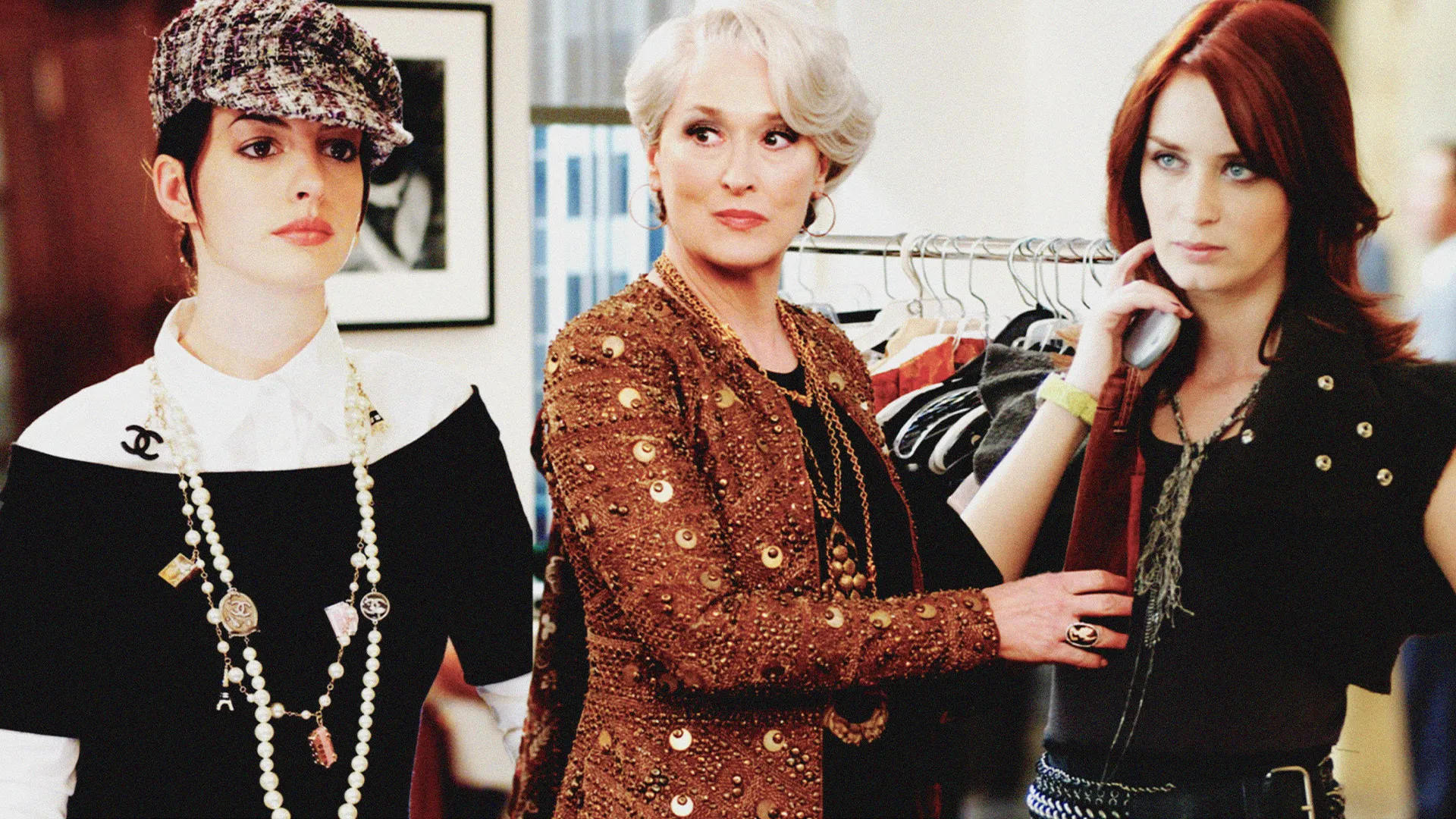
A huge part of its impact comes from the aesthetic. The wardrobe wasn’t just visual decoration; it was central to the storytelling. Andy Sachs’ transformation remains one of the most iconic style evolutions in cinema because her clothing perfectly reflected her personal change. At first, she feels completely disconnected from the world of Runway: basic sweaters, unpolished silhouettes, and that constant feeling of not belonging. Then come the structured coats, Chanel boots, leather gloves, and perfectly curated looks that eventually become almost like armor.
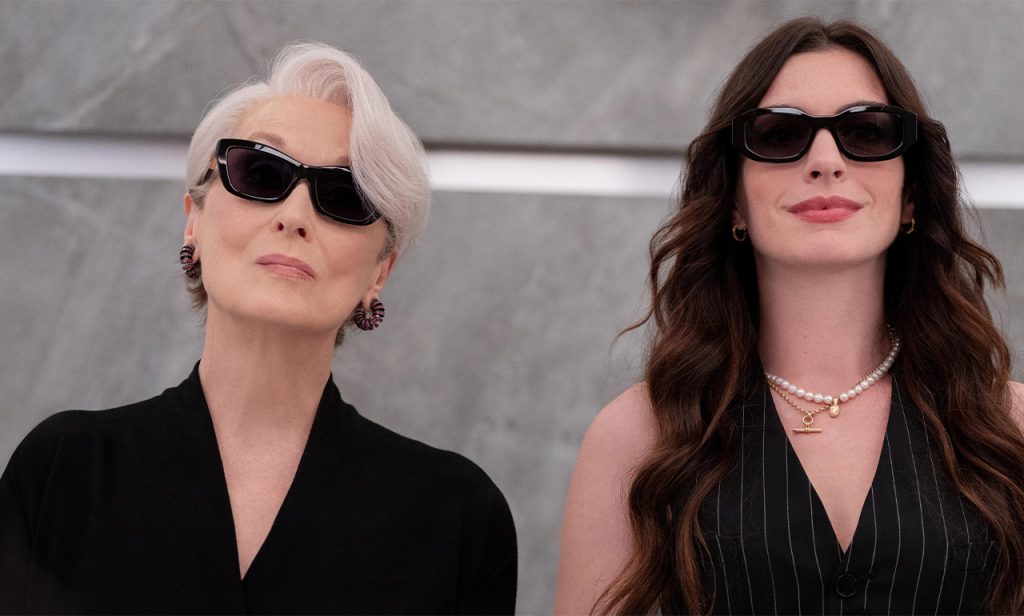
And that was precisely the film’s most interesting message: in fashion, clothes are never just clothes. They communicate power, ambition, status, and identity. Miranda Priestly understood that perfectly. Her minimal, immaculate, and highly controlled aesthetic projected authority before she even spoke. Some of the film’s most memorable moments work because of the styling itself: Miranda’s white coat entering the office, Andy walking through New York during the movie’s most iconic montage, or the now legendary cerulean blue sweater speech, which is still probably one of the smartest explanations Hollywood has ever given about how the fashion industry actually works.
Because The Devil Wears Prada was never only about glamour. Behind the fashion shows, takeaway coffees, and impossible New York offices, it also portrayed an industry obsessed with perfection, pressure, and constant validation. And maybe that’s exactly why it still feels so relevant today.
Watching it now, from inside this industry, it’s impossible not to recognize many of its dynamics. Runway, the obvious reinterpretation of Vogue, exaggerated certain codes, but it also understood editorial culture perfectly: the relentless pace, the constant pressure, and that feeling that everyone is trying to prove they deserve to be there.
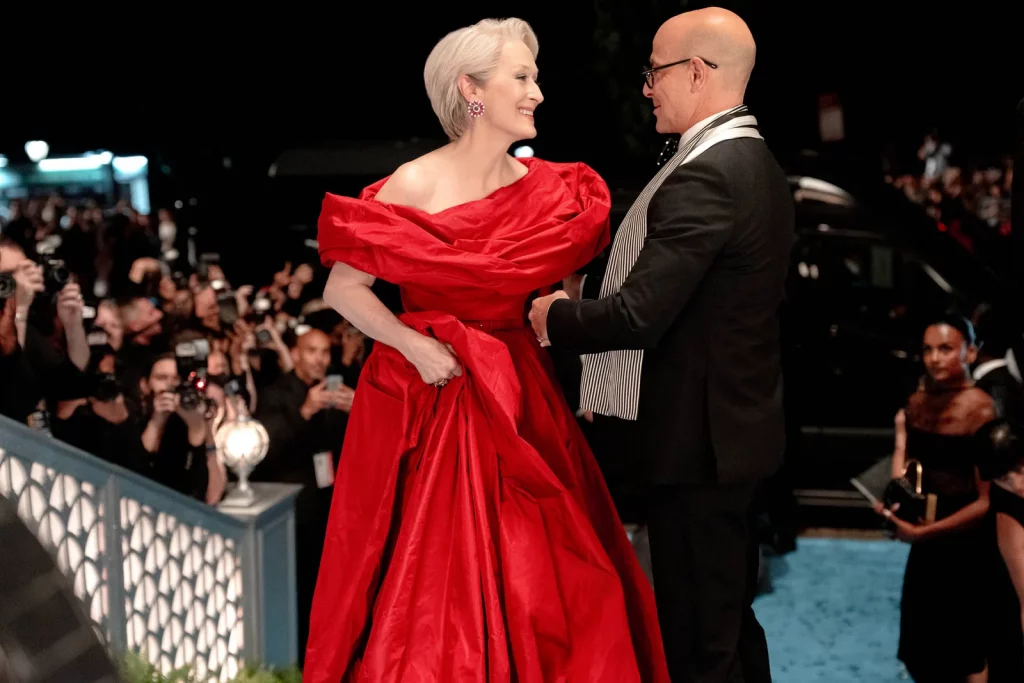
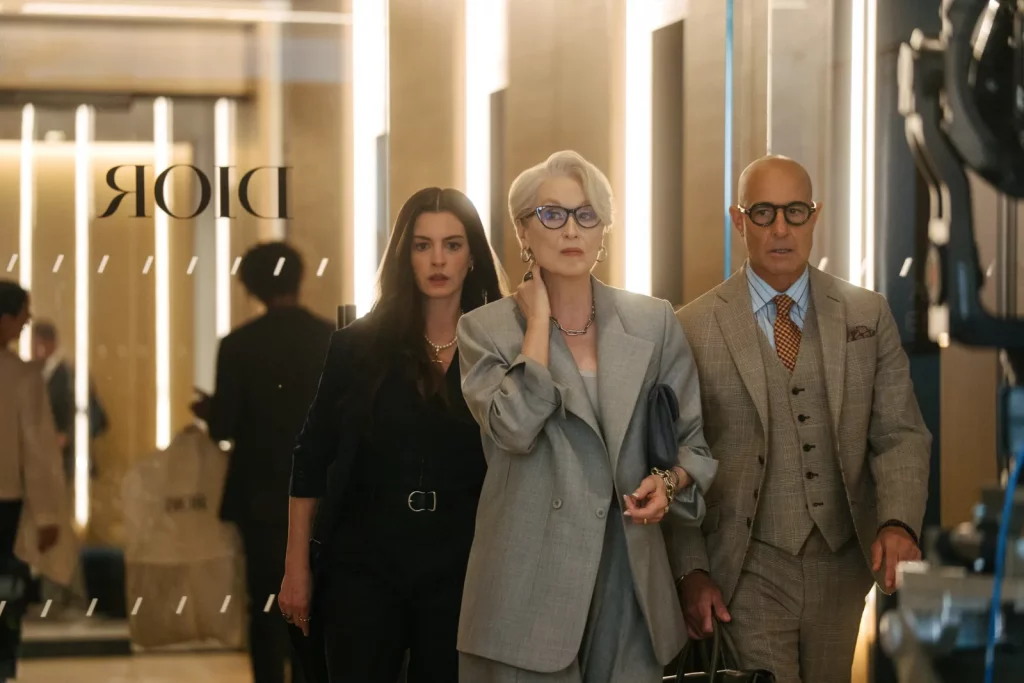
The new film also introduces a very interesting difference compared to the original. The Devil Wears Prada was about entering the industry; the sequel seems to be about surviving inside it. The first movie revolved around aspiration: landing the dream job, discovering luxury, and becoming part of an apparently untouchable world. Now, the focus feels much more connected to the decline of magazines and the radical transformation of the editorial industry.
There’s also a noticeable shift in the aesthetic. The original film was defined by the maximalist glamour of the 2000s: layering, impossible heels, oversized bags, and highly editorial looks. The sequel appears to move toward a quieter, more contemporary type of luxury, much closer to today’s fashion landscape: clean silhouettes, understated sophistication, and references to the quiet luxury aesthetic that now dominates both runways and social media.
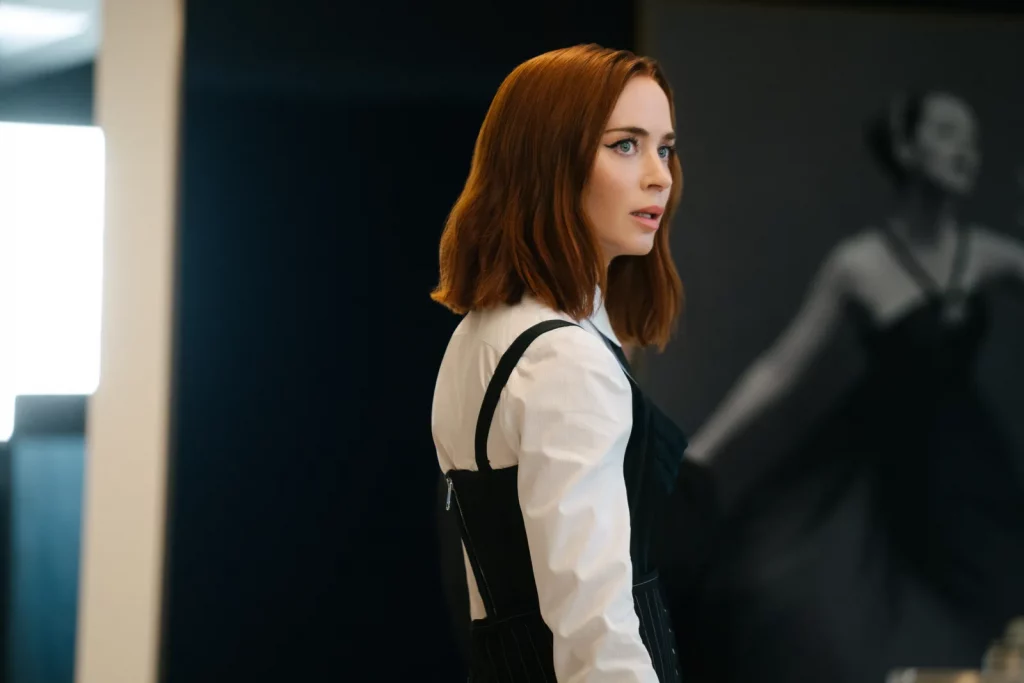
And perhaps that makes Miranda Priestly even more interesting. In the first film, she represented an almost untouchable figure, the ultimate symbol of traditional editorial power. Now, she seems to be facing something far more uncomfortable: a world where even the most influential figures have to constantly adapt in order not to become irrelevant.
Today, magazines operate in a completely different environment. Trends last hours, articles compete against algorithms, and much of the content feels designed to disappear within minutes. And honestly, sometimes it feels as though fashion journalism is becoming more about fast content than actual journalism.
That’s why I still believe so strongly in physical magazines and in stories that last. Fashion already has an inevitable visual component; the truly difficult part is creating content with depth. Interviews that reveal something new, essays people want to reread years later, or stories capable of leaving a feeling long after the last page is turned.
Magazines should feel like collector’s objects.
And maybe that’s the reason The Devil Wears Prada still resonates with so many people twenty years later. Because it isn’t only about clothes. It’s about ambition, sacrifice, and that obsession with belonging to an industry that, even when it exhausts you, still feels impossible to leave behind.
Because yes: fashion may look superficial from the outside. But everything that exists behind it rarely is.
Words: @annaamaso