
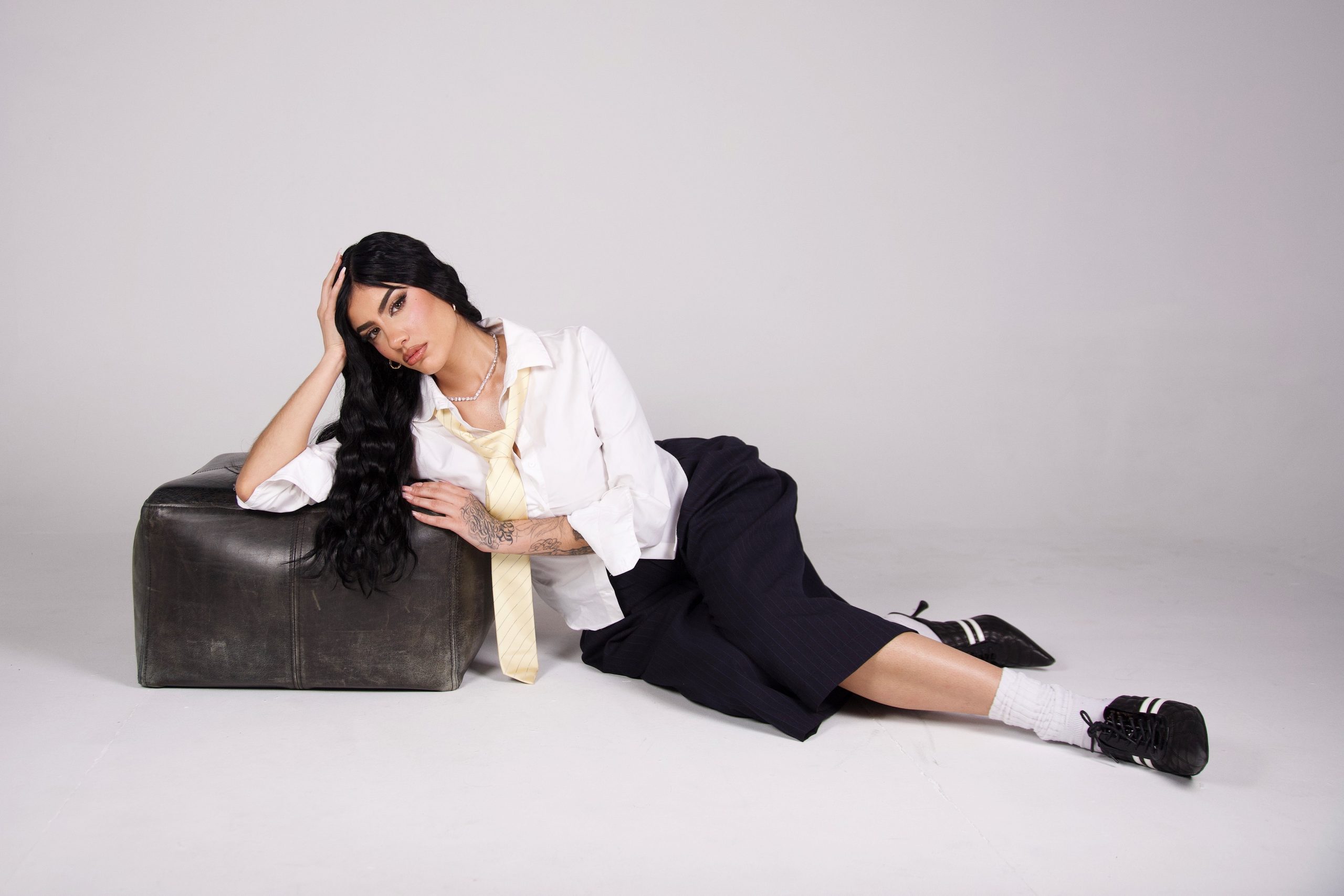
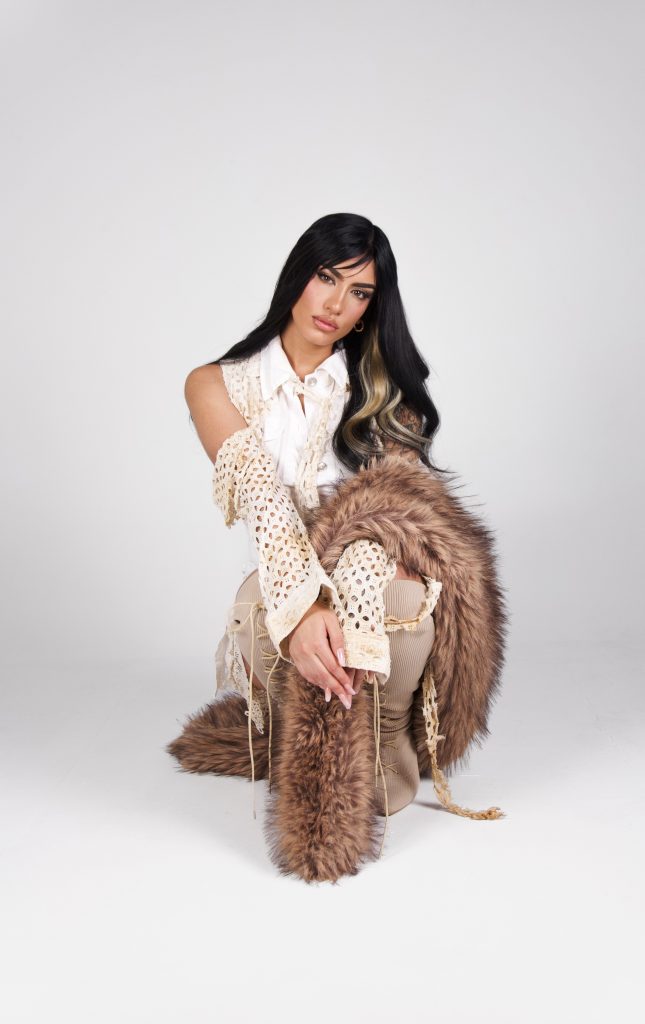
ALBANY SPEAKS ABOUT THE WORLD OF 333
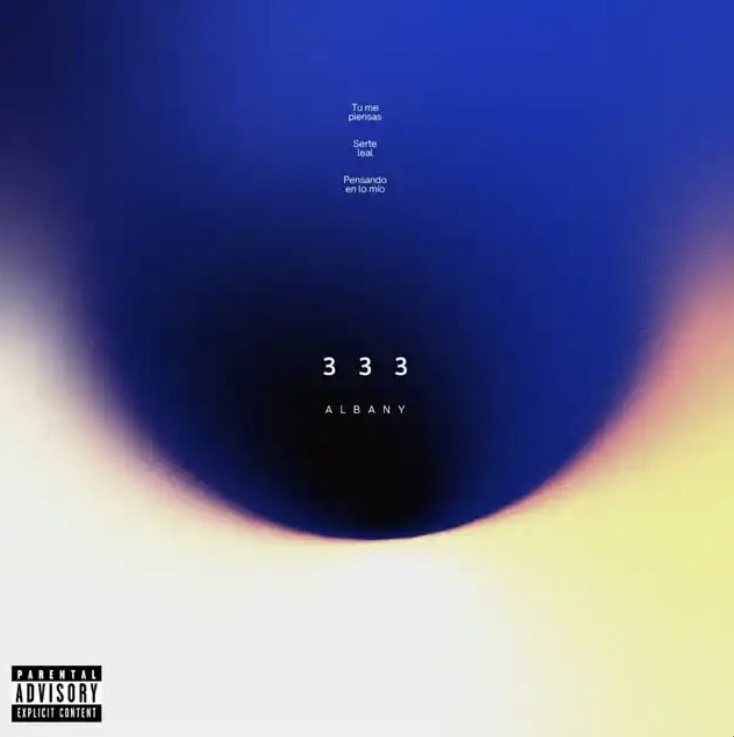
In the wake of a midnight release, Albany finds herself in a familiar yet ever-evolving headspace: the quiet satisfaction of having shared something deeply personal, quickly followed by the itch to create again. Her latest project, the EP “333,” marks a sharp turn from the expansive, collaboration-heavy universe of “Estaba Escrito.” Stripped down to just three tracks and shaped in close collaboration with producer Benzie, this new chapter leans into intimacy, spontaneity, and emotional clarity.
In this conversation, Albany reflects on the symbolism behind “333,” her connection to spirituality and numerology, and the organic creative process that defines her music. She opens up about reinterpreting Rosalía’s “Dolerme,” her evolving aesthetic, and the balance between visual identity and artistic substance in today’s fast-paced music landscape. From freestyle-driven songwriting to her place within the Scrapworld community, the interview captures an artist in motion: constantly shifting, questioning, and redefining her own boundaries.
Álvaro Ramos: How are you feeling after launching the project at midnight?
Albany: I’m doing well. Whenever I release something, I feel like someone who’s just had a baby, like: it’s finally out. And then I start thinking about the next thing.
AR: I’ve been thinking a lot about how your last project was huge. “Estaba Escrito” was a massive compilation, and now you’ve gone on to a three-song EP. How did that happen?
A: I think you have to do different things, and you can’t always be doing the same thing. The previous work has nothing to do with this one: not in the number of songs, not in collaborations, not in anything. I also didn’t want to bore people by constantly releasing things. I have a ton of music—I could release 500 songs if I wanted—but I decided to do it in smaller doses, also to give myself a little breathing room.
AR: Does the title “333” have anything to do with numerology?
A: A little bit, yes. It’s a number associated with growth, with new things, and it coincides with a very good period in my life. It’s reflected quite a bit in that. But it also came about naturally: several songs had a kind of fixation with that number.
AR: You released “Dolerme” at the beginning of 2026, just recently. How does it fit into your career rollout this year?
A: It’s a separate single. It’s actually a Rosalía song, a cover. We made it at a music camp with girls for an Amazon Original. I didn’t feel like it was entirely my own; they asked me to do a cover and I chose that one, out of respect. And it became a single.
AR: What do you feel about “Dolerme”? Why did you choose it?
A: I feel like it fits my style better, that I can represent it better. There are Rosalía songs that I’m nowhere near as good as, but this one is simpler: guitar, something intimate, expressing feelings about a somewhat toxic relationship. It’s very simple and fluid, and I connected with it naturally.
AR: Do you feel personally addressed by Rosalía’s message in «LUX,» considering the angelic numbers like 333?
A: I was already a believer before that; it’s not that Rosalía made me believe in God. I do have songs that are directed to God, even though I haven’t released them. In fact, I had one called «My God.» But it’s something that’s always been a part of me: gratitude, talking to the universe, to the moon, to God… It runs parallel to the music.
AR: Introspection is key for an artist. On this EP, all the production is by Benzie. What was it like working with him?
A: I met him years ago at a session. There was another producer, but I connected more with Benzie, and we ended up working together. We started talking, making music, and that was it. We’re also friends: we teach each other things, share ideas… We understand each other very well, and we’ve been working together for years.
AR: Was it like the perfect collaboration?
A: Yes, although it wasn’t planned. I didn’t think, «He’s going to be my producer.» I work with other people, but he’s the one I call the most. It’s all very organic.
AR: There’s a narrative evolution in the EP: «Tú me piensas» (You Think of Me), «Serte leal» (Being Loyal to You), and «Pensando en lo mío» (Thinking About Myself). How do you work with those points of view?
A: I don’t realize when I do it. I just sing, that’s it. Then everyone interprets it in their own way. But yes, each song has a different perspective, as you said.
AR: Tell us your favorite verse or something special about each track.
A: It’s complicated because I work a lot from a freestyle perspective and I don’t learn the lyrics that much. But «Serte leal» is more of a fantasy, something imagined, not necessarily lived. The others are more literal, more me. But specific phrases… I like them all.
AR: Speaking of sexuality, how do you relate to it in your music? Do you feel like you’re hypersexualized?
A: Not too much. I could even explore it more. I’d like to make more explicit music videos. Sometimes I’m very sexy, other times I’m in flip-flops… it depends on the day.
AR: Aesthetically, you’ve evolved a lot. What has that change been like?
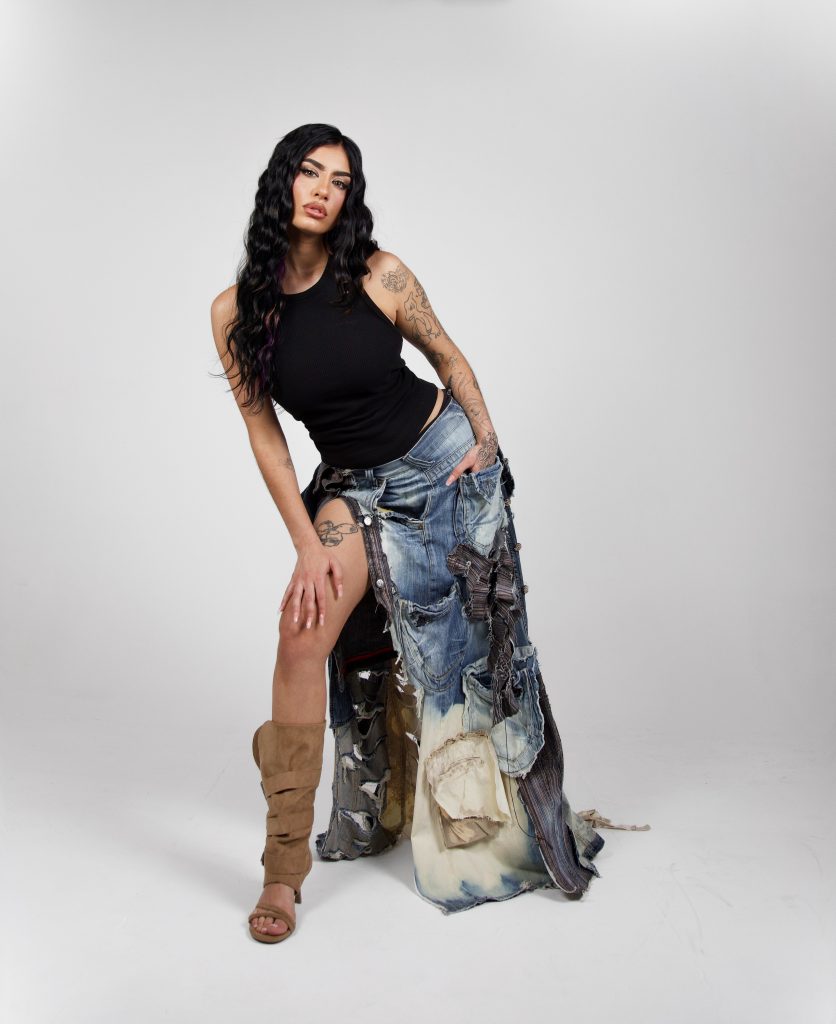
A: I get bored always doing the same thing. I could stick to one style and exploit it, but I need to explore. I like anime, video games… I’ve already tried that and I know I can go back to it whenever I want, but now I want to experience other things.
AR: How important is fashion to you as an artist?
A: It doesn’t matter too much to me, but I know it’s very important these days. People are drawn in by the visuals. Even so, it saddens me that it carries more weight than the music. We live in an age of constant stimulation, and it seems that whoever generates the most impact wins, but that doesn’t fulfill me.
AR: Is that why you’re not on the EP cover?
A: Of course. It seems obligatory to be on the cover now, but I want people to listen to the music. I don’t care about the rest.
AR: Recommend a video game or anime.
A: I haven’t been playing much lately, but my favorite will always be Tekken. I definitely recommend that one.
AR: And what do you think about Scrapworld being inspired by Tekken?
A: It makes sense, because a lot of people associate me with that aesthetic. It’s a part of me.
AR: How do you see yourself within Scrapworld this year?
A: We’ve taken an important step. I just released the EP and I’m going to present it there, so it’s really cool.
AR: What do you think of these platforms for the urban genre?
A: They’re important. They support artists and create community. Without that, many things wouldn’t exist.
AR: Are you looking forward to performing at Isla Azul?
A: Yes, although I’m curious to see what it will be like. But I’m looking forward to it.
AR: To finish up, what songs of yours would you recommend to someone discovering you for the first time?
A: I’d tell them to listen from the oldest to the newest. Although I’m a little embarrassed to listen to my old songs myself. In the end, it depends on the mood: each song fits a different moment.
Questions by @alraco43