
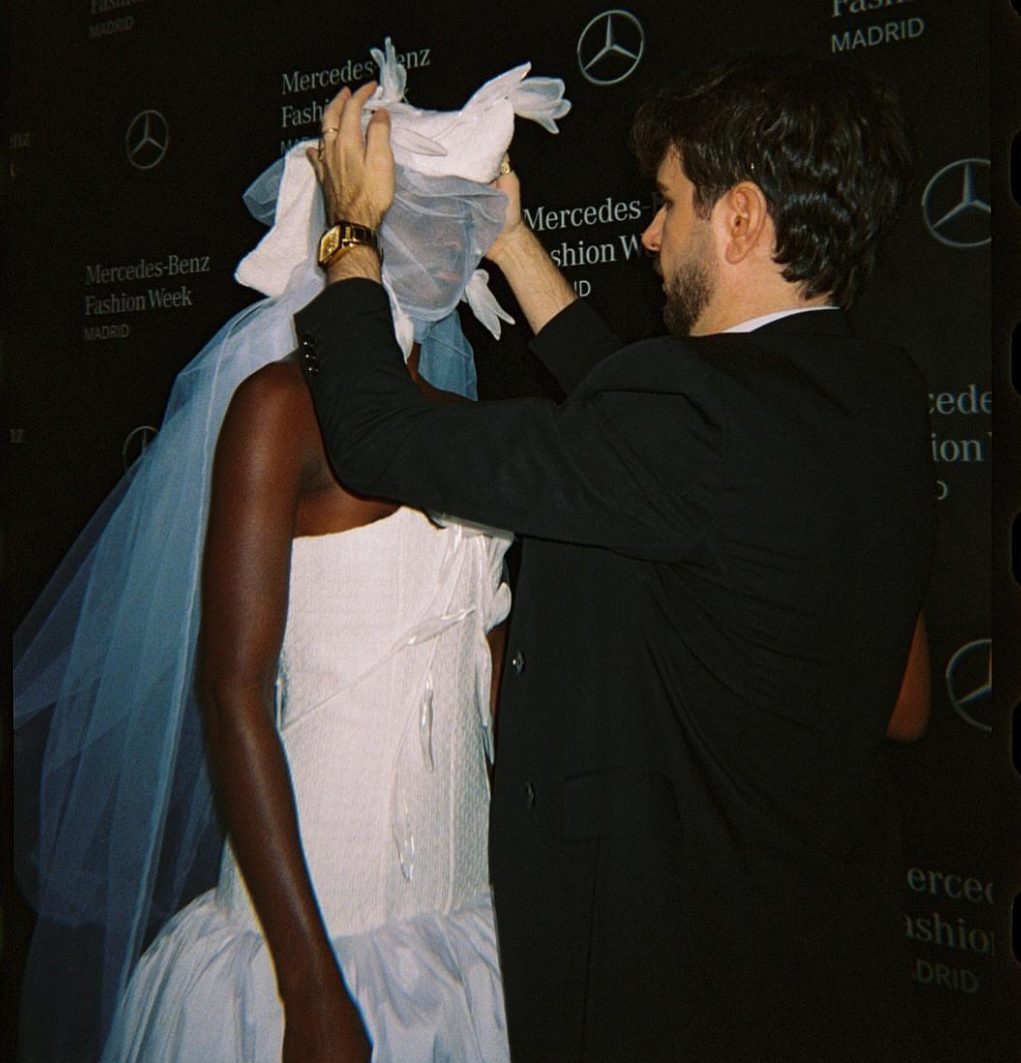
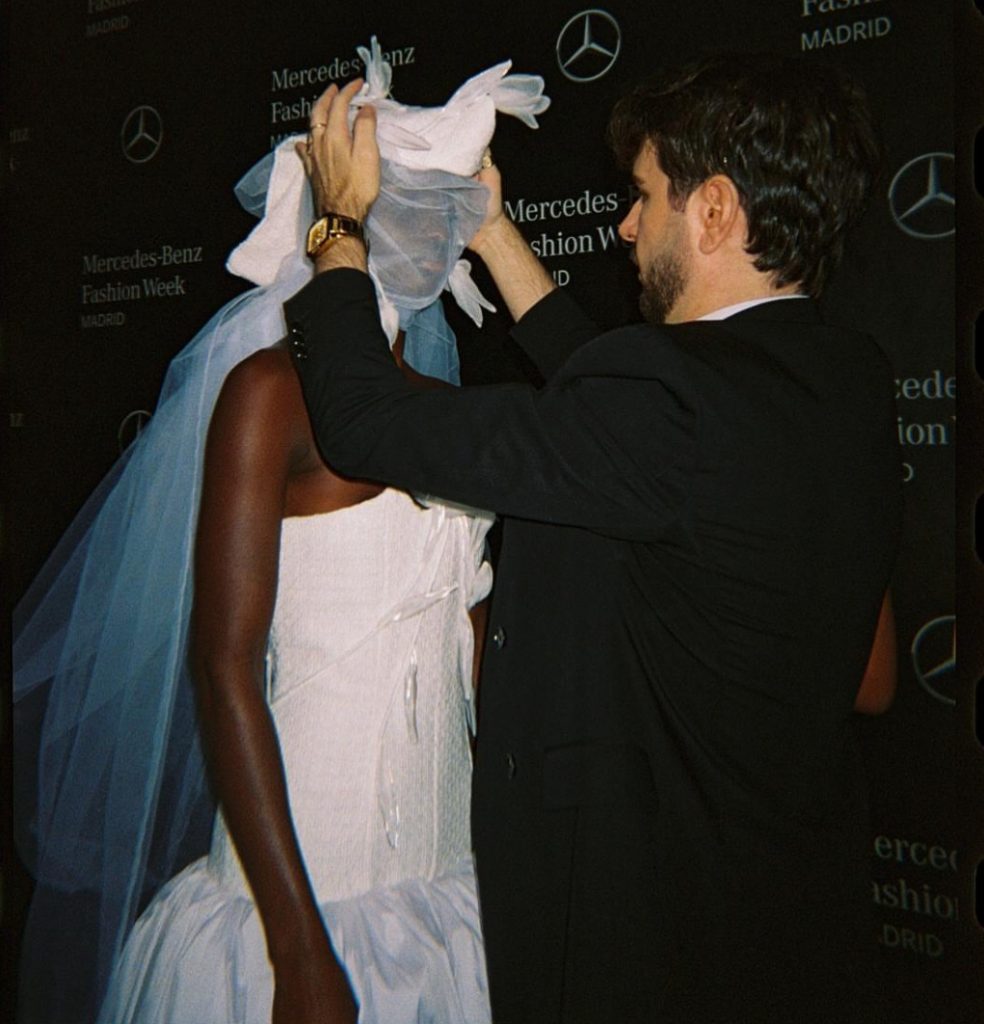
ANTONIO DEL CANTO: AN IN-DEPTH INTERVIEW
Antonio del Canto belongs to a new generation of designers who understand fashion as a poetic language, capable of translating emotions and cultural references into silhouettes and fabrics. Trained at UDIT, he developed a vision that combines the conceptual with the sensory, the academic with the instinctive. Between Madrid and Paris, he has built his own universe where literature, film, music, and a romantic theatricality coexist, becoming his personal hallmark.
His collections, such as “Kiss Me at the Gate,” inspired by Anna Karenina, or “Vertige,” focused on altered states of consciousness, reveal a restless mind, obsessed with the beauty of the ephemeral and design’s capacity to tell stories. In his work, fabrics are not just material, but a vehicle for emotion. With a precise balance between fantasy and functionality, Antonio del Canto transforms fashion into an act of introspection.
Clara Fernández: Antonio, when did you discover you wanted to dedicate yourself to fashion, and how did your journey in this world begin?
Antonio del Canto: I discovered my passion for fashion at a very young age, almost inevitably. In my home, there was always a natural inclination towards dressing well, an almost ritualistic respect for how one presented oneself to the world. My mother, in particular, was my first muse: her attention to detail, the elegance with which she combined colors and textures, and the care with which she chose each garment profoundly shaped my aesthetic sensibility. As a child, I used to take scraps of fabric I found around the house to improvise dresses for my dolls; in that childhood game, my first intuitions about proportions, the drape of fabrics, and the pleasure of transforming a simple piece of cloth into something that told a story were already emerging. That playful impulse grew until it became an undeniable vocation: I understood that fashion design was the language with which I wanted to express my way of seeing the world.
CF: What memories do you have of your time at UDIT? How did your university influence your understanding of design?
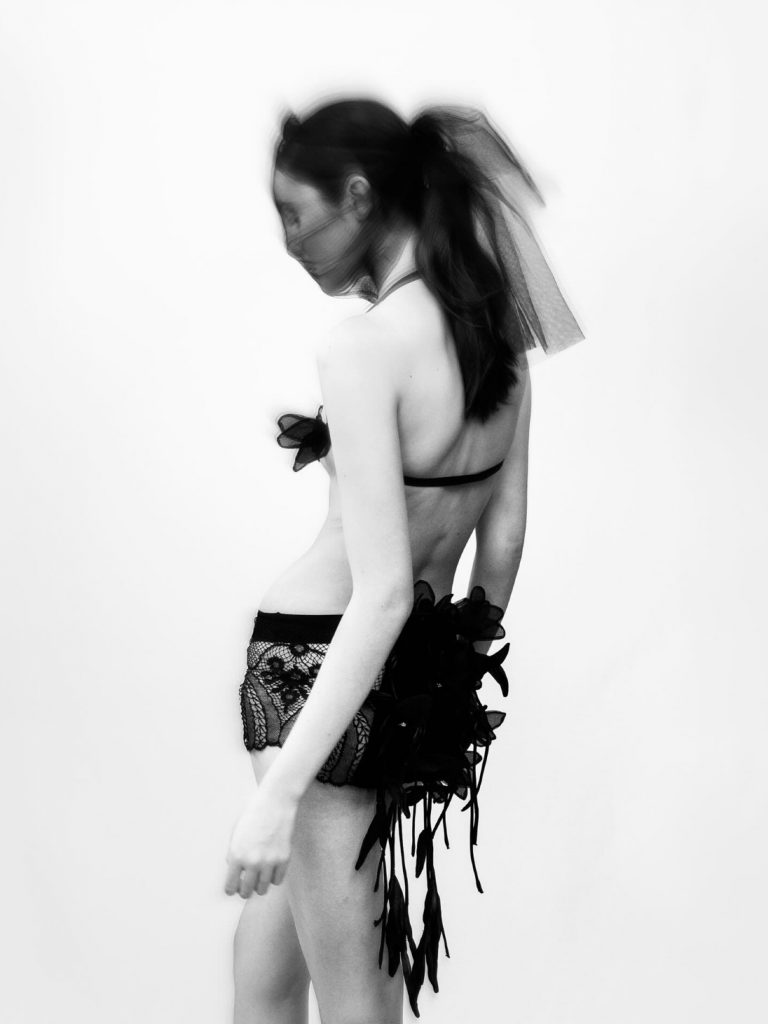
ADC: My time at UDIT was a period of revelations. More than a place of technical learning, which it was, it was the space where I began to understand fashion as a cultural discipline and an artistic language. I remember the long afternoons in the workshop, the constant sound of the sewing machines, and the exchange of ideas with professors and classmates who shared the same passion. There I discovered the importance of rigor in pattern making and the weight of conceptual research; I learned that behind every silhouette there must be a reason, a story, an emotion. UDIT taught me to respect both the artisanal process and critical thinking, values that continue to guide my work today.
CF: You have worked between Madrid and Paris: what differences do you find in the way fashion is created in each city?
ADC: Madrid has a warm, intimate pulse, where fashion engages with tradition and the vibrant character of the city. There, creativity feels spontaneous, intuitive, marked by Mediterranean energy and Spanish cultural history. Paris, on the other hand, possesses a refined solemnity: it is more analytical, almost philosophical; Every stitch seems to hold a thought, every detail becomes an aesthetic statement. In Madrid I found passion and a sense of belonging; in Paris, precision and contemplation. Working between both cities has allowed me to combine the best of these two worlds: the emotional depth of Madrid and the intellectual poetry of Paris.
CF: Your collections breathe literature, film, and music. What artistic disciplines are your greatest source of inspiration today?
ADC: Literature continues to be my greatest source of inspiration: complex characters, their moral dilemmas, atmospheres charged with emotional tension—all of this awakens in me the desire to translate these narratives into silhouettes and textures. Film, especially expressionist films and those that delve into the psychological limits of their characters, also feeds into my approach to color and light in my collections. Finally, contemporary music, with its minimalist and melancholic character, influences the rhythm with which I envision the runway shows and the movement of the garments.
CF: Which designers (past or present) do you consider guiding lights in your work?
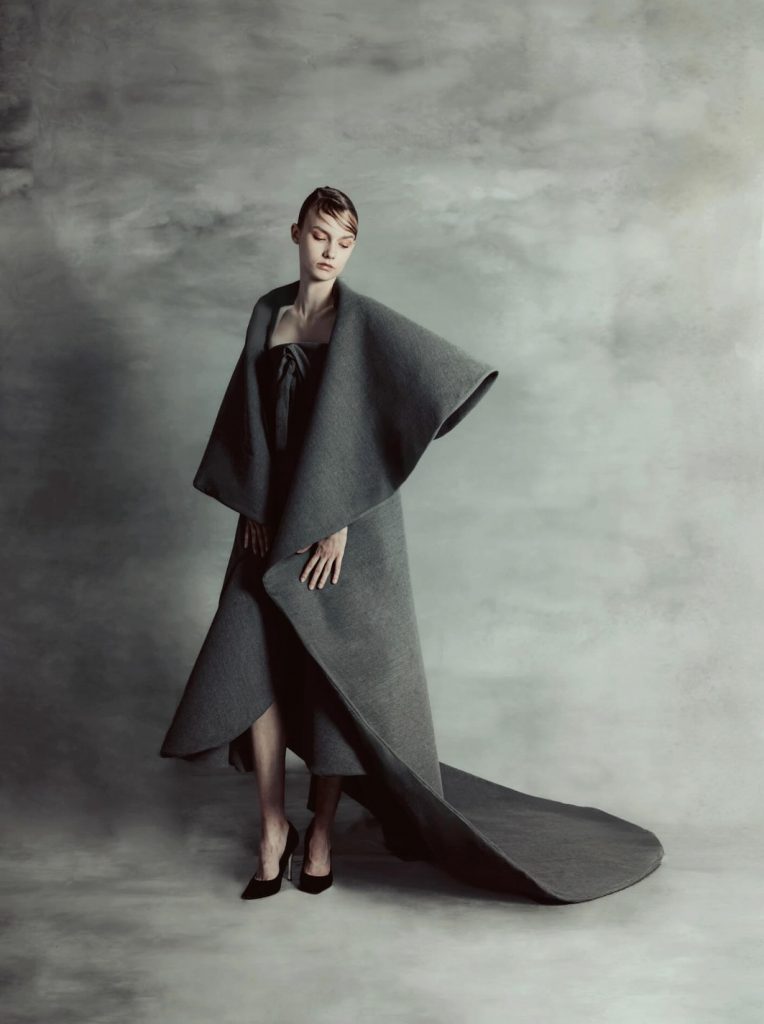
ADC: My references are guiding lights that illuminate different aspects of my creative identity. Cristóbal Balenciaga inspires me with his mastery of the architectural construction of garments; each of his cuts seems sculpted in the air. Alexander McQueen influenced me with his visceral theatricality, his courage to blur the lines between fashion and art. And John Galliano, with his talent for romantic drama and his sense of spectacle, reminds me that fashion is also pure emotion, staging, and narrative. They, from different eras and perspectives, have forged paths that I admire and that, at times, resonate with my own creative quest.
CF: Do you have a creative obsession that always reappears in your designs?
ADC: I have a constant obsession with the contrast between fragility and structure. I’m drawn to the idea of bodies that seem suspended, light, but that at the same time are supported by invisible structures beneath the fabric. This dialogue between the ethereal and the solid echoes in almost all my collections.
CF: Kiss Me at the Gate was inspired by Anna Karenina. What drew you to that story and made you want to transform it into fashion?
ADC: Kiss Me at the Gate arose from my fascination with Anna Karenina. I’ve always been moved by Anna’s tragic fate, trapped between love and duty, between desire and social condemnation. I was interested in capturing the instant before the fall, that tension between passion and the abyss. The garments were born to reflect a suspended romanticism, almost frozen in time, where the viewer could feel that the drama was about to erupt.
CF: In Vertige you explored altered states of consciousness. How do you translate such abstract ideas into silhouettes and fabrics?
ADC: In Vertige, the challenge was to materialize altered states of consciousness: to translate vertigo and the feeling of disorientation into cuts that defied the body’s usual verticality, into fabrics that seemed to move on their own, and into colors that evoked dreamlike flashes. My goal was to construct the experience of a dream in motion, in which the viewer perceived the imbalance and emotional instability.
CF: What part of the process do you enjoy most: the research, the pattern making, the fabric experimentation, or the runway presentation?
ADC: The stage I enjoy most is the research: getting lost in books, archives, and pictorial references allows me to find the essence of each project. Experimenting with fabrics is also especially stimulating: when a concept begins to acquire weight, texture, and volume, something almost magical happens, as if the ideas come to life.
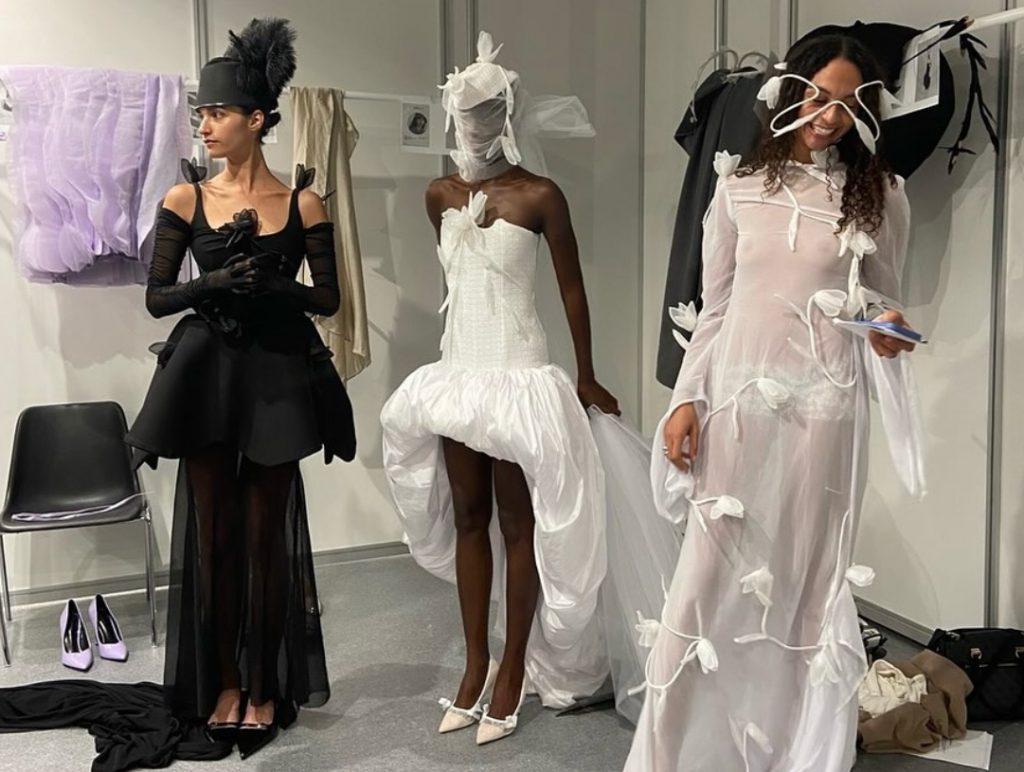
CF: Your pieces combine the theatrical with the romantic. How do you balance fantasy with functionality?
ADC: To balance fantasy and functionality, I strive for the garment to maintain harmony with the body and allow movement, even if its appearance is theatrical. I believe that fantasy should beautify and evoke emotion, but never imprison. A garment should be experienced, not just contemplated.
CF: You work with very diverse materials, from taffeta and satin to linen and twill. What do you look for in a fabric before including it in a collection?
ADC: A fabric has to seduce me before I choose it: its drape, its weight, its texture, and the way it reacts to light determine whether it fits the spirit of the collection. Often, rather than imposing a shape, I let the fabric itself suggest the silhouette.
CF: What role does sustainability play in your fashion production process?
ADC: Sustainability is a value I strive to integrate consistently and responsibly. I try to choose materials from controlled sources with a lower environmental impact, reduce surplus, and design timeless collections that are meant to be kept, not discarded after a season. Fashion should aspire to last, not to be consumed without measure.
CF: How would you define the identity of your brand, “Antonio del Canto,” in three words?
ADC: The identity of my brand could be defined in three words: Dark Poetic Romanticism.
CF: What emotions do you want to evoke in those who wear one of your garments?
ADC: My intention is to awaken in those who wear my garments the feeling of being part of an intimate story, of inhabiting a moment that belongs only to them, of becoming the protagonists of a memory that will remain linked to that piece.
CF: If your fashion could be told as a poem, what verses would it contain?
ADC: “Between folds of light and shadow, the fabric recalls the hands that dreamed it, and the body, upon wearing it, discovers itself anew, as if the garment were whispering its own story.” (“Entre pliegues de luz y sombra, la tela recuerda las manos que la soñaron, y el cuerpo, al vestirla, se descubre nuevo, como si la prenda le susurrara su propia historia.”)
CF: What was it like to see your name on the Allianz EGO runway for the first time?
ADC: Seeing my name on the Allianz EGO runway was an experience that mixed disbelief, pride, and gratitude. It was the moment I understood that years of quiet work were finding an echo on the stage. I felt that my creations, until then intimate, finally belonged to the public.
CF: What does it mean to you to be part of this platform for emerging talent?
ADC: Being part of this platform means being part of a generation that seeks to renew the language of Spanish fashion with new narratives. Allianz EGO is not just a showcase; it is also a space for dialogue, collective learning, and community among young creators.
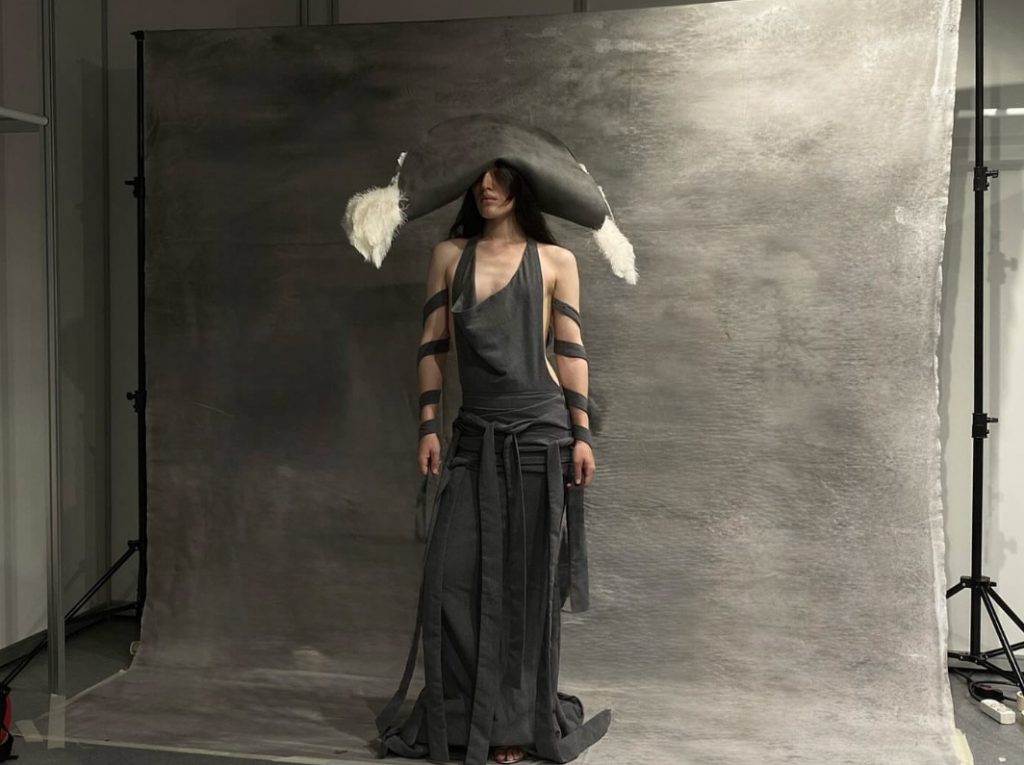
CF: What projects are you working on now, and where would you like to take your brand in the coming years?
ADC: Right now, I’m working on a collection that explores the idea of refuge: garments that protect the body and, at the same time, emotional memory. In the future, I would like to take my brand towards collaborations with visual artists and the performing arts, blurring the lines between traditional fashion shows and performative experiences that unite fashion, theater, and visual arts.
Questions by @claraafernandez_
translated by @alraco43