
ASIER QUINTANA: AN IN-DEPTH INTERVIEW
Asier Quintana is a Spanish designer currently experiencing a period of personal and artistic consolidation, using fashion as a tool for reflecting on identity and clothing. His practice goes beyond mere aesthetics: he seeks to question structures of gender, power, and taste, reinterpreting established codes and proposing new critical readings of fashion. Since graduating in 2021, Quintana has chosen to work independently, building his own universe where artistic coherence coexists with market demands. His approach combines personal introspection with a constant dialogue with history and society. In her upbringing and sensibility, the women in her family—her mother, grandmother, and aunt—played a key role, awakening her curiosity for clothing and dressmaking, while professional role models such as Alexander McQueen, Ann Demeulemeester, Rei Kawakubo, and John Galliano taught her to see fashion as a language capable of unsettling, moving, and challenging norms without losing its humanity.
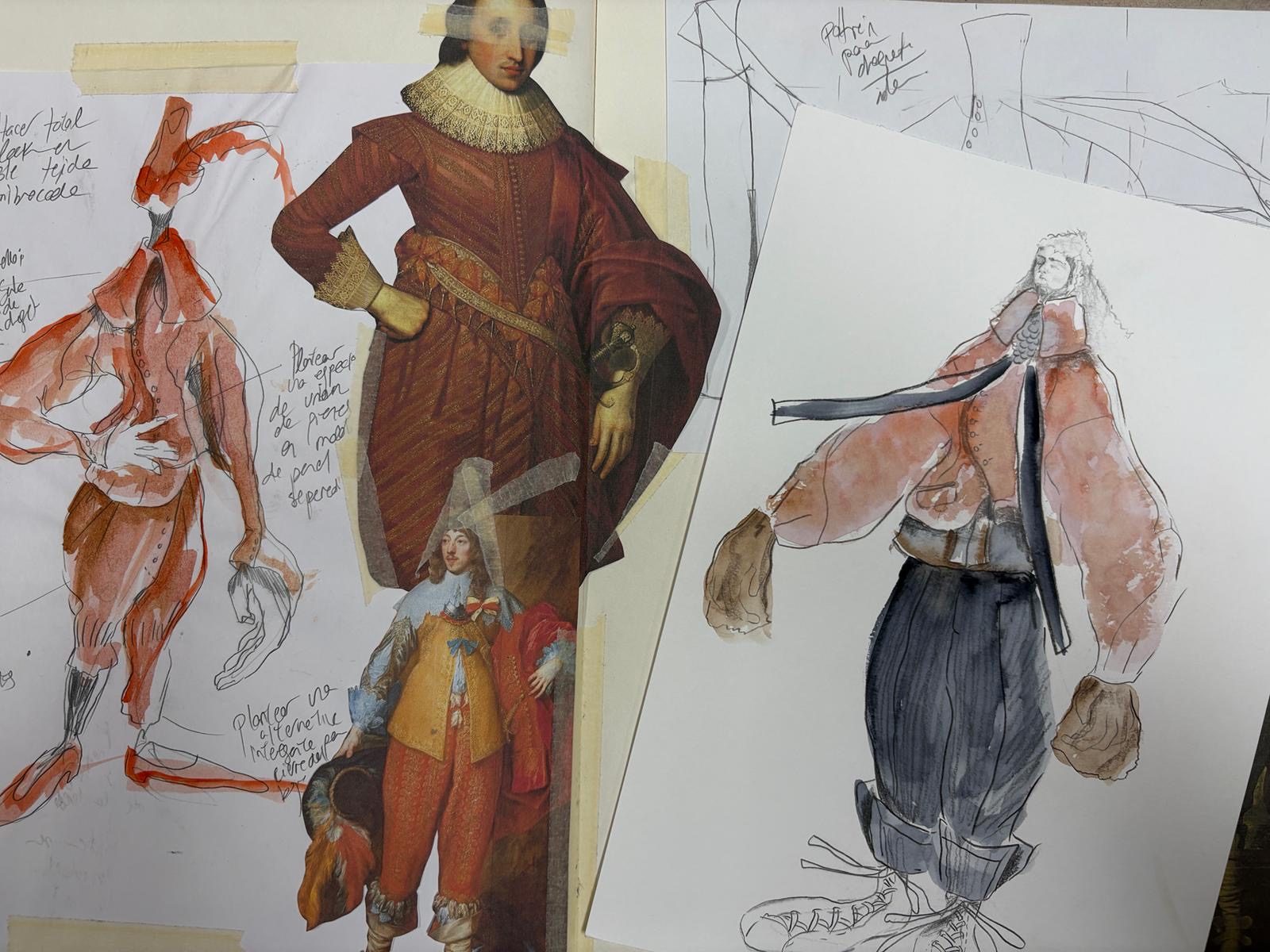
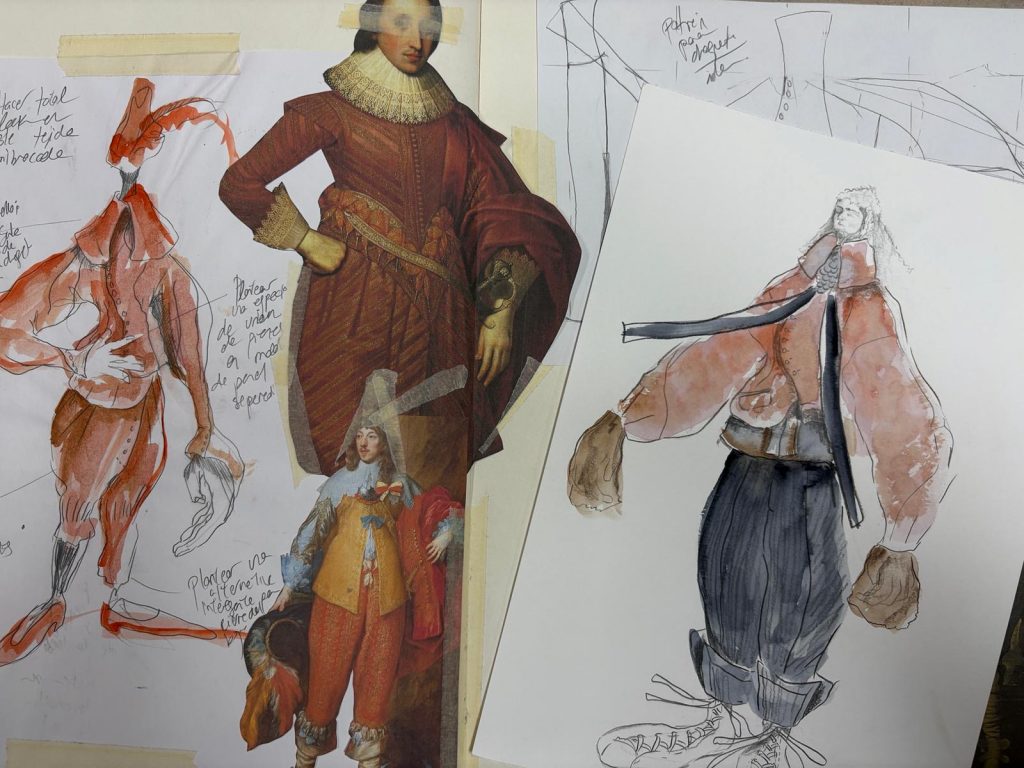
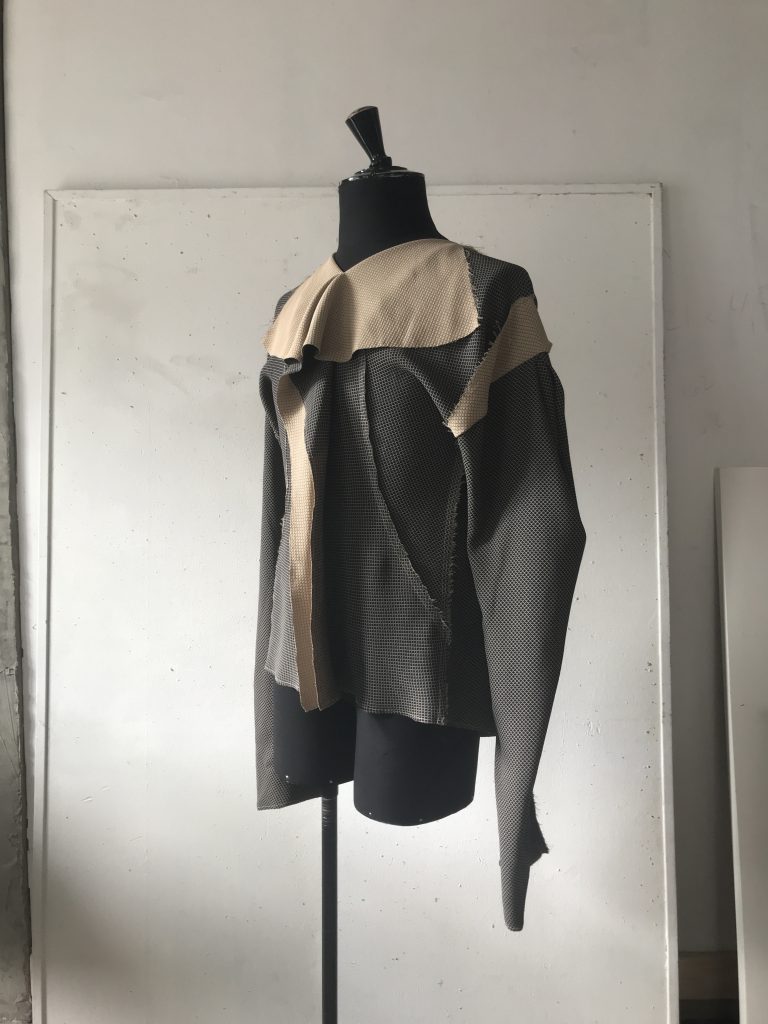
Her Crisis collection, presented on the EGO runway at Mercedes Fashion Week 2025, arises from the combination of history and introspection. Inspired by Spanish Baroque opulence and Virginia Woolf’s novel «Orlando,» the collection explores the tension between restriction and freedom, between excess and purification. Through interrupted cuts, distorted proportions, and recycled or vintage materials, the collection translates «crisis» as a process of transformation and liberation, where rigidity coexists with fragility and emotion.
Autobiographical and socially conscious, Quintana’s work addresses identity, masculinity, and belonging, as well as his commitment to visibility and empathy for the LGBTQIA+ community. For Quintana, fashion remains a valid language for telling profound stories, provided it is practiced with intention, honesty, and emotion, reclaiming craftsmanship as a sign of authenticity and sustainability. He is a designer who combines historical rigor, poetic sensibility, and social reflection, building collections that invite the public to feel, question, and explore fashion as a space of living identity and transformation.
Rahel Martinez: How would you define yourself now, at this point in your career, as a person and as a designer?
Asier Quintana: I would say that right now I’m in a moment of personal consolidation, but also of reflection. This collection has been a starting point for reactivating codes that had become somewhat dormant. After years of training and exploration, I feel that my practice has become a tool for reflecting on identity and clothing, rather than a simple aesthetic exercise. As a designer, I’m interested in understanding fashion as a language capable of constantly questioning structures of gender, power, and taste, and of reinterpreting the codes we take for granted.
RM: When did you decide to embark on this journey as an independent designer, and what challenges did you encounter?
AQ: This decision to work independently arose organically after my graduation in 2021. I wanted to continue working on building my own universe, giving myself time to understand my role as a designer in the current context. There are many challenges in this process, and undoubtedly one of them is meeting market demands without losing artistic coherence. Throughout this process, I’ve had the support of BIAAF, for which I’m very grateful. They’re helping me translate that universe and understand how my work can engage with the industry without losing its honesty.
RM: Who would you say is the person (from the fashion world, or from your family…) who most influenced your entry into the world of fashion?
AQ: More than a single person, I’d say it was the women in my family—my mother, my grandmother, and my aunt, among others—who sparked my curiosity about clothing and dressmaking. My grandmother was a seamstress in the town where I was born, and she’s always been a part of the family. Professionally, I’ve always been influenced by designers who have approached fashion as a form of discourse: from Alexander McQueen and Ann Demeulemeester to Rei Kawakubo or John Galliano in his more theatrical phase. I’m interested when fashion becomes uncomfortable, vulnerable, and profoundly human. I remember watching a documentary about Jean Paul Gaultier as a teenager and feeling a very strong connection with what I was seeing: that freedom, that sensitivity, that gentle provocation that challenged norms without losing tenderness.
RM: What were your main influences (artistic, poetic, literary, fashion-related) in creating “Crisis”?
AQ: Crisis was born from the intersection of two axes: history and introspection. On a historical level, I was interested in studying the restrictions on men’s clothing during the reign of Philip IV in Spain, a time when Baroque opulence coexisted with the new political convictions of the reign (an idea I came to understand in depth thanks to the podcast Las Hijas de Felipe, which helped me better grasp that historical context). At the same time, Virginia Woolf’s Orlando, in its film adaptation, provided the poetic and emotional dimension: that search for identity beyond time and gender.
RM: Why did you choose the title “Crisis” and what meaning did you want to convey with it?
AQ: The full title is ‘Crisis: The Journey of the Decadent and Corrupted Mind’. The title arose from the multiple social and historical tensions of the 17th century. Likewise, the concept of transition in Orlando’s story has greatly influenced the idea of the ‘Journey’. Crisis doesn’t originate solely from a negative place, but rather as a turning point, a moment in which mental, aesthetic, or ideological structures crumble to give way to something new. It is a journey through the torments of the mind, corrupted by opulence and excess, but also a gesture of liberation, allowing us to understand crisis as a possibility for transformation.
RM: At what point did that name appear in the creative process?
AQ: It appeared relatively early on. One day, while I was out for a run in one of my favorite parks in Copenhagen, it just came to me. Initially, the title was going to be Cry-cis, with the idea of satirizing the crisis of masculinity that ‘Las Hijas de Felipe’ (The Daughters of Felipe) talked about in their podcast. As the project progressed, I changed it to ‘Crisis,’ since it more accurately encapsulated that duality of collapse and opportunity, and was also a somewhat more ambiguous term, open to interpretation.
RM: How is the concept of “crisis” literally translated into the garments? Is it seen in the broken structures, layering, cuts, materials…?
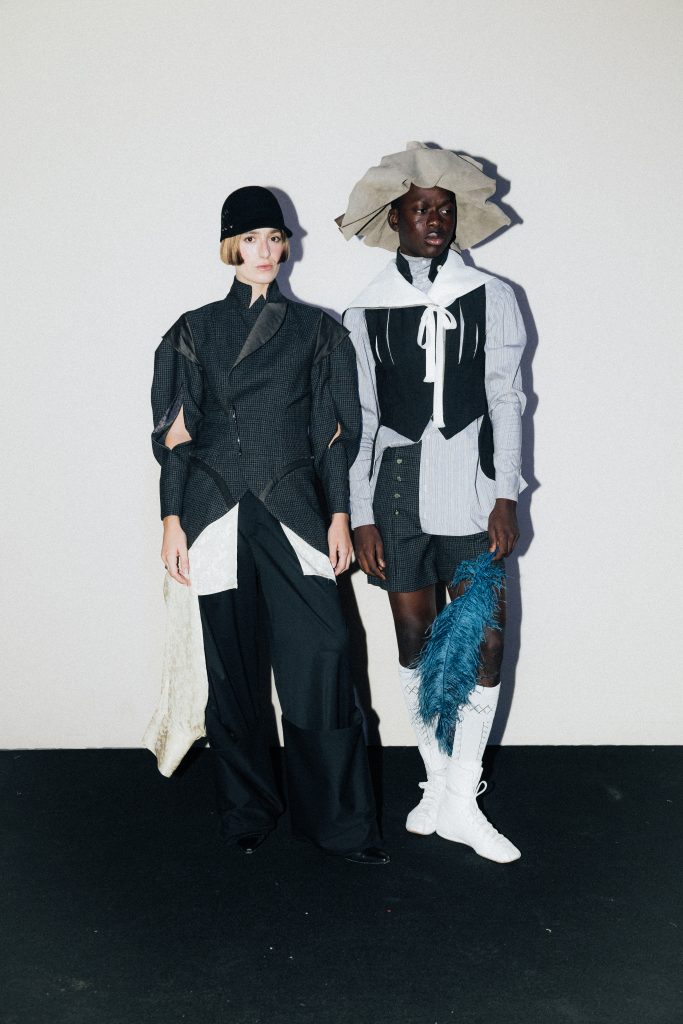
AQ: The crisis manifests itself in many ways in the collection: in the interrupted cuts, in the distorted proportions, in the garments that seem to contain an internal movement. Also in the mix of textures, in the pops of color, in the contrast between the rigidity of classic tailoring and the fragility of materials like chiffon or silk. This visual friction translates the conflict between control and excess, between the imposed and the spontaneous.
RM: Did you play with the idea of restriction vs. freedom in the physical design (fits, closures, rigidity…)?
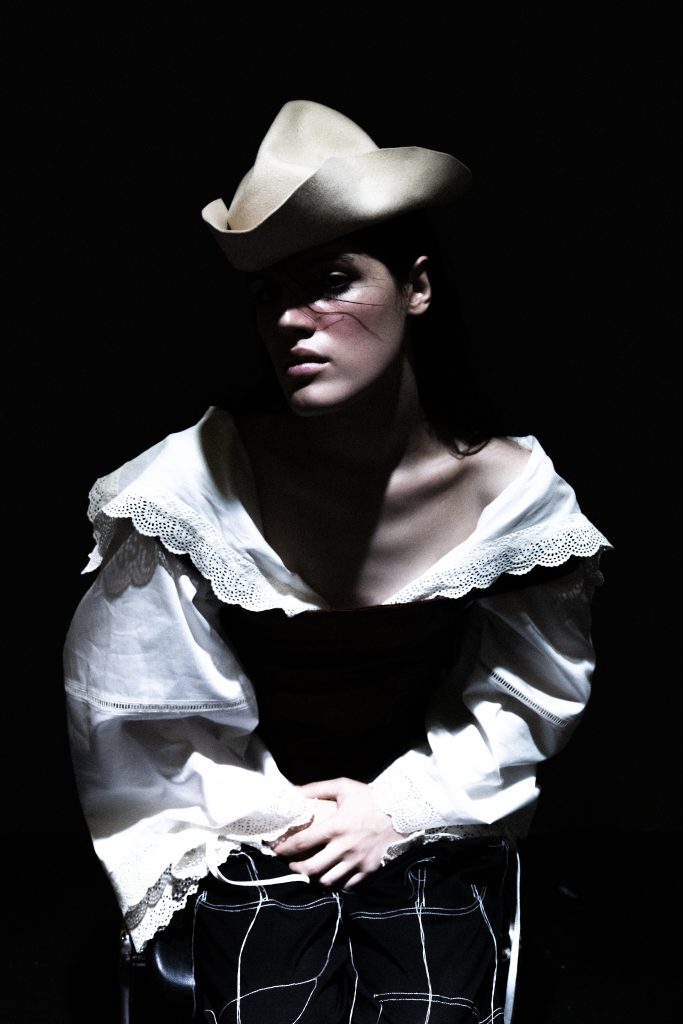
AQ: In a way, yes. This idea of restriction versus freedom isn’t new, and I unconsciously introduced it, especially when developing the styling of the collection. Likewise, there are elements like high collars and closed cuffs that appear sporadically throughout the collection, emphasizing this idea of transition, while other garments feature slashed details or more fluid fabrics that move with the body. It’s about creating a bit of an illusion that beneath these outer garments lie more intimate and vulnerable worlds, like pajamas or nightgowns for this whole unrestrained court.
RM: How is the collection reflected in the materials you used? Did you look for “torn,” rough, contrasting materials?
AQ: More than torn, the materials express ideological contrasts. I was very interested in the idea of conveying the opulence of the early Baroque period, and reinterpreting our decadent idea of the term ‘Baroque,’ with the twist that this opulence isn’t real, but rather an illusion. Although the fabrics used are of fantastic quality, they are mostly stock fabrics, vintage, or salvaged from flea markets and the like. Many of them are literally old napkins, tablecloths, or upholstered cushion covers. There is a beauty in the old that has already been lived in, an emotional patina that fits very well with the idea of crisis as a process of memory and transformation.
RM: Is there a narrative within the collection—for example, that it starts more rigid and ends more liberated—or is it all constant tension?
AQ: Yes, the collection was conceived with a clear narrative evolution. The collection begins in a more decadent, volatile territory with voluminous silhouettes and ornate embellishments. As it progresses, the forms lighten, the colors mute until they reach black, as if the body had undergone a purification process. It’s a journey from excess to sobriety.
RM: Did you use wear and tear, deformation, or exaggeration as a visual resource to speak of the collapse of an aesthetic or a system?
AQ: Yes, albeit subtly. I’m not interested in literal chaos, or at least not in this collection, but rather in that feeling of something crumbling from within. In some cases, the garments are deliberately unbalanced or feature controlled deformations.
RM: Is there anything autobiographical in this collection? Have you recently experienced any kind of “crisis” that has impacted you?
AQ: Yes, inevitably every project has an autobiographical component. Crisis stems from a period of introspection and personal questioning, not only about identity and masculinity, but also about the place of those of us who design in an increasingly depersonalized system, and in a very unstable global sociopolitical context.
It is also influenced by my concern for the current situation of the LGBTQIA+ community, and by the need to create more empathetic spaces within and outside the creative field and the community itself. I am interested in the idea of using fashion as a vehicle to generate narratives that care for us, that embrace vulnerability and that desire to belong.
RM: What do you hope the public feels when they see “Crisis”?
AQ: I hope they feel that there is something alive, something that moves. That it is not just an aesthetic proposition, but an emotional dialogue. Crisis speaks of the loss and regaining of control, of what is crumbling, of what needs to be examined anew. Liberation can be a good way to feel after seeing it: confusion, questioning, joy, tension… Every emotion has its place. I’m not looking for definitive answers, but rather honest sensations.
RM: Are there any misinterpretations of the collection that concern you, or is everything open to interpretation?
AQ: There can always be diverse readings, and that’s part of the dialogue with the public. I try to reflect on possible interpretations and approach them with empathy. I’m aware that, when working with historical references, it’s often inevitable to start from imagery and references linked to the European and white upper class, since that’s the most documented part of history. However, instead of reproducing them, my intention is to question them from within: to examine the cultural codes I grew up with and propose new critical readings. It’s not about idealizing that past, but about exposing it, revising it, and transforming it into something else.
RM: Do you think fashion is in a real crisis? (of meaning, production, speed)?
AQ: Yes, profoundly. But it also presents us with a window, an opportunity to reset and rethink its relevance in the context of the 21st century. There is a clear overabundance that is overwhelming, and this has not only led to a loss of its symbolic meaning, but also a loss of awareness of what lies behind each garment. I know it sounds very idealistic, but we must stop and rethink from other perspectives: slower, more human, more conscious. After all, everything involved in creating a garment is a very artisanal process, from the textile production and pattern making to ensure a perfect fit, down to the smallest detail of a button. We have to reclaim that craftsmanship.
RM: What role do you think emerging designers will play in this change? Will they be the ones who drive it or the ones who suffer from it?
AQ: Probably both. Emerging designers are the ones who feel the weight of an saturated system the most, but we are also the ones who have the capacity to propose alternatives. I’m not certain how the situation will change, but I am hopeful: I believe that change will be possible if we manage to support each other as a creative community, not only for our generation, but for those that come after us.
RM: Do you think there is room in the market for proposals that are unsettling, that are not easy to digest or sell?
AQ: There always have been, which is why I really enjoy delving into the history of fashion in general. Designers and artists that we venerate today were the subject of ridicule and bewilderment when they started out. Designers like Rei Kawakubo and Yohji Yamamoto challenged the glamour of the 80s with their completely black, baggy, unstitched collections, etc. The market and the public didn’t necessarily understand it, and it was sold as one of the most radical proposals in fashion. Years later, its trajectory is undeniable. I like to think there’s always an audience that seeks them out, and I believe that proposals that are unsettling or questioning are necessary precisely because they open up space for critical thinking. But therein lies our work and the challenge: knowing how to communicate those proposals.
RM: Do you think fashion is still a valid language for telling profound stories, or is it becoming devoid of meaning?
AQ: It still is, but it depends on how it’s used. Fashion is a powerful language, even though it’s sometimes trivialized by its commercial environment. When you work from a place of intention, honesty, and emotion, you still have the capacity to move people, to tell stories, to transform. But it’s a very delicate balance; when it becomes your profession, it’s also what pays for the collections, the rent, the people you work with, etc. If profound stories and narrative can grant you that sustainability, then you’ve succeeded.
RM: What role do you think craftsmanship will play in the future of fashion?
AQ: Craftsmanship is an essential pillar of this industry. In an increasingly digital and ephemeral future, the hand, the gesture, and the time invested in a garment will be the true signs of authenticity. In my honest opinion, craftsmanship and the knowledge of these processes are key to making the fashion industry truly sustainable.
RM: How can you maintain a strong aesthetic identity without becoming repetitive or formulaic?
AQ: Honestly, I have no idea. This is something I think about a lot, and it terrifies and excites me at the same time. I’ve only just started my career as a designer, so I don’t have much to repeat yet, but I have found myself in situations where I tended to generate similar ideas, silhouettes, and so on. I believe that as long as an identity is built on coherence and honesty, it will maintain its essence. For me, identity is not a fixed point, but a practice in motion. Furthermore, I increasingly advocate for collaboration with other creative minds; a collective perspective allows processes to breathe and evolve. The imagination also needs to step back from the process and rest in order to renew itself and generate new ideas.
Questions by @rahelmartineez
Translated by @alraco43