
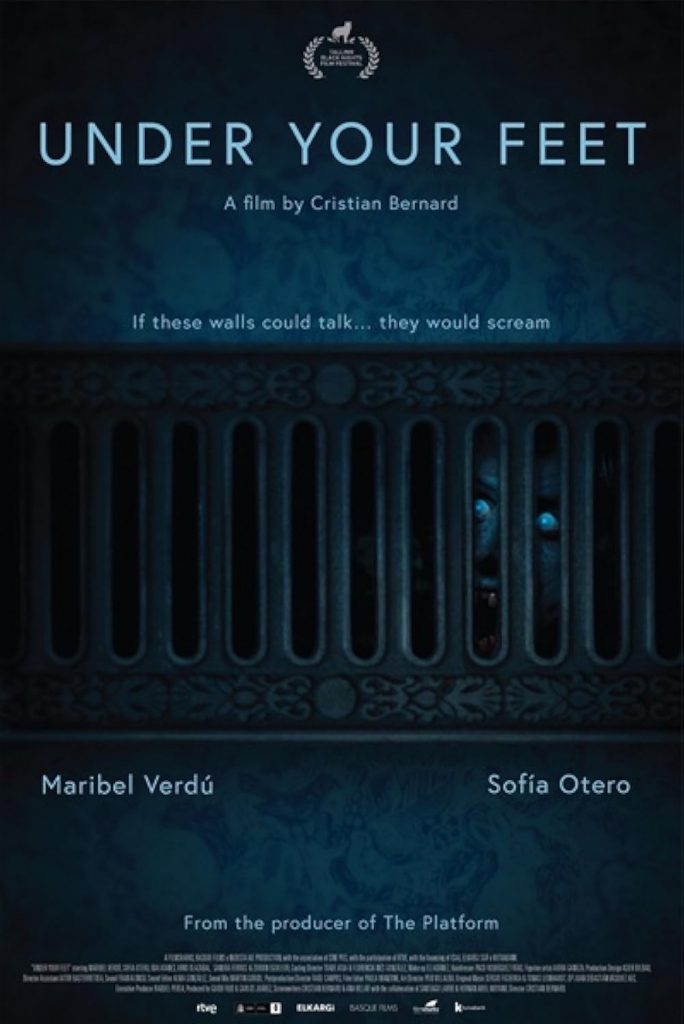
CRISTIAN BERNARD PRESENTS UNDER YOUR FEET: “THE CAMERA IS THE SOUL OF THE FILM”
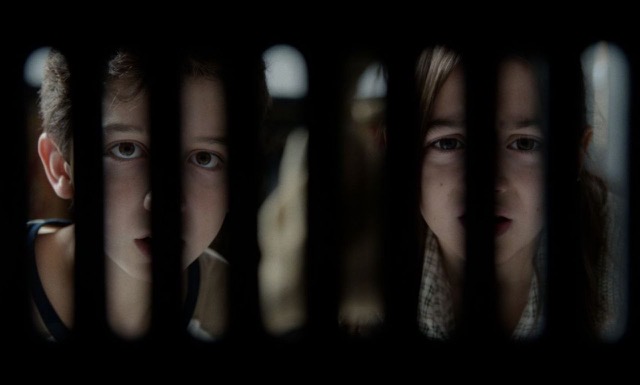
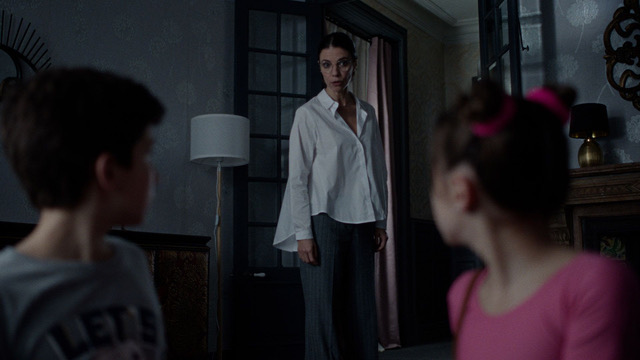
The horror in Under you feet does not only come from what is hidden in the dark, but also from everyday things that start to feel wrong. In his new film, Cristian Bernard tells a tense and atmospheric story that mixes supernatural horror with very human fears. It follows a mother (Maribel Verdú) and her two children (Sofía Otero and Ibai Atanes) as they move into a new home, hoping for a fresh start, but slowly discover that the place hides something disturbing. The camera feels almost alive, turning every hallway and silence into something unsettling.
On the occasion of the film’s release, we spoke with Cristian Bernard about the long process behind the project, the choice of Bilbao as the main location and how he sees the camera as the soul of the film.
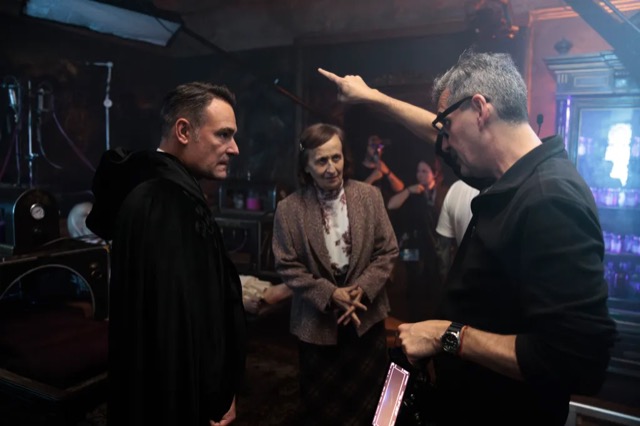
Joaquín Bañuls: One of the things that impressed me most when watching the film is how well the children perform in every scene. What did you see in Sofía and Ibai for these roles?
Cristian Bernard: In the casting, I saw many children. I remember that Sofía was already almost certain, but there were three other boys. She is an amazing, very experienced actress, who had already worked in ‘20,000 Especies de Abejas’, where she shows real skill and talent. But when I saw the chemistry she had with Ibai, I knew it immediately. Sofía brings the drama, and Ibai adds the comedy. Also, they are inspired by my own children. My daughter is very methodical, and my son has an incredible imagination. So when I saw them, they felt like my own kids.
JB: Another thing I noticed is how the camera acts like another character, almost like a main one that follows the story. I think it creates a certain discomfort for the characters. So, what did you want the audience to feel through the camera?
CB: Usually, the camera in cinema today just observes, records, and looks… nothing more. In this case, it had two main purposes for me: to discover the sinister side together with Maribel, and also to be the soul of the apartment. There is a shot where the camera moves through the hallway while the screams are heard, becoming a moth and going towards the girl’s foot. For me, it is not just an element. It is like the pen in literature. The camera is the soul of the film.
JB: How long did it take you to shoot the film?
CB: Five weeks. It took me 13 years to make it, and we shot it in five weeks.
JB: After so many years, it must be very hard to finally finish it and start shooting. Do you find it difficult to let go of the story and accept that everything won’t be perfect?
CB: Yes, very much. I lived for this film all those years. But cinema is like that, and now the film belongs to you. I can’t do anything. It now has its own life, with its flaws and its strengths. I experience it like a kind of mourning, but I am already thinking about the next one. That is the only way to move forward. It is a film I truly loved making.
JB: Why did you choose Bilbao as the main location?
CB: I found a city that was perfect for this film. At one point it was going to be shot in Madrid, or Buenos Aires… but once we found Bilbao, I started looking at its specific qualities. Right now there is a big production boom in Bilbao, and we found the right producer there, Carlos Juárez, who understands the story and loves genre cinema. It is very hard to find a producer who wants to make a film with the quality it deserves.
JB: Finally, have you seen any films recently that have really moved you or that you would recommend?
CB: If we focus on horror, ‘Bring Her Back’ is an extraordinary film because it is really about human beings. Then, of course, ‘Marty Supreme’. For me it was a journey. I like the Safdies and I think they make great cinema. And finally, the Bruce Springsteen biopic. I am a huge Springsteen fan, but also I loved it because it is not about a rock star. I am tired of rock biopics that only talk about money, fame, and drugs. This one does not. It feels like Cassavetes directing a film about a rock star.
JB: I usually don’t like biopics for exactly that reason.
CB: Give it a chance, because it focuses on a moment in time, when he writes ‘Nebraska’. It is neither about his birth nor his full story. It never touches the success of ‘Born in the U.S.A.’, but it captures his sadness.
Questions by @joaquinxbc