
GUCCICORE OR HOW A WHOLE GENERATION IS TRYING TO LOOK ALIKE
The appointment of Demna in Gucci was intentional, François-Henri Pinault is trying to get buzz to the core brand of his empire (as Brenda Weischer pointed out in her last episode of brendawareness). The brand has been seeking creative help since the finale show of Alessandro Michelle, one of the musical chairs games that hasn’t gone well in the fashion industry. As we understood in the 2021 “House of Gucci”, the depiction and translation of the family business to the masses was created by the sense of exclusivity and intentionality caused by the ready-to-wear that Tom Ford created back in the 90s. An effervescent new fashion brand was born after it, followed by the stellar creative pathways that Frida Giannini and Alessandro Michelle injected into the Italian Maison after the acquisition of it by Kering.
The relationship between the family business and New York City was concreted back in 1953, when they opened their first store outside of Italy in the City That Never Sleeps. The appointment of Tom Ford reinvigorated the idea that the Italian brand has a lot in common with the way of thinking of the American consumer and developed sweet and concise collections that were matched with incendiary campaigns in collaboration with Carine Roitfeld that put the brand on the international map. With the appointment of Demna, Kering was expecting the revitalization and rejuvenation of a company that has accompanied the hypebeasts since the sneakers that Alessandro Michelle launched back in 2016.
GucciCore is the definition of where Gucci is going, the artistic and economic future of the company, one that is trying to redefine the streets by distilling the essence of the company into a visual language that is built into a wardrobe for everyone. The 4th exploration of character studies that Demna has brought to the brand to understand the clientele that is going to make the numbers go up in an uncertain time in fashion. After La Famiglia, Generation Gucci and Primavera this collection serves as a single and cohesive way of grounding pragmatic and wearable pieces that define the brand.
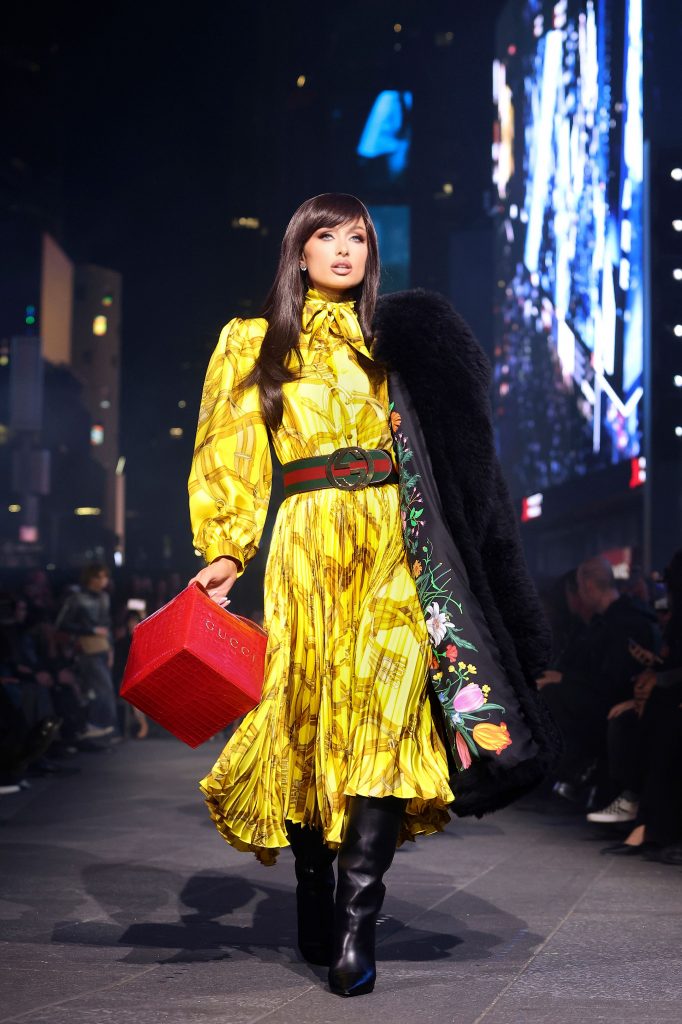
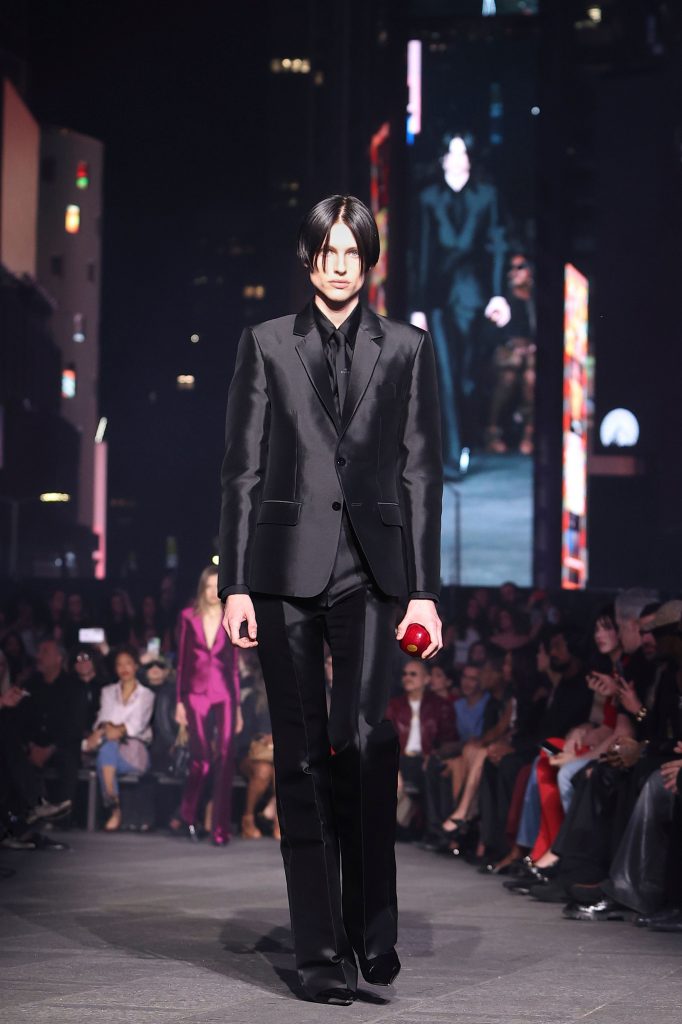
Looks were walking Times Square, invading the public space in benefit of a private business, to redefine the streets that are in everyone’s mind when thinking about the USA (specially after the hit that was SATC). A worldwide point of view that was defined by a video montage combining found footage with advertisements fills that flooded the infamous screens of the place. In Demna’s words: “the annoying interruption of the beautiful vision of the world by advertising something that you don’t have to sell”. That is called power and can only be achieved by being one of the millionaires of the world. Thanks to the Pinault family (I guess), the brand explored the idea of becoming an ethos, a lifestyle, and an aesthetic identity.
This is a more attainable way of looking at clothes for Demna, a new characteristic that is going to be a mark in his work at the Italian empire. A developed sense of utilitarian extravagance that is intertwined with the crucible of American consumerism that is Times Square. Trying to define a new target audience is something Gucci is known for, from the empowerment and sexiness of Tom Ford’s era to the development of masculinity that was Alessandro Michelle’s one. A city where it is so easy to recognize and find in the middle of the street people from the wealthier families of the world to hobos promoted by a massive consumerism that leads them to having nowhere to go. Something that wants to be solved, in some type of way, by Zohran Mamdani and his socialists propositions that want to see the plurality of styles that fill the city (as the brand recalled through the show), living a quiet and flamboyant life, having nothing to worry about other than nurturing their family and friends circle with an established job opportunities.


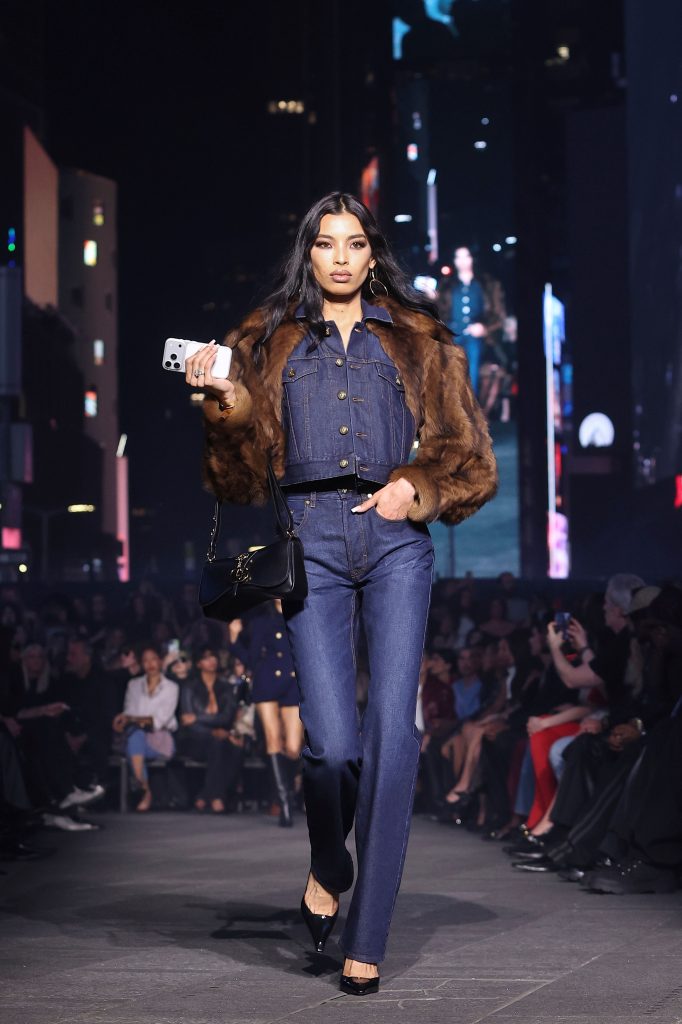
But the absurdity of human beings was the main thing that we can extract from the collection. A compilation of every style that can exist in a city like NYC to find the one that we aligned with, not the one that represents our persona. The most commercial collection that Demna has ever done (literally that is what he said to Vogue) serves as one of the most impactful and ambitious presentations that Gucci has ever released yet (literally I’ve never seen a clearer way for the Pinault family to express to media and public that Gucci is their top bet and their precious gem of all of their array of brands).
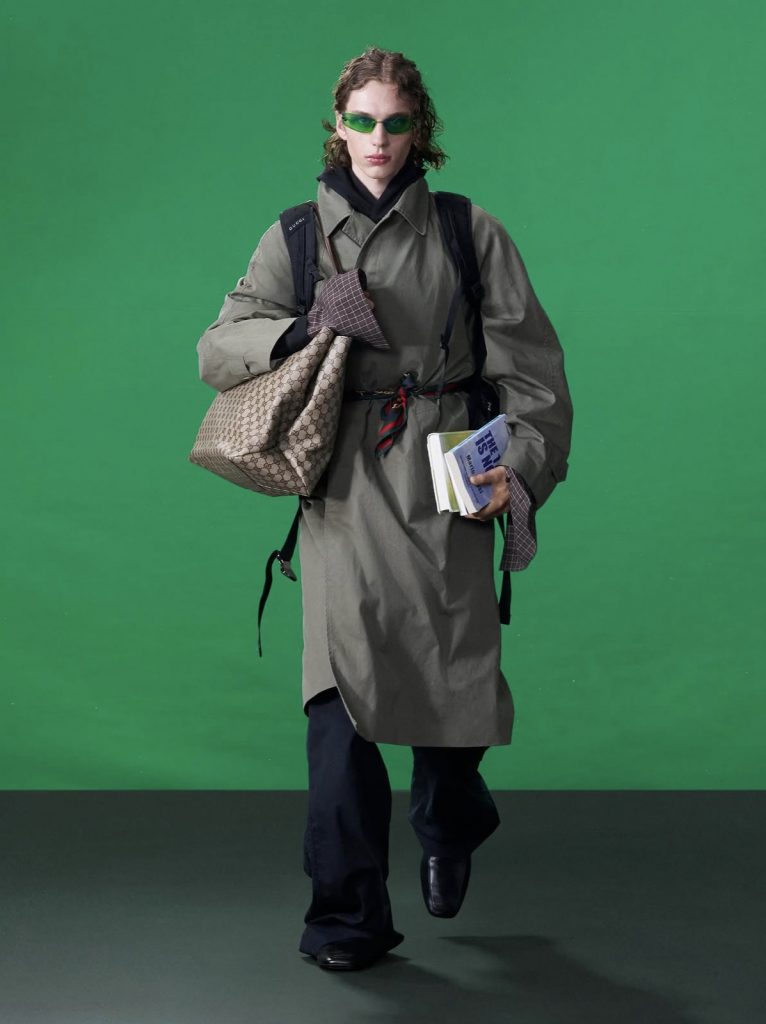
Speaking about the garments is so difficult to enter in the craftsmanship/conceptual space that we are currently being surrounded by the ideas of media and creators online, because the clothing that is coming out of Gucci latest collections are meant to be worn in the outs-and-abouts, they are not an ode to artisans or tactile experiences (or even not a social-political commentary). I appreciated the fact that I saw lots of accessories that were not made to be sold at the Gucci store. We repeatedly saw nothing luxurious at all: the apple, the IPhones (thinking about the product placement of it all, truthfully), the yoga mats. Items that we all use in some type of way in our daily routine. Backpacks for office workers flooded the first few looks, taking us back to the days where commodities and easiness were the main selling factor of an item.
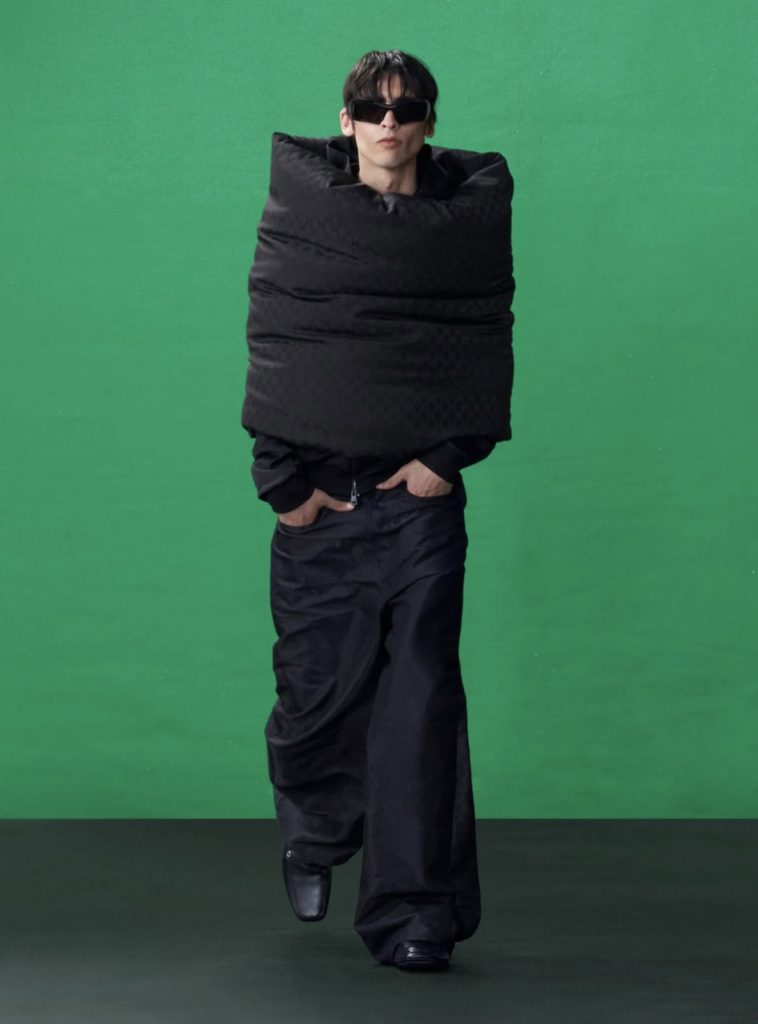
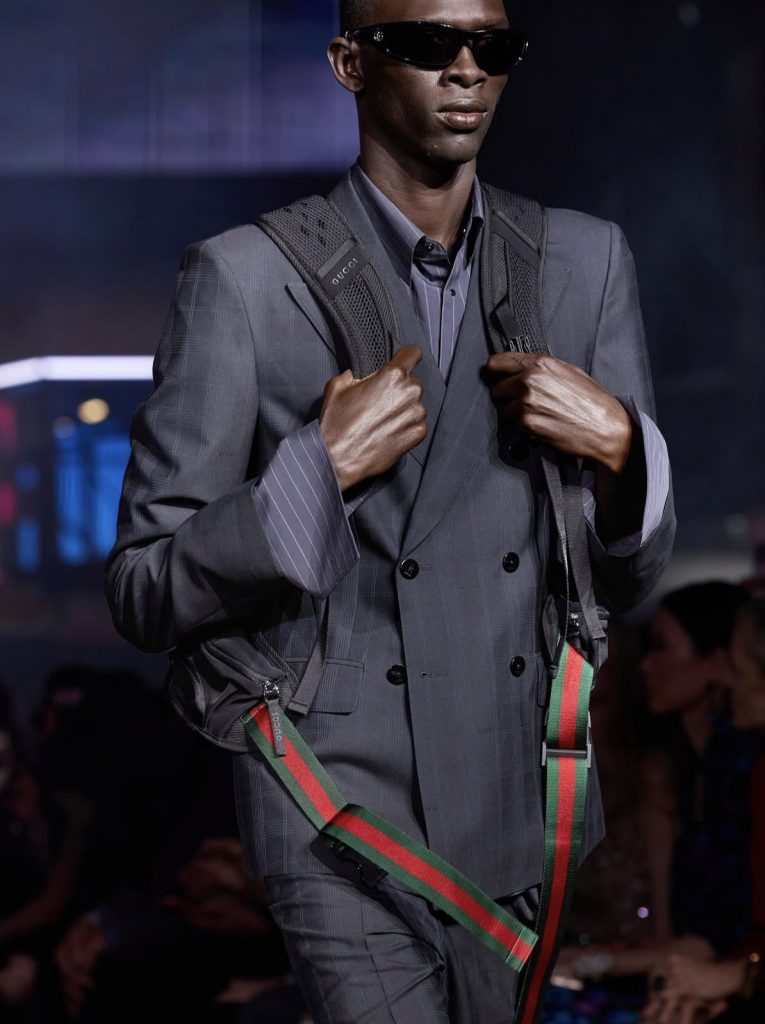
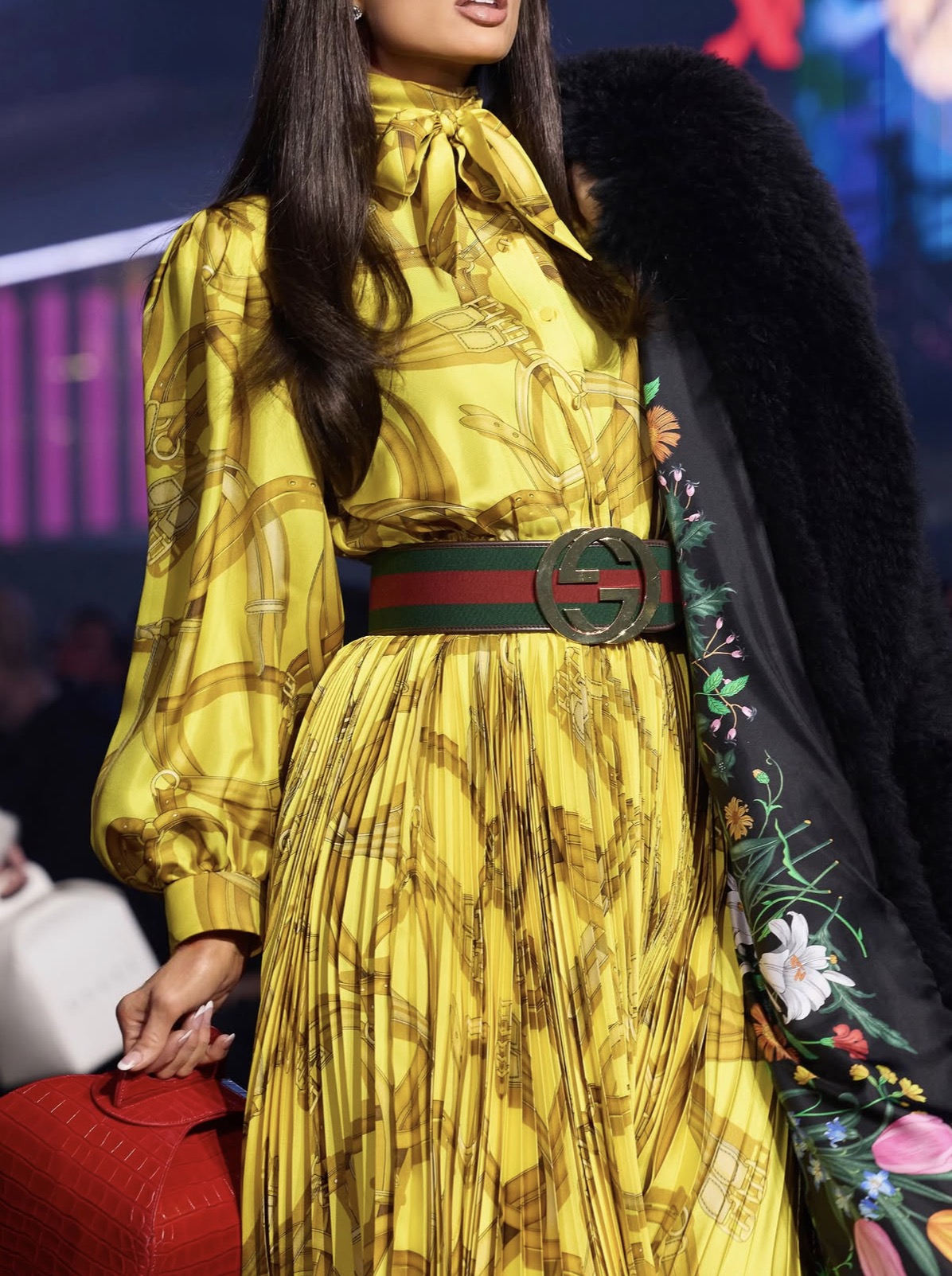
GucciCore is not so much about the body and silhouette, if not the attitude and easy-to-replicate of it all. There is so much sense in trying to include as many people as possible in the target of a brand that wants to be positioned again in the pinnacle of Italian ready-to-wear fashion with an international vision. I would love to highlight the presence of the floral print in dresses and linings that fit perfectly with the strategy the company is pursuing in perfumery (which I feel needs to change if Demna remains in creative direction). Also, the makeup created by Sam Visser was a masterpiece in itself, it represented the glorification of beauty through filters-alike beats that enhance or change (literally) the face of the wearers, revealing new faces of already known ones.
To finish I didn’t want to reference any celebrity that was part of the front row or the catwalk, if not giving space to the new voices that are shaping the industry. Like the work of Romain Bichot, that has been a designer member of the team that Demna has been creating since his time at Balenciaga, that we can see reflected in the pieces called “GG TUBES”, a reminder that sometimes what a student do at schools can also be represented in an environment that focus on selling over all. Creativity can thrive in a society that is defined by consumerism, but we need to remind ourselves that branding is the most impactful way to get it and Gucci knows it.
Words by @alraco43