
IED MADRID: CLASS OF 2025
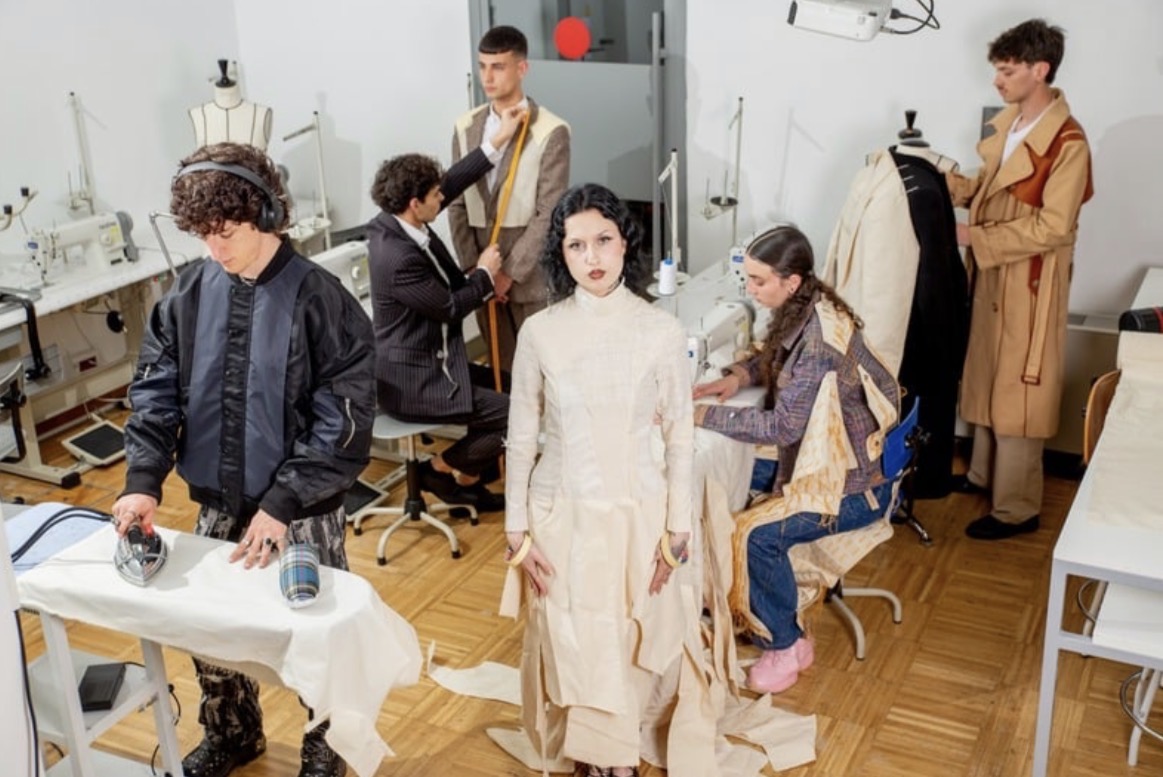
If you are from Spain and have any type of understanding about fashion, you know that one of the predominant school that create a space for designers to blossom is Istituto Europeo di Design and their different spaces across the country (from Madrid, to Barcelona, without forgetting Kunsthal in Bilbao). The last season of Madrid es Moda was revitalised by the different fashion shows that presented to the whole industry the best creative voices out of their students; adding this value to an event that seeks to enhance the value of Spanish designer brands, position them globally, and offer them new business opportunities.
In the case of IED Madrid, we could enjoy their annual runway show where the future of fashion presented their understanding of «Connected Knowledge», exploring the intersections between memory and artificial intelligence, bioengineering and artisanal knowledge, science and sustainability. They presented their proposals not as closed answers, but as open questions capable of embracing the complexity of our time. While Raquel Aldaz Casalo won the Fashion Talent Award, we would like to enhance the vision of five of our favorite proposals.
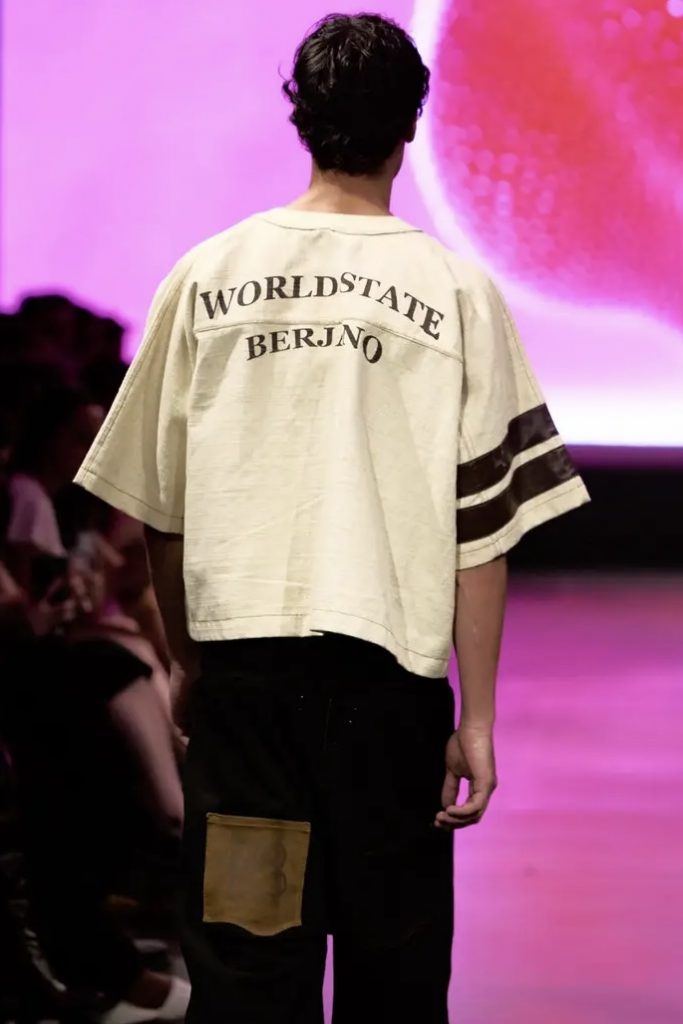
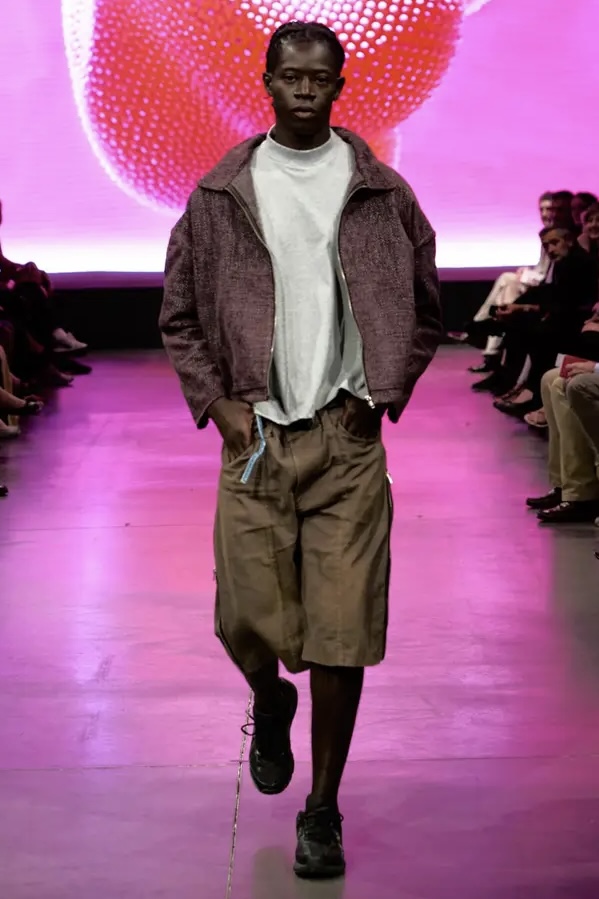
BERJANO (@berjano_) by Pedro Diaz García (@peter_sct)
Alvaro Ramos: What was the conceptual starting point for your graduation collection?
Pedro Diaz: I wanted to move away from overly conceptual designs and garments created solely for aesthetics. I aimed to create pieces that would stand the test of time, both aesthetically and functionally. The collection was conceived as a real everyday wardrobe, with garments designed to be worn 365 days a year, durable and high-quality.
AR: How do you achieve a balance between creativity and practicality in your designs?
PD: I work from Virgil Abloh’s 3% concept: starting with recognizable garments and silhouettes and modifying them just enough to give them a new interpretation. Creativity emerges in small changes to the construction, materials, volumes, or finishes, always maintaining functionality. For me, the balance lies in intervening without losing the essence of the garment, creating visually interesting pieces designed for real, everyday use.
AR: What advice would you give to aspiring designers starting their careers?
PD: Don’t limit yourselves by what others expect of you. It’s important to investigate, try different paths, and find the branch of design that truly fulfills you, without setting unnecessary limits.
Natalia Arroyas (@nataliaarroyas)
AR: What was the conceptual starting point for your graduation collection?
NR: The starting point was deconstruction and the idea of working with existing garments. I’ve always wondered why we consume and produce endlessly when so much clothing is wasted. I was interested in rethinking the concept of «upcycling» and creating something interesting. I wanted to observe classic tailored garments, understand their form and history, and then transform them. The collection stems from questioning the established order and exploring how something familiar can acquire new meaning through change and fragmentation.
AR: How do you achieve a balance between creativity and practicality in your designs?
NR: For me, creativity must coexist with the actual use of the garment. That’s why I work with subtle transformations and functional details that don’t completely alter the piece, but do change how it’s worn, allowing for small adjustments. I aim for garments that are conceptually interesting and have innovative shapes, but at the same time, they must work well on the body and be comfortable to wear.
AR: What advice would you give to aspiring designers just starting their careers?
NR: I would tell them to trust their process and not be afraid to experiment. To work hard and push their potential to the limit, to use their time to create and create. It’s important to make mistakes, to try things out, and to take the time to understand what they want to express with their work. I believe that developing your own unique style takes time, and that consistency and curiosity are crucial.
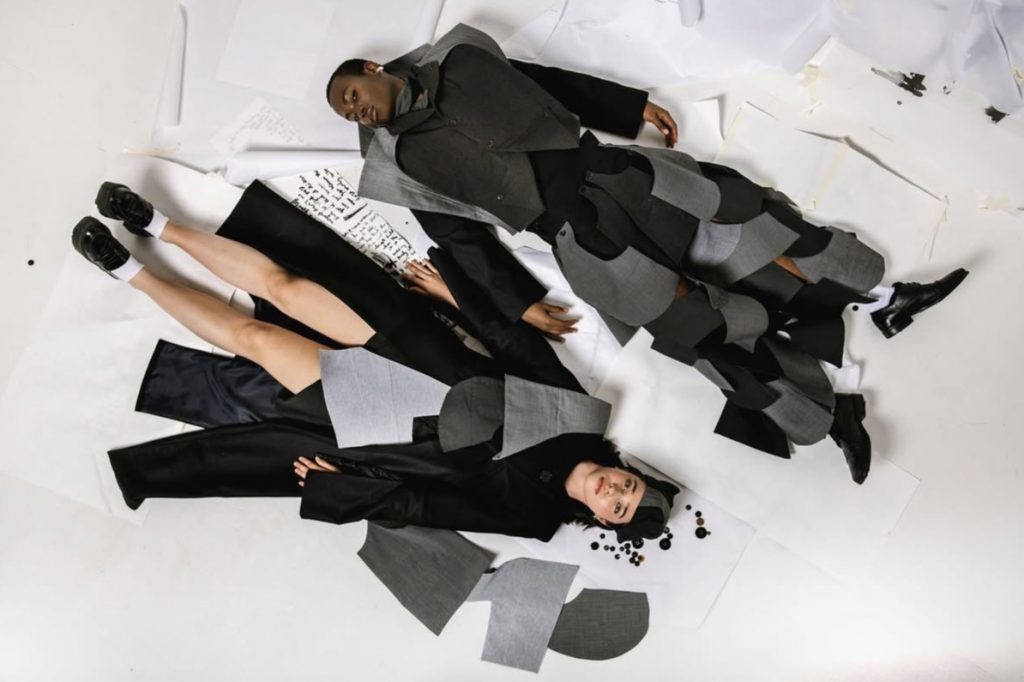
G4RC14-M0CH4L35 (@garcia_mochales) by Miguel Conde García-Mochales (@mc0nd3)
AR: What was the conceptual starting point for your graduation collection?
MC: I was looking for a concept that would be easy for any viewer to understand. Something straightforward, not the result of mixing artistic movements, historical periods, cultures, or aesthetics—something quite common in fashion. I wanted a balance between something everyday and something conceptual, something that would give me creative freedom but from a grounded and realistic perspective. Based on that premise, I decided to use as my concept what I consider the most important part of the entire creative process, and also the part I enjoy the most: the materialization of the garments.
AR: How do you achieve a balance between practicality and creativity in your designs?
MC: Without a doubt, through pattern making. Pattern making is a fundamental tool for maintaining practicality and functionality in my designs. I like the garments to fit well on the body, to be comfortable and functional for everyday wear. I pay close attention to the proportions to ensure all of the above is respected.
I prefer to contribute the creative aspect through manipulation and experimentation with textiles or other elements that make up the garment, as I believe it’s the most effective way to achieve something truly unique.
AR: What advice would you give to aspiring designers who are starting their careers?
MC: It might seem obvious, but work hard. Work harder than anyone else: practice, fail, learn, and practice again. Be a perfectionist and critical of your work, and try to improve with every project. This profession is very competitive and doesn’t offer as many career paths as it seems. Be smart and play your cards right. Document everything, have a good portfolio, and create content on social media.
Creativity is great, and playing at being a creative director is really cool during your studies, but when you enter the workforce, what matters is what sells and how well you market yourself. Be smart and realistic. Choose your internship carefully, because that decision can be a turning point in your professional life. Don’t buy into the idea of creating your own brand lightly: being an entrepreneur isn’t easy, especially without a large initial investment.
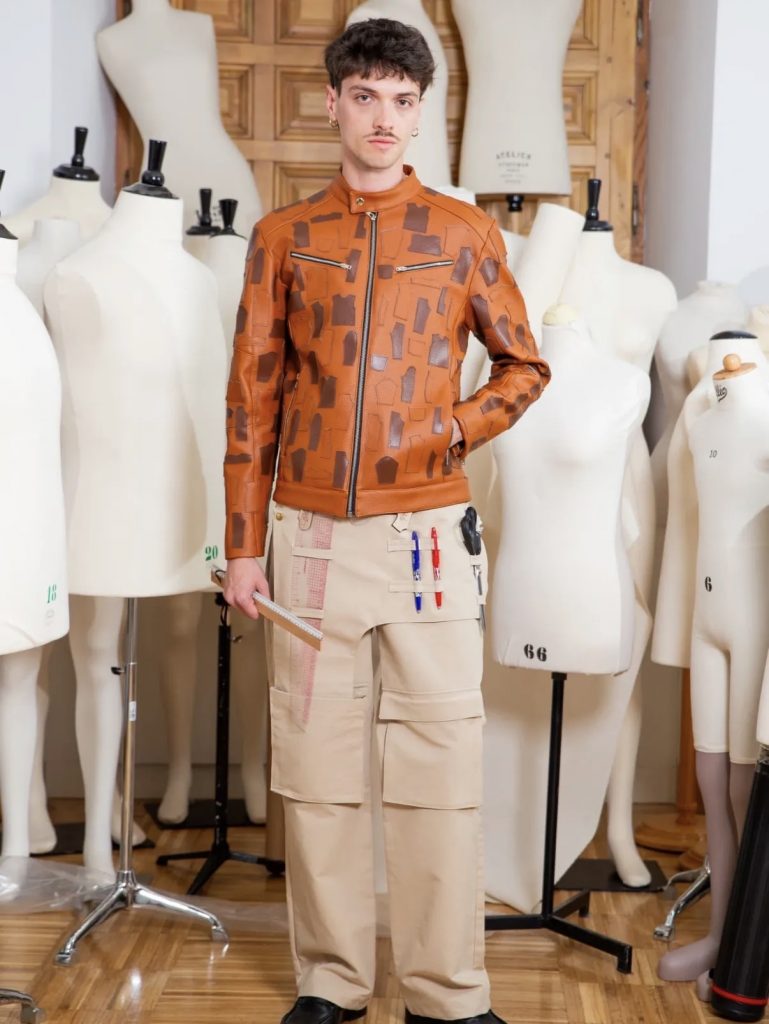
Maison Somet (@maisonsomet) by Maitane Somet García (@maitanesometgarcía)
AR: What was the conceptual starting point for your graduation collection?
MS: The starting point for my collection was a reflection on the power dressing of the 80s and 90s, a time when fashion became a tool for legitimizing and empowering women who were beginning to occupy professional spaces traditionally dominated by men. Those structured silhouettes, the jackets with strong shoulders, and the firmness of the shapes were not just an aesthetic trend, but a form of affirmation and presence.
From that historical reference, I felt the need to question what we understand today by power and how it can be expressed from a more intimate and contemporary place. «Le savoir faire distingué» (Distinguished Savoir-faire) was born precisely from that questioning: a search for feminine power that is not imposed through image, but rather built through process, craftsmanship, and applied knowledge. I was interested in exploring how care, technique, the conscious choice of materials, and the time dedicated to making can become a silent but profound form of empowerment.
AR: How do you achieve a balance between creativity and practicality in your designs?
MS: For me, the key is always starting from a solid foundation of construction and tailoring. Technique doesn’t limit creativity; it supports it. Working from the pattern, the fit, and the structure allows me to develop garments that work on the body, and from there incorporate textile experimentation, artisanal details, and more conceptual gestures.
Each garment is born from a very deliberate, almost ritualistic process, where nothing is arbitrary. The fabrics are my own creations and are the result of prior research that seeks coherence between form, function, and meaning. In this way, creativity manifests not only visually, but also in how and why it is made. For me, a design is truly practical when it makes sense, when it is designed to last, and when it conveys a clear intention.
AR: What advice would you give to aspiring designers who are starting their careers?
MS: would tell them to allow themselves the time to find their own voice and not to be in a hurry to fit into a specific discourse or aesthetic. Building a solid identity requires experimenting, making mistakes, and, above all, reflecting on the process itself. It’s important to listen to references, but also to learn to filter and keep what truly resonates on a personal level. Furthermore, I believe it’s essential to value craftsmanship and technique. Understanding how a garment is constructed, respecting the materials, and knowing the processes adds enormous depth to design. Fashion isn’t just about results or image; it’s about thought, sensitivity, and work. Committing to honest and conscious practices is, in itself, a form of resistance and a way of positioning oneself within the fashion system.
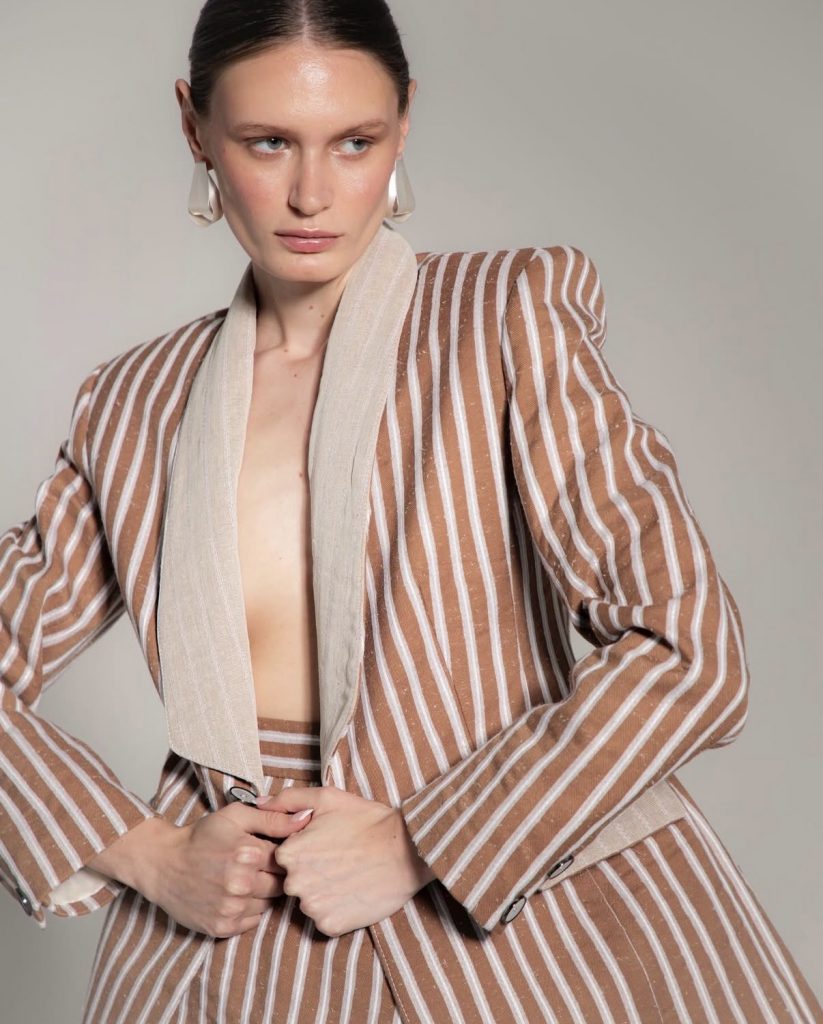
Guillermo Sastre (@sastrefdz)
AR: What was the conceptual starting point for your graduation collection?
GS: The starting point for my final project stemmed from a very personal question: after completing both my pattern-making degree and my bachelor’s degree in design, I wanted to understand what had changed within me. What conclusions had these years taught me, how my style had evolved, and, above all, how my understanding of design had transformed.
From there, I formulated the central question: What is the difference between clothing and fashion? This reflection led me to structure the project as a dialectic of thesis, antithesis, and synthesis.
The thesis is based on function: clothing as a primary need for shelter, protection, and defense against the environment—that is, the essential basis of clothing. The antithesis shifts toward expression: the cultural, symbolic, and artistic development that transforms clothing into fashion, as a language and aesthetic construct. And, from this tension, the project’s objective was to construct the synthesis: to unite both fields through a collection that integrates real functionality (materials, forms, and construction) without sacrificing its own aesthetic. In my case, this aesthetic is rooted in menswear and tailoring, incorporating references and solutions from the world of high-performance sports, survival in adverse climates, the military, and even spacesuits (the ultimate expression of function in clothing), so that the garment is both concept and tool.
AR: How do you achieve a balance between creativity and practicality in your designs?
GS: That balance is a direct result of my own journey. When I started in the textile industry, I became aware of the sector’s enormous complexity and the number of fields that intersect it. For years, I went through a broad and somewhat undirected learning process: I wanted to explore all the extremes, from haute couture and tailoring to fast fashion, utilitarian clothing, experimentation, and textile engineering, as well as the use of fashion as a conceptual and expressive vehicle. This exploration of different facets of the fashion system was key to understanding it as a whole.
Over time, this scattered learning becomes organized, and the balance emerges almost naturally. In my work, creativity is never considered an end in itself, but rather an applied tool. The starting point remains the function and practicality inherent in clothing, and on that foundation I build the aesthetic expression. Creativity manifests itself in how I unite both layers: function and form, utility and visual language.
In that sense, my process consists of translating personal references, symbols, and aesthetics—those things that interest me and define me as a designer—into real design solutions. It’s not about imposing an image on the garment, but about integrating that symbolic weight within practical decisions regarding construction, materials, and use. That’s where I find the balance: when creativity reinforces function instead of competing with it.
AR: What advice would you give to aspiring designers who are starting their careers?
GS: The first thing I would say is that there is no universal recipe. There is no single valid path or one correct way to learn design. Each person assimilates, processes, and develops their criteria differently, and what works for some may not work for others. Understanding this from the beginning avoids a lot of unnecessary frustration.
I also believe it’s crucial to be aware that the fashion industry is vast and diverse. There are multiple ways to understand design, creativity, and its application. Therefore, my advice is not to be overly influenced by what the system itself dictates: neither by trends, nor by the season’s color palettes or dominant market narratives. Creativity applied to clothing goes far beyond following external instructions; it’s about developing your own criteria.
Finally, I would tell them not to obsess over defining a style too soon. Style isn’t fixed or definitive; it changes as you change as a person. It’s normal for today’s design to be different from yesterday’s, and that’s not an inconsistency, but a sign of growth. In fact, I think the best indicator of evolution is looking back and finding mistakes, things you would now do differently. That demonstrates progress. It’s a tough, demanding, and often thankless industry, but it’s precisely in moments of doubt and frustration that you truly define who you are and why you do what you do. If you keep moving forward, even with doubts, you’re already on the right track.
Words: @alraco43