Inside Art Basel Paris: Where Art Shines and Shadows Appear
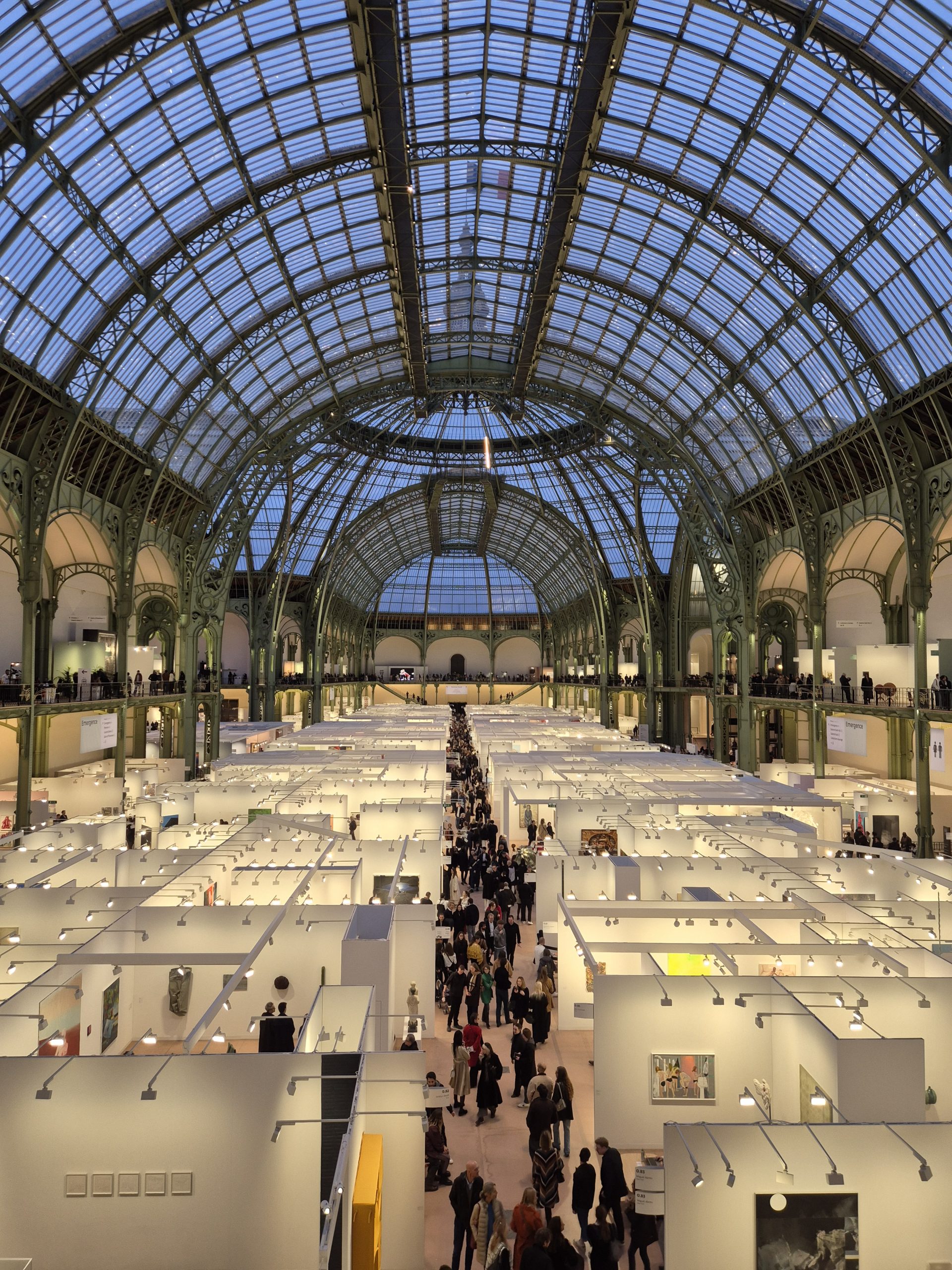
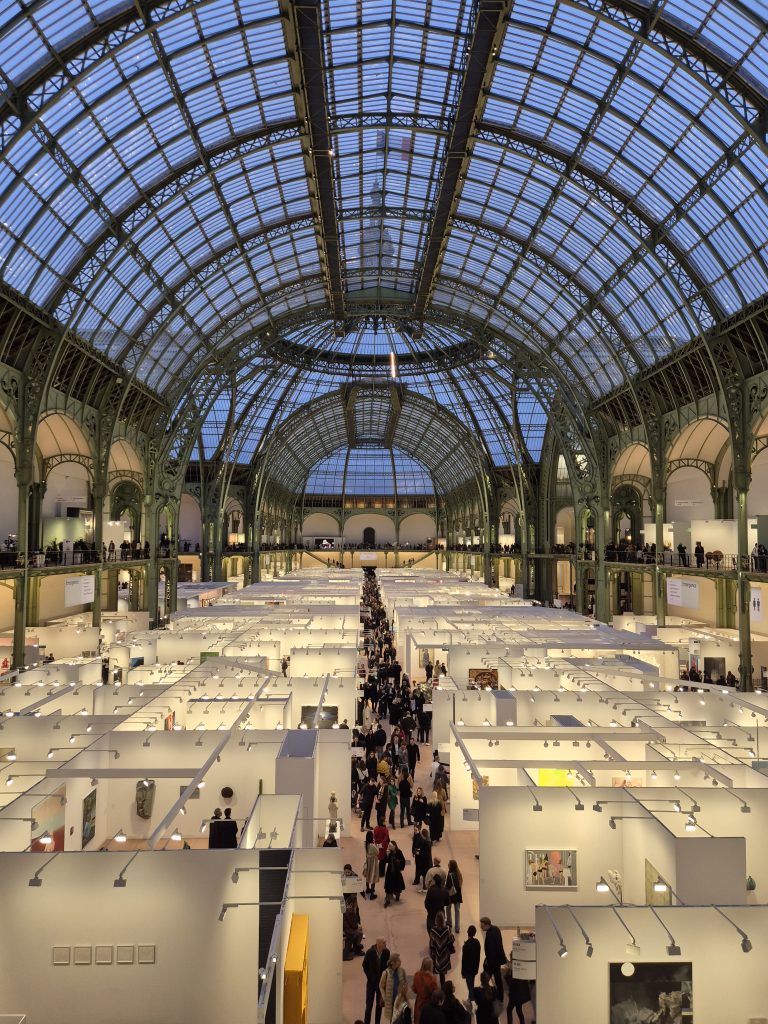
For its second year in a row the international art fair Art Basel was taking place in Paris in the magnificent Grand Palais. As a global meeting point for both curators and collectors, this year there were 206 galleries from 41 countries and territories and the art fair attracted more than 73.000 visitors, momentarily transforming Paris into an even bigger cultural scene.
As I was walking into the Grand Palais I felt both lucky and completely overwhelmed: Art Basel is one of the key events in the art world, an event I had dreamed of attending for years but there were so many people I could barely see the pieces that were exhibited on the main floor. The layout of the fair was divided into three sections: Galeries (the main section bringing together established galleries), Emergence (dedicated to emerging galleries and artists) and Premise (featuring unique curatorial proposals that may include works created before 1900). The main floor was filled with the biggest galleries exhibiting blue-chip masters such as Picasso or Degas while tucked away on the upper floor, smaller galleries presented emerging artists. One could say that this physical division mirrors the hierarchy of the art world: what we see first, and what we have to search for. I was pleased to find some of my favourite artists such as Ana Mendieta and Dorothea Tanning on the main floor and discover new artists I had never heard of on the upper level.
There’s a public program that complements the Art Basel which includes various exhibitions and performances such as the Miu Miu “30 Blizzards” conceived by Helen Marten and the conversations held in the Petit Palais where I was able to hear non other than Marta Minujin talking about her idea of making a giant football made out of dulce de leche in Buenos Aires. The idea is that the city is transformed by this event and is taken over by contemporay art but, does the fair truly transform Paris or does it just reaffirm its elitism? The reality is that it is a huge privile to know about Art Basel, and let’s not even talk about attending it. The price for a ticket is 40 euros (30 euros reduced). Most of the public events are held during the day, during the hours most of us are working, and on the weekend everything gets packed and let’s be honest, being cramped while trying to look at a painting makes it not as enjoyable. Even online, reactions were mixed: as one Reddit user put it, «It’s not that special, honestly”.
We have to at least mention the list that appeared in the bathrooms of the venue before it was quickly taken down. It named thirty-four artists, painters, graphic designers, exhibition curators, art school directors or collectors accusing them of: «Harassment, assault, rape». I personally applaud this act of resistance, it’s a reminder to us all that beneath the allure of the art world, accountability and change are still in order.
Some of my Highlights from Art Basel Paris:
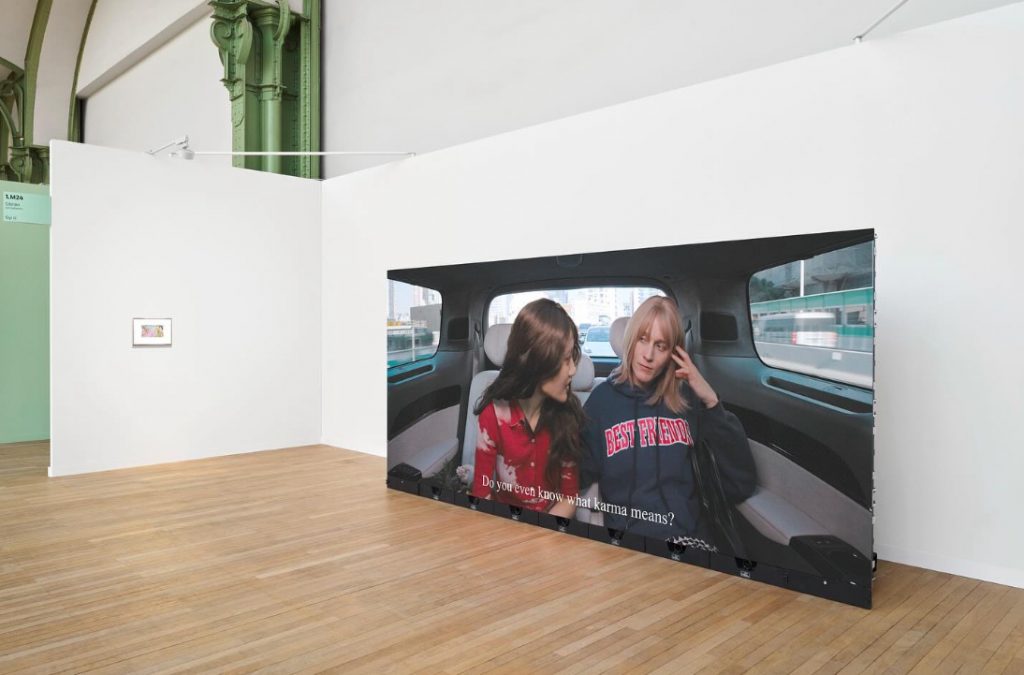
In the Emergence zone I found the San Sebastián’s gallery Cibrián presenting the multidisciplinary artist Siyi Li’s new project, New Energy, a film installation with a LED wall that. The film follows two women who embody five fragmented stories and how their roles and relationships change as they drive through Shanghai’s sprawling metropolis. With a clear influence of the fashion editorial language the film explores what drives creativity and invites us to embrace the complexity of change.
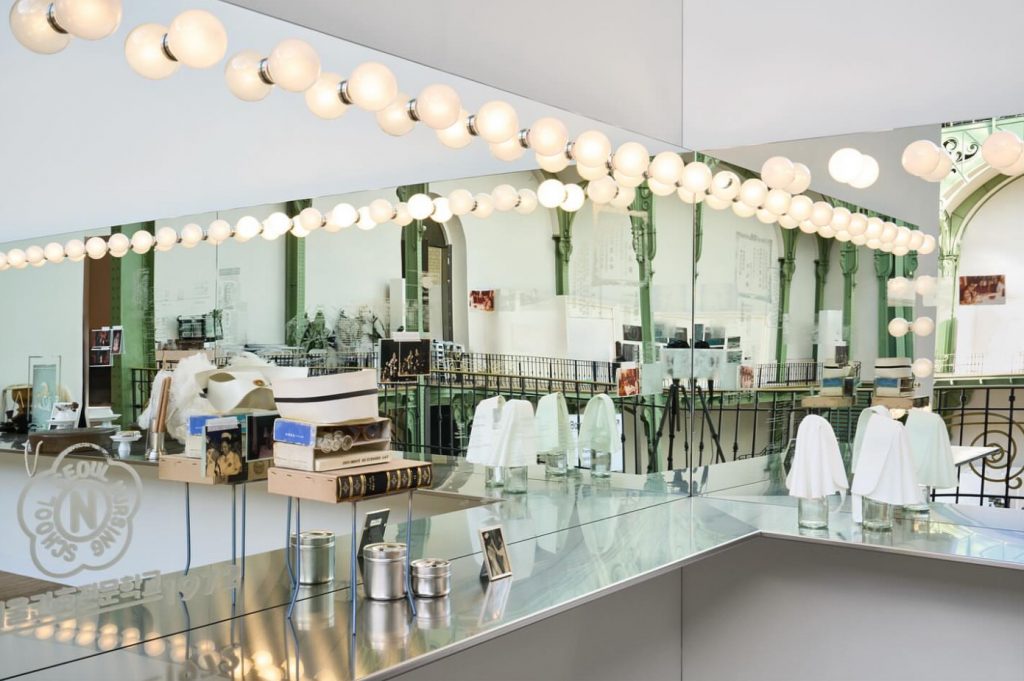
The Cologne gallery Drei presented the installation objects of the wind by the artist Mira Mann. The form of the dressing-room mirror that we usually find in the private space of the pre-show green room is elongated to imply two painting traditions: the Eastern examples of ancient Chinese panoramic scrolls and Korean Chaekgeori paravents, and the much later nineteenth-century European panoramic landscape.
As a viewer, seeing your own reflection as narratives of migration and mythology are inscribed onto the mirror invites you to consider your own position within these intertwined histories.
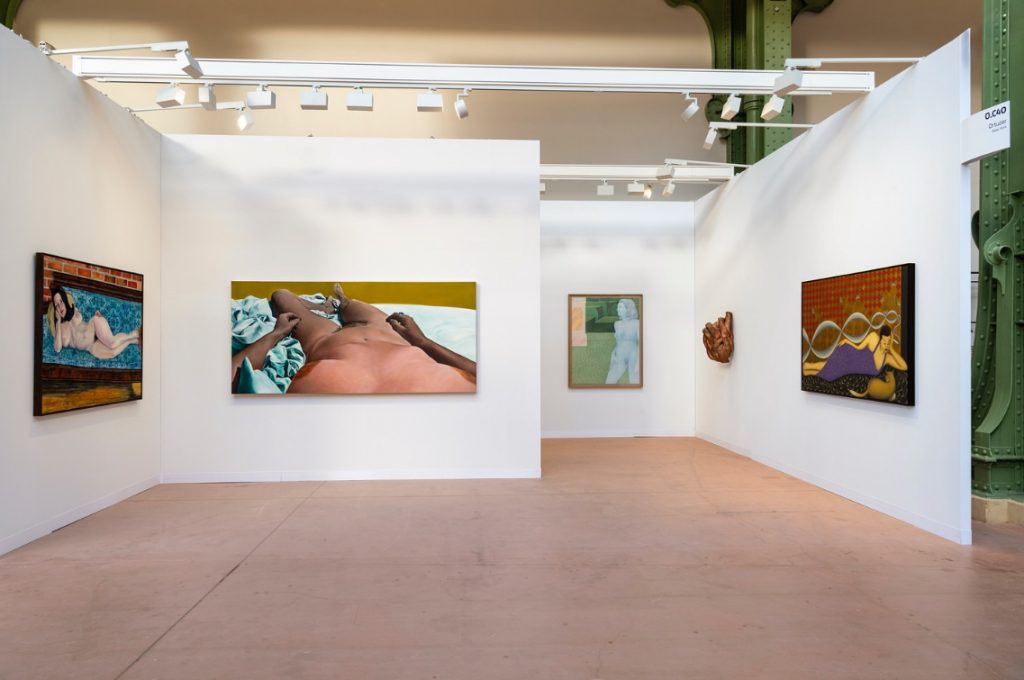
The New York gallerie Ortuzar presented a selection of paintings and sculptures by different artists spanning from the mid-twentieth century to the present. Immediately my eye was caught by the work of Joan Semmel. I found it very inspiring the way she explores the possibilities and paradoxes of the female nude. She portrays the female expirience from her own point of view and disroups the conventional dynamics of figurative painting and its spectators.
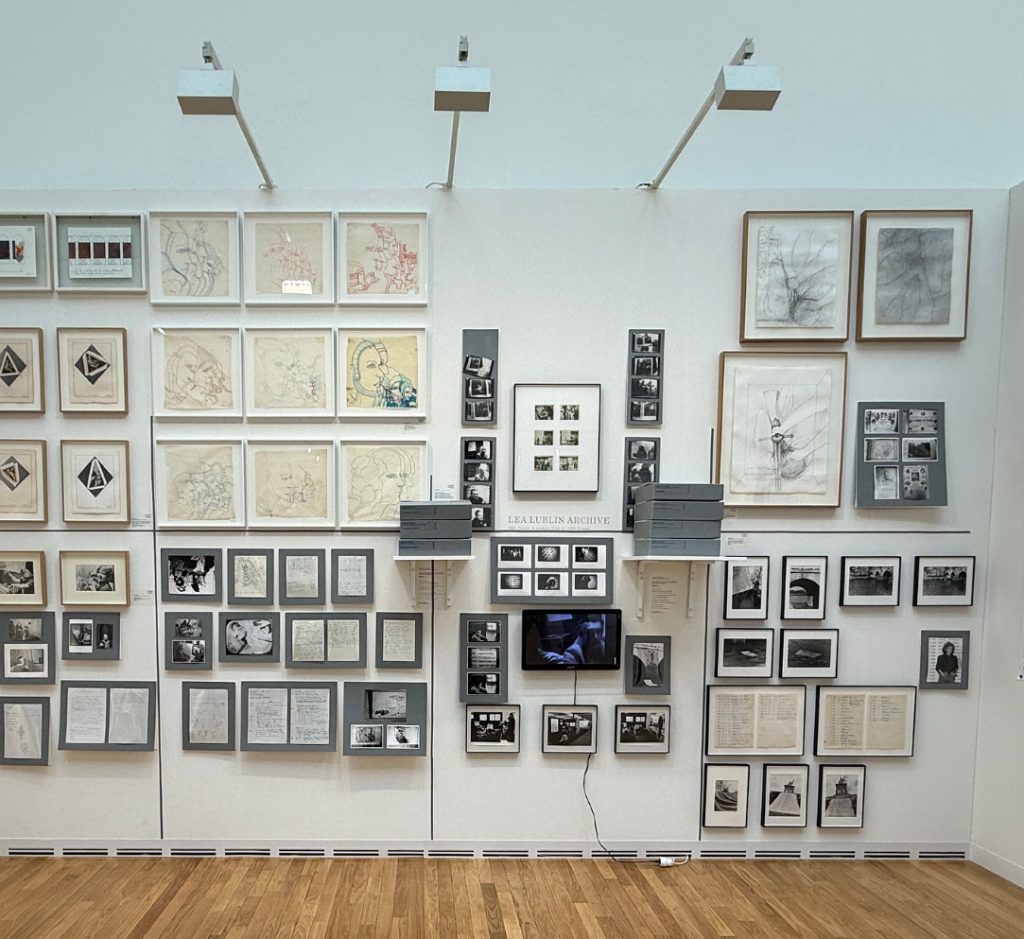
Lea Lublin
The gallery Mira Madrid featured the complete archive of Lea Lublin: a comprehensive body of 1,447 elements encompassing correspondence, writings, photographs, drawings, and documentation of her works and life. The polish-argentinian artist questioned art and explored in her conceptual practice the relation between representation, sexuality and body from a feminist perspective. An overlooked artist in my opinion that I find very inspiring.
In the end, Art Basel is an example of the highest almost elitist levels of the art world. However, it presents art to a wider audience and in a world where many have little exposure to what’s actually happening, that feels like a small victory for all of us outsiders.