
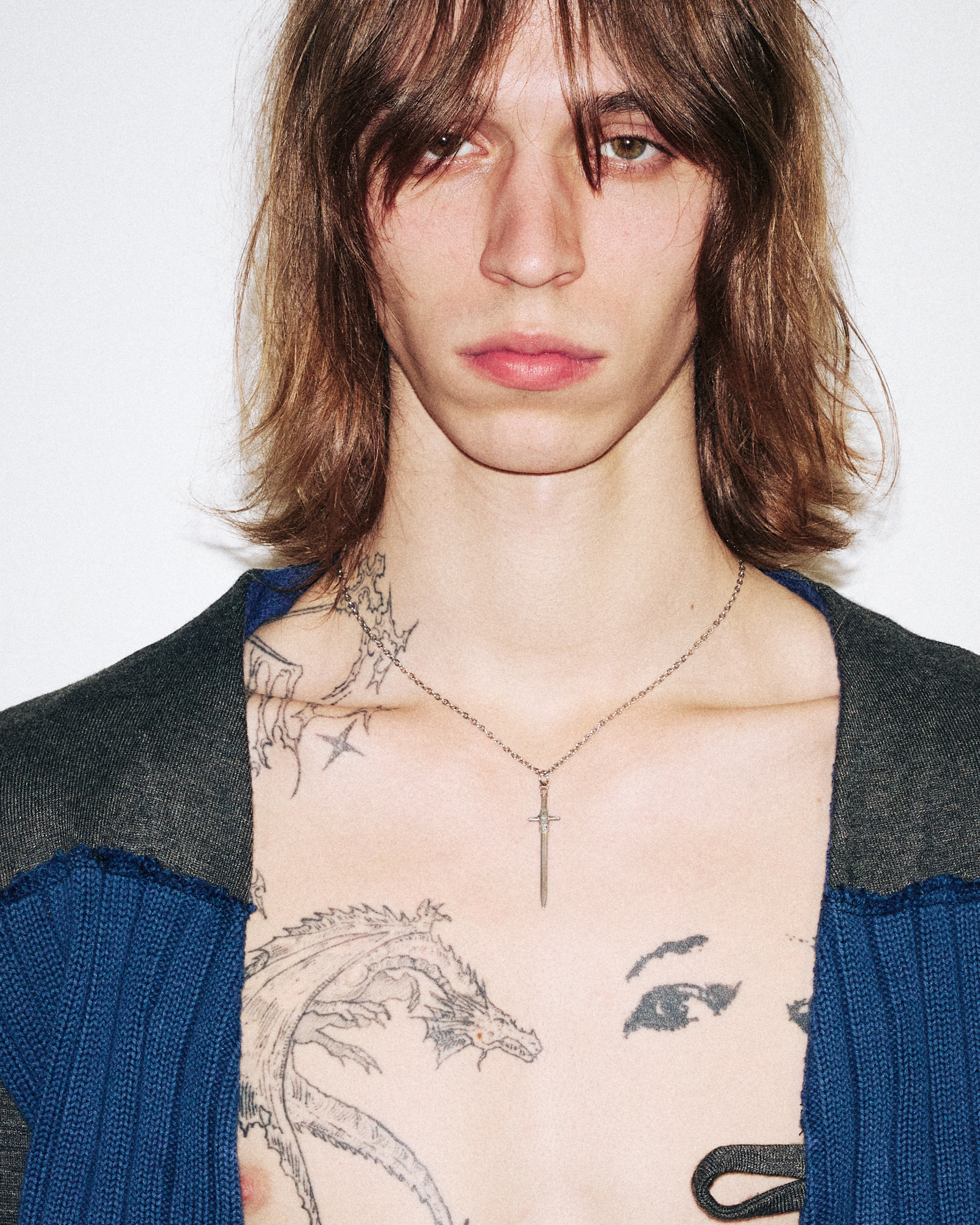
JUAN VG BY JUAN VALENTIN-GAMAZO: AN IN-DEPTH INTERVIEW
With a fresh and challenging vision, Juan Valentín-Gamazo, the creative force behind JUAN VG, redefines the codes of luxury and sustainability through upcycling. His latest collection, JALEO, proposes a reconciliation with the «Cayetana» aesthetic through irony, elegance, and provocation, demonstrating that design can be both an exercise in introspection and a tool for change. In this conversation, the Madrid-based designer shares how he transforms the everyday into visual discourse, how he fuses masculine and feminine elements without labels, and how his personal universe becomes a declaration of freedom, style, and awareness.
Miguel San Sabastian: To begin, I’d like you to introduce yourself, not only as a designer but also as a person. Who is Juan VG inside and outside of fashion?
Juan Valentin-Gamazo: Well, aside from being the designer and creative director of my own upcycling brand, JUAN VG, I would define myself as someone who focuses more on the visual world than on words. I’m not very talkative, an introverted extrovert, fun-loving and down-to-earth, adventurous. I like to learn about both the outside world and myself, and I’m calm but with a mischievous yet posh side.
MSS: Jaleo draws on the «cayetano» figure, so prevalent in your environment since childhood. How was the process of going from observing that aesthetic to transforming it into your own style?
JVG: Well, it all started with getting to know the world and discovering other ways of relating to others. For a long time, I didn’t feel connected to the aesthetic I had grown up with, so I distanced myself from it. Over time, I understood that, in the end, it’s part of me because it’s something I’ve experienced since I was little. Now that I know myself better, I’ve been able to accept it and transform it in my own way, from my own perspective.
MSS: In this collection, you talk about reconciling with something you previously rejected. Do you think designing can be a way to accept and reinterpret what once made us uncomfortable?
JVG: Upcycling is a great tool for achieving precisely that: reconciling with and reinterpreting what once made us uncomfortable. Designing this way allows me to give new life to pre-existing garments and styles; I’m using those materials, but from a different perspective. Through design, I create my own story and my own relationship, in this case, with the posh aesthetic.
MSS: You blend irony and classic elegance. How do you manage to balance humor, critique, and sophistication?
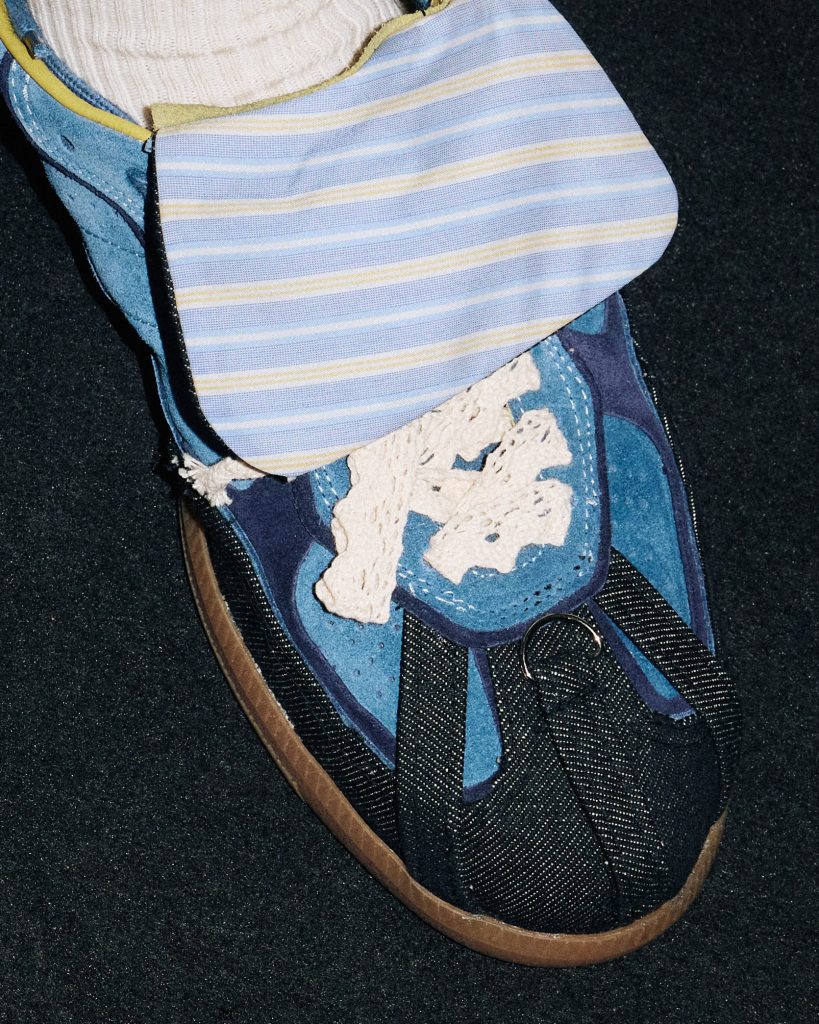
JVG: I never intended to mock the posh aesthetic or the people who represent it. Rather, from my own style, which perfectly defines the essence of JUAN VG, I aim to give it that elegant and classic touch, but with a playful twist. I’ve always described the brand as naive and rebellious, and I think that slightly mischievous touch comes very naturally to me. To create these kinds of things, I designed the t-shirts with the «pear boy» logo, which is the name given to posh kids before the word existed; they were called «pear boys.» Or I collaborated with Alohas for shoes, which is a very posh brand, and I like that they dared to give it that twist and support me with the collection.
MSS: The collection explores different moments of the day. How did you construct this narrative that moves from the everyday to the formal?
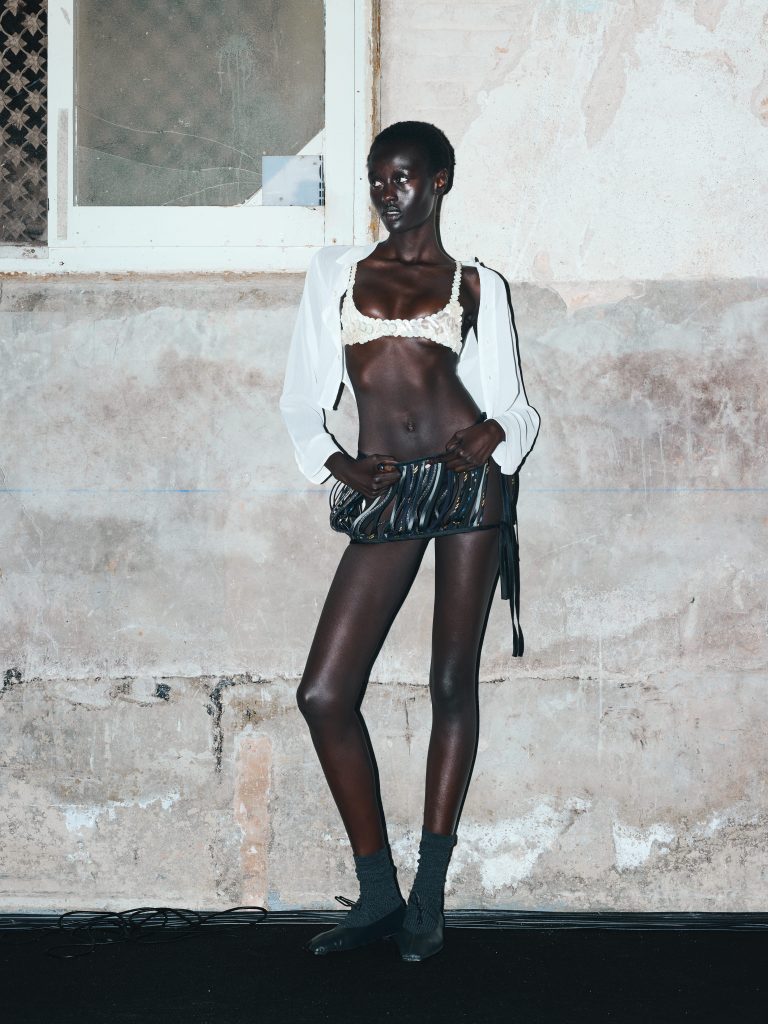
JVG: When creating this collection and its 28-look runway show, I set out to build a journey that moves from the everyday to the formal, because that progression perfectly expresses the breadth and potential of the brand. It begins with relaxed pieces, sweatshirts that speak of a normal day, and then moves on to jeans, shirts, and finally reaches a more refined stage. In this way, a wide range is revealed that not only showcases garments but also articulates the identity of JUAN VG: approachable, versatile, and with aesthetic ambition.
MSS: Jaleo moves between the provocative and the functional. What role does provocation play in your design process?
JVG: The main goal of JUAN VG is to design upcycled garments that are truly wearable for everyday life: what I want to promote with the brand is a new style of consumption, in which upcycling is functional as well as aesthetically appealing.
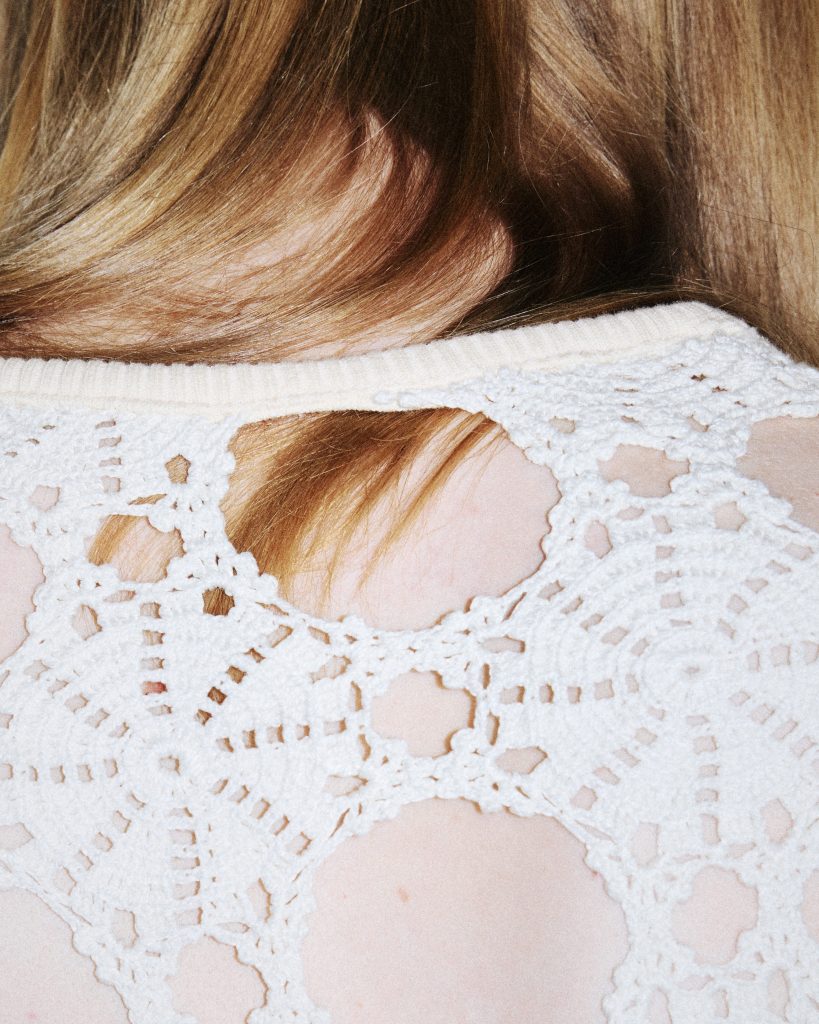
With the JALEO line, I maintain the brand’s core, the functionality of upcycling, and combine it with more artisanal and provocative pieces: hand-sewn dead-stock buttons, explicit references to sequins, shirts with high side slits, garments made from strips crafted from secondhand ties… All of this aims to introduce that touch of provocation that I consider essential to my design approach.
MSS: Upcycling is essential to your work. What attracts you to transforming existing garments into new pieces with their own identity?
JVG: Honestly, I don’t know if it’s because it’s how I started designing and it now feels like part of me, but it’s how I come up with ideas. It’s about thinking what I can do with the clothes I have and racking my brain to design it.
MSS: You combine fabrics like denim, knitwear, and lace with freedom. How do you decide which materials can coexist in the same garment?
JVG: I really enjoy combining different blends of the same fabric because I want to give equal prominence to both the patchwork of upcycling and the garment’s design. I play more with different colors and shades when combining them in a single piece, and thanks to working with Solidança and Stocktextils, I can obtain these materials to work with and develop my creativity.
MSS: The silhouettes are bold and expressive. What do you want the audience to feel when they see these pieces on the runway?
JVG: The goal is to convey a sense of quality, originality through upcycling, and usability. I want people to be able to see themselves wearing these garments when they analyze the looks.
MSS: There’s a noticeable constant dialogue between masculine and feminine. Are you interested in blurring those boundaries within fashion?
JVG:The truth is, we need to reach a point where the distinction between unisex and genderless becomes irrelevant. Ultimately, it doesn’t matter what I do or who I put it on, but rather the perception of the public or client who, regardless of their own affinity with my designs, sees the garment and likes it. It’s not about trying to assign it to a specific gender.
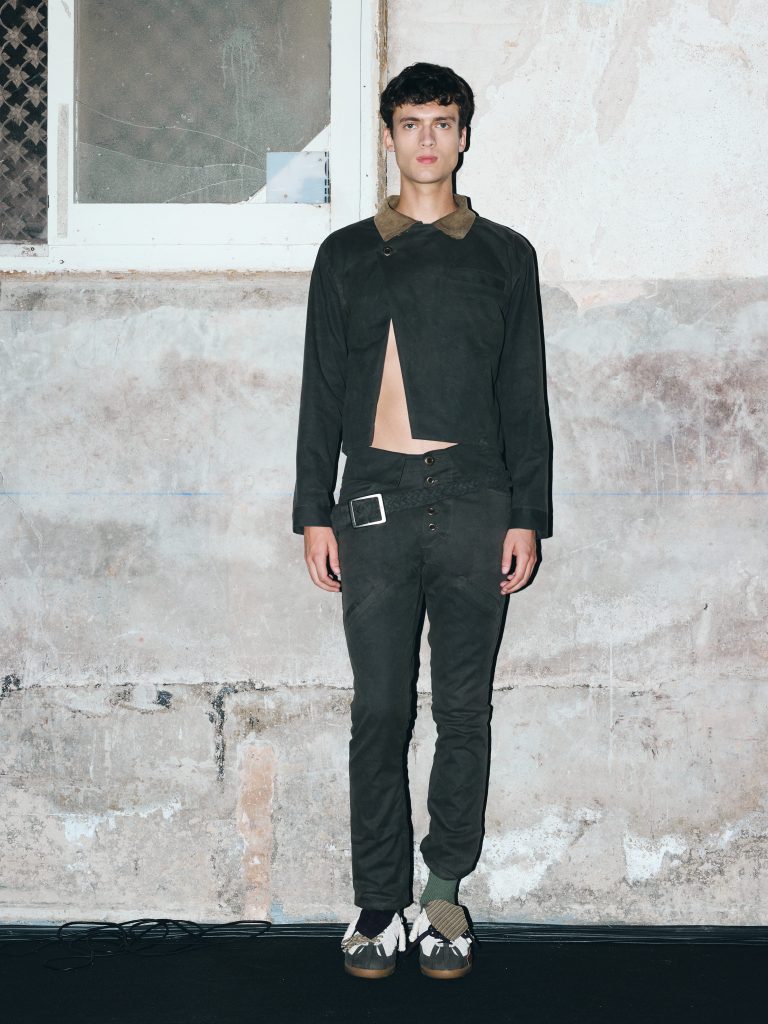
MSS: Some garments include very powerful illustrations and graphics. What role do they play in your visual narrative?
JVG: I’ve always enjoyed drawing, painting, and tattooing, so it’s an artistic expression that I like to showcase and present in my garments as a way of expressing and fusing disciplines, adding a playful touch to the brand.
MSS: Your design style seems very personal, almost autobiographical. Is each collection a way of telling your story?
JVG: That’s the path each collection is taking. Ultimately, I like to be inspired by something I’ve experienced and can tell in a more personal way, rather than starting from an external idea and developing it to make it my own. But it’s not like I’ve been actively seeking it out; it’s just emerged organically. I never rule anything out for the future.
MSS: You’ve lived in countries like South Korea and Hungary. How have those experiences influenced your creative approach?
JVG: I think I have a broader perspective and a wider range of experiences, which contribute to my growth as a person and as a creative, allowing me to develop and expand much more than if I’d lived in Spain my whole life. Being able to see and experience things firsthand, regardless of whether they’re related to fashion or not, is something I absorb, hold onto, and can use to express myself through design and upcycling.
MSS: The «new posh» you’re proposing is free, fun, and without labels. What message would you like to convey with this figure?
JVG: Ultimately, what I want to express is somewhat the same idea as JUAN VG as a brand: if you look at the brand’s evolution, you realize that there have been more distressed and rebellious collections, and now JALEO is more classic but with a twist. Ultimately, it reflects my perspective as a designer in that fashion is fluid, and we shouldn’t pigeonhole ourselves into one style or think that because we feel more drawn to one style, we can’t wear clothes from another. The truth is, if you dissect the garments based on how you combine them, they can belong to many different social groups and aesthetics, and you can go from posh to rebellious without it mattering.
MSS: If you had to define Jaleo in three words, what would they be?
JVG: Disruptive, hot, and upcycling
Questions by @miguelsansebastian
Translated by @alraco43