
LA ÚLTIMA MISA BY SEN SENRA: A LIVE REVIEW
Sen Senra’s show doesn’t begin when he walks onstage, but in silence: blinding blue lights, no distraction, a pause that feels deliberate. The opening interlude in Galician, carried by his grandmother’s voice, “Who would have thought I’d become an artist?”, sets the tone for the night. This is a concert about origins, about leaving and the fear of not returning, about falling in love with the dream while mourning what gets left behind.
He enters alone, no dancers, breaking the fourth wall with a lateral view of the backstage. His look echoes the project’s original cover: restrained, intentional, luxury used as language rather than excess. Behind him, a tree grows slowly, roots in the land, branches reaching outward, paired with the image of a house seen from outside. Home, here, is something constructed.
Opening with “No Quiero Ser Un Cantante”, it’s immediately clear this isn’t a hit-driven show but a narrative one. As contemporary dancers join during “Está Sexy”, “Blue Jeans y Un Crop Top” and “Uno de Eses Gatos”, physicality clashes with introspection. A guitar interlude by Juan Habichuela Nieto strips things down further, and Sen removes his jacket to reveal a vintage Hood By Air piece, a quiet nod to identities in transition and vulnerability as strength.
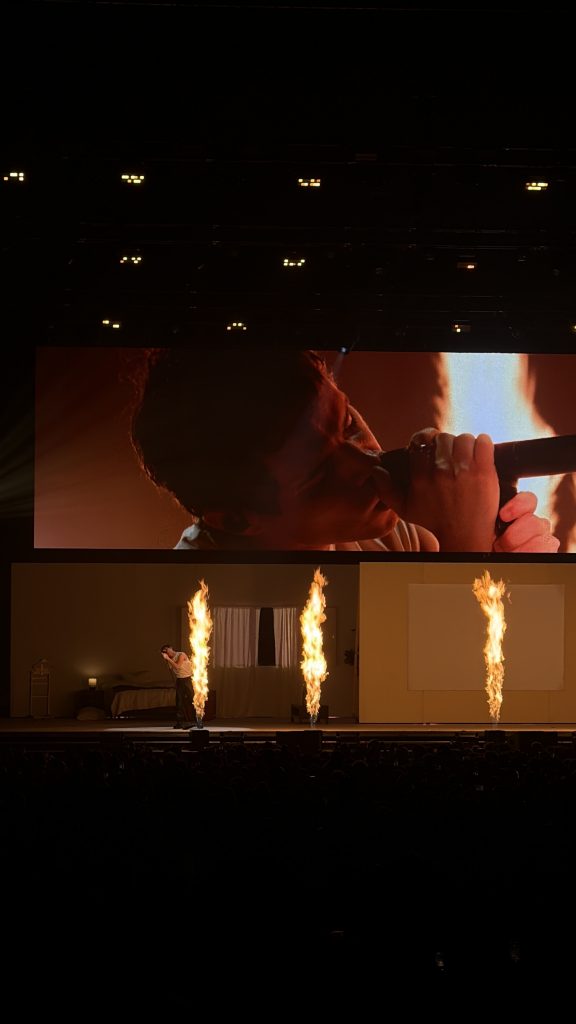
As the set progresses (“Taba Sucio”, “Mi Norte”, “Familia”, “Da Igual Lo Que Opine La Gente”), the concert turns confessional. Nostalgia, memory, and longing for home take center stage. One of the most striking images arrives when Sen appears lying on a bed, perfectly lit: a symbol of refuge and emotional conflict, of an artist actively defining what “home” means to him now.
Visually and emotionally, the show leans closer to theater than pop spectacle. Shadows, graphic tees, and partial staging emphasize restraint. There are no big cameos, no easy crowd-pleasers. This is an inward-looking performance, too emotional for a man, some might say, filled with internal voices, unresolved desire, and quiet resentment. A poetic monologue introduces No Se Preocupe, ending in a brief techno release: catharsis, but controlled.
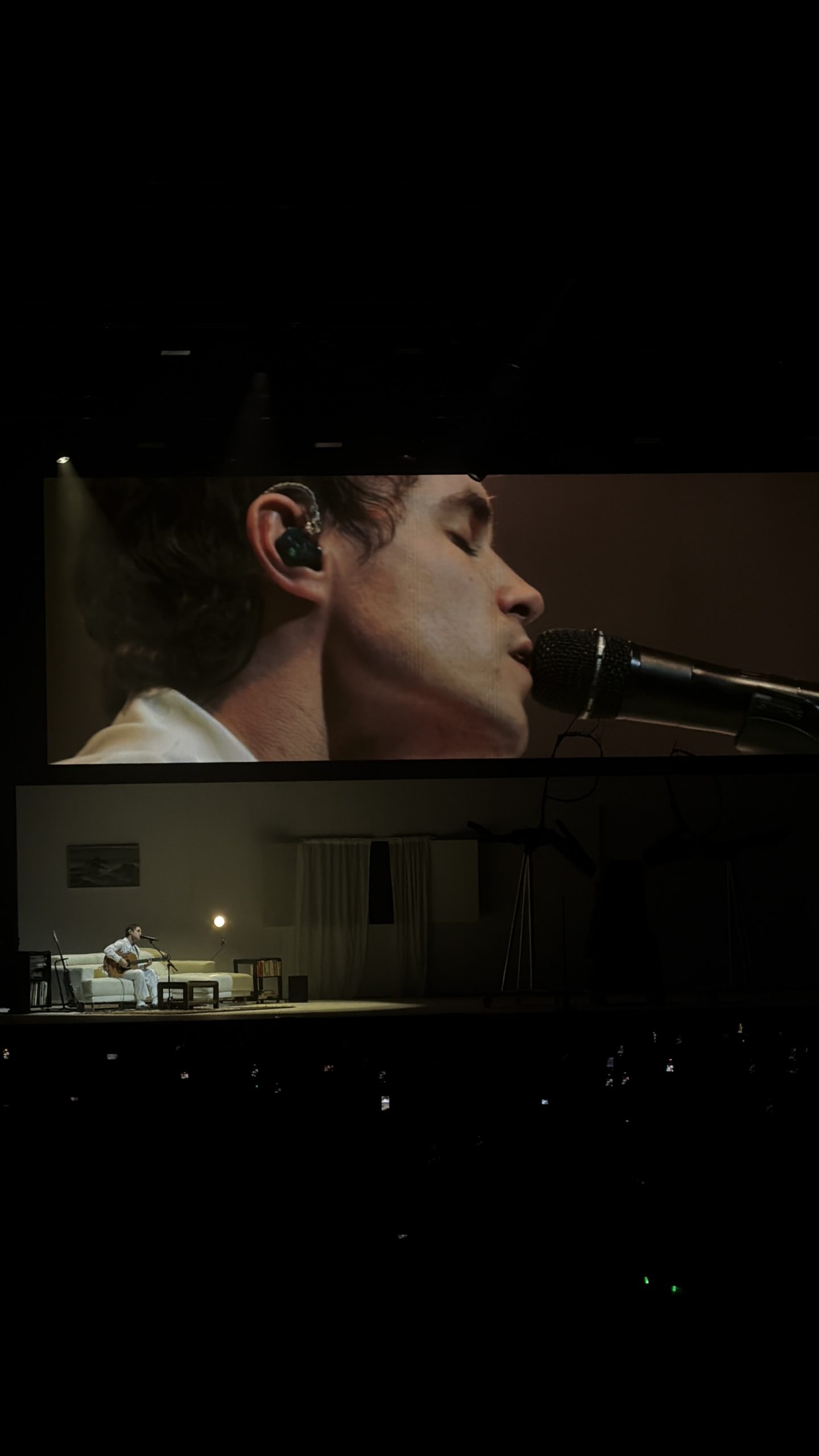
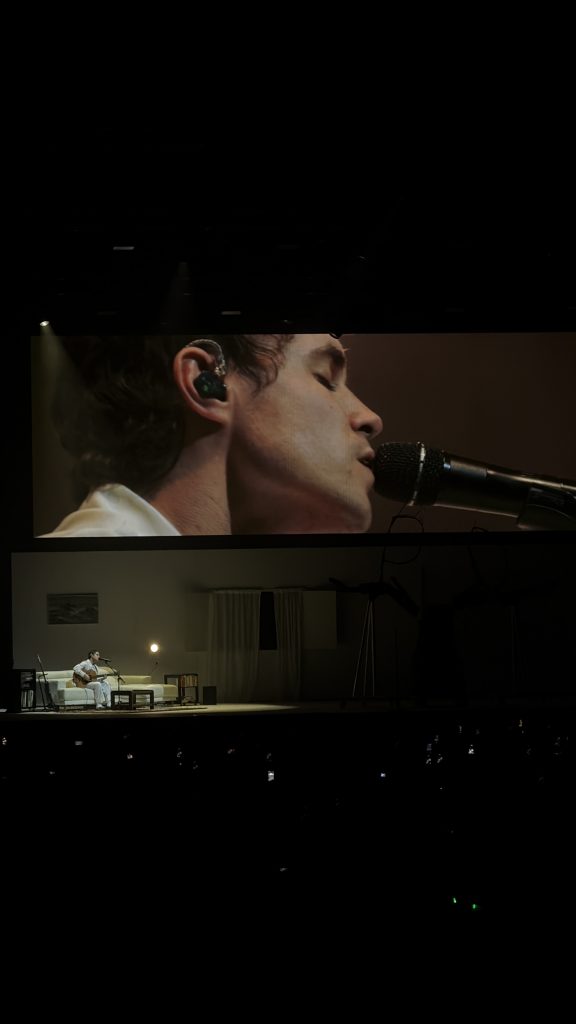
The second half deepens the ritual. Guitars become central, and the phrase “This machine kills oblivion” appears etched onto one of them. Time slows. The stage transforms into a living room, a space of comfort and return, as Sen revisits earlier songs alongside visuals from past eras. The contrast is clear: past eclecticism versus current austerity, and an unshakable faith in his own trajectory. Fashion plays a role too, with Palomo Spain and Prada reinforcing his status as a cultural and stylistic reference point.
Not everyone sings along, and that feels intentional. This isn’t a concert to chant in unison; it’s one to record, to send later to the person the song was meant for. The final speech makes it explicit: leaving yourself to come back changed, losing one life to gain another. The journey, the land, and movement itself are honored, with “PO2054AZ” standing as a symbol of nostalgia and transition.
The closing stretch doesn’t feel like an ending but a completion. When Sen reveals the show’s scaffolding ,“for ever and ever”, it’s a gesture of trust. When the foundations are solid, there’s no fear of what comes next.
Words: @alraco43