
PRIMAVERA: GUCCI IS THE NEW SEXY & PROTEIN CHIC IS IN
In the ever-ending conversation of high and low culture, aesthetics have always played a significant role. Reality TV and tracksuits have always been at the cusp of the so-called low culture. In fact, the sole goal of this appellative was to diminish the taste of a segment of the population that believed in ostentation and was very much opposed to simplicity.
As part of this show-off culture, logo-mania became a cultural trademark. With the passing of time, beige was the new black, and quiet luxury was in. But who decides what is considered chic? What is taste? Snobbery is not foreign to the fashion industry, and what is considered classy or not is dictated by a few.
Demna, a natural at provoking conversations around his vision, presented a collection that seemed to vindicate precisely this: the taste for sparkles, the Gucci logo, and a strong partyboy aesthetic. A collection directed at a segment of the luxury consumers that is often ignored. The show presented tracksuits, leggings, and sneakers that are inherent to this aesthetic, executed seamlessly for a more elevated finish.
Now more than ever, fashion reflects society’s lack of personality. Proof of this lies in the vapid Instagram reels that praise simplicity above all. “10 things I find incredibly chic…” videos flood our algorithms, celebrating objects that invite consumerism with the promise of turning your life into a Pinterest mood board. It is precisely because of this that a counterattack against the simplistic aesthetic must exist in fashion, one that advocates for plurality in styles.
Demna’s vision has always sparked controversy; his fashion is ironic and irreverent. In his collections, he challenges the snobbery surrounding taste and class. Those who work in fashion would agree that the definition of taste is different for industry insiders than for the rest of the world. At the end of the day, taste is only an exhaustive education in references. References that not everyone has access to. And if they do, these may be deemed inappropriate by those holding the power, ultimately gatekeeping and incapacitating them from inhabiting those spaces.
The collection stands by showing off, either a logo, a sinuous fabric, or a nicely sculpted body. And that is precisely what many luxury consumers have always liked about Gucci: a Jackie bag rightly reinterpreted or branded clothes that can be worn in their day-to-day lives. Furthermore, now that Demna is at the helm of the creative direction of Gucci, many of his old clients will migrate with him. Particularly, considering he is effectively managing to blend his own creative universe with the Gucci heritage. All of this points to a revival of the brand, both from a cultural and a financial point of view.
The collection was sexy, with certain references to Tom Ford’s time in Gucci. In an industry where novel brands resurface every year, having a rich archive to reference is a competitive advantage. However, the proposal must also be appealing and somewhat rich in novelty, in order to attract the right client. Demna understands the importance of this, and it shows.
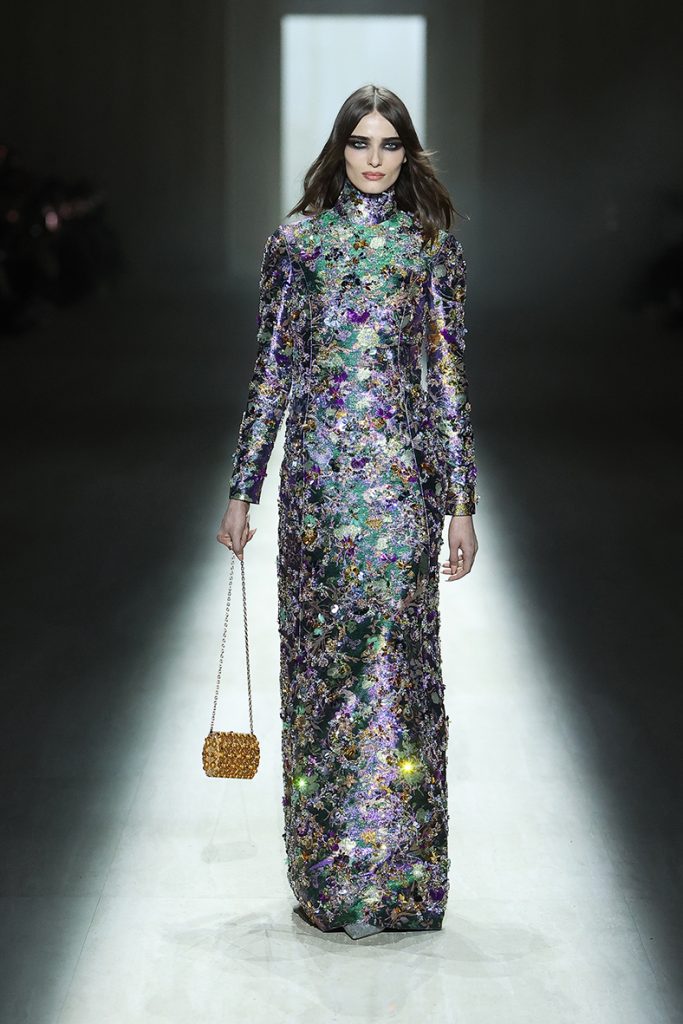
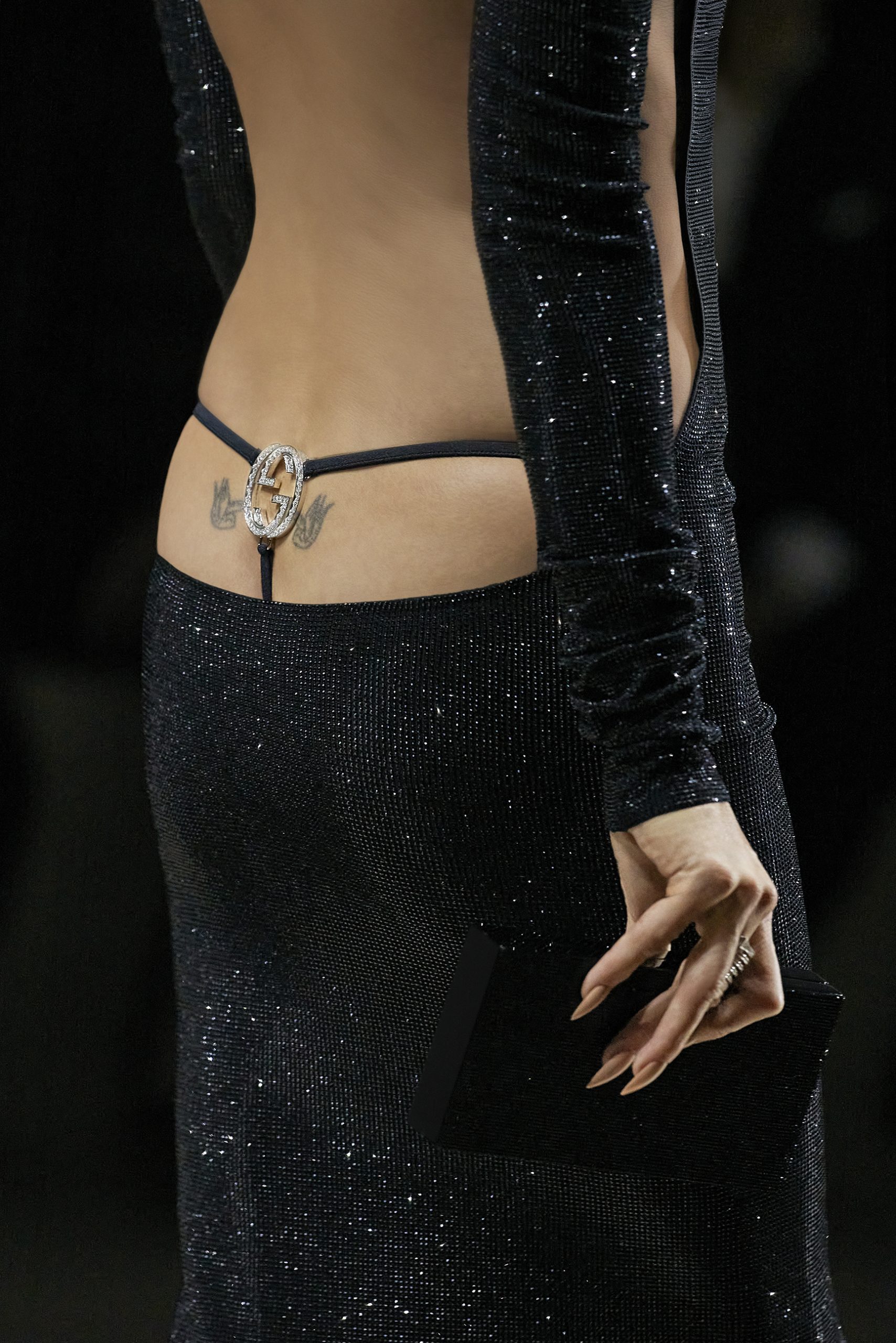
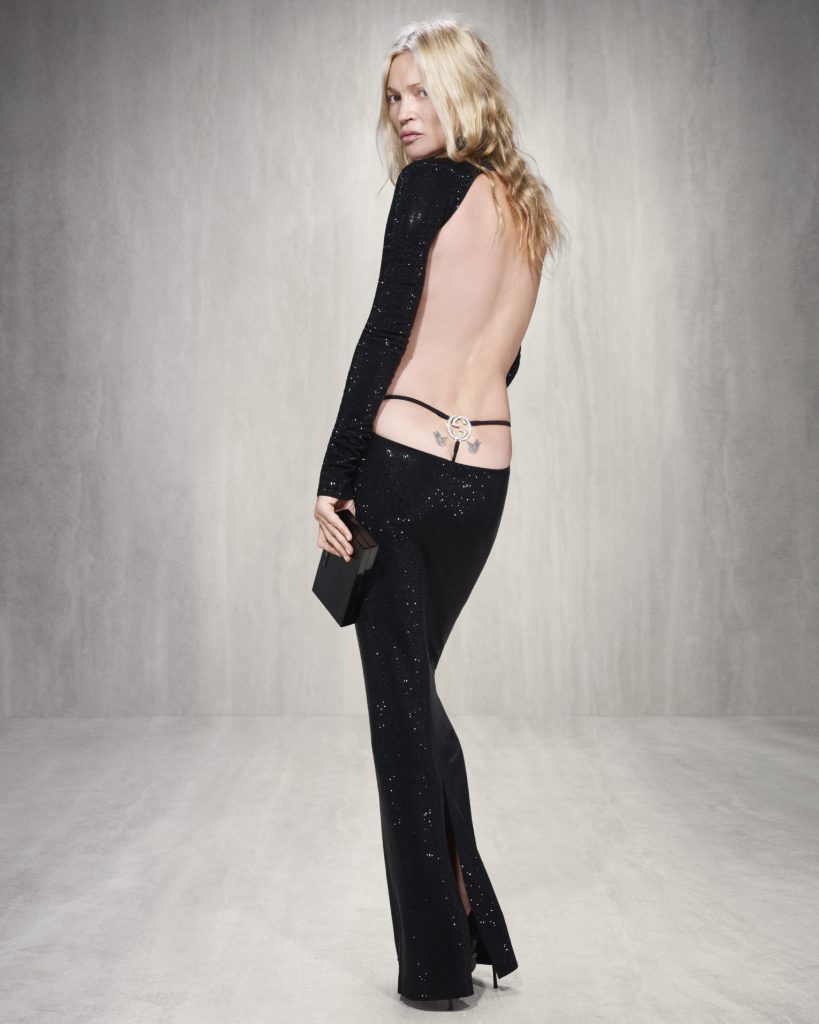
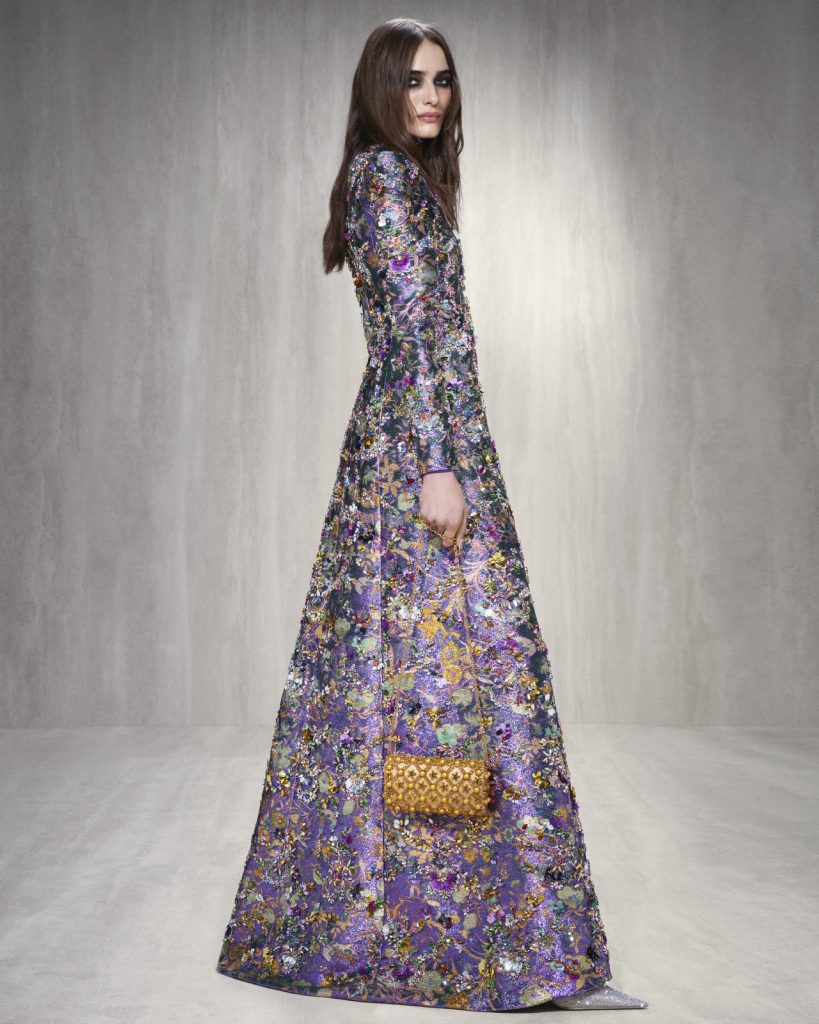
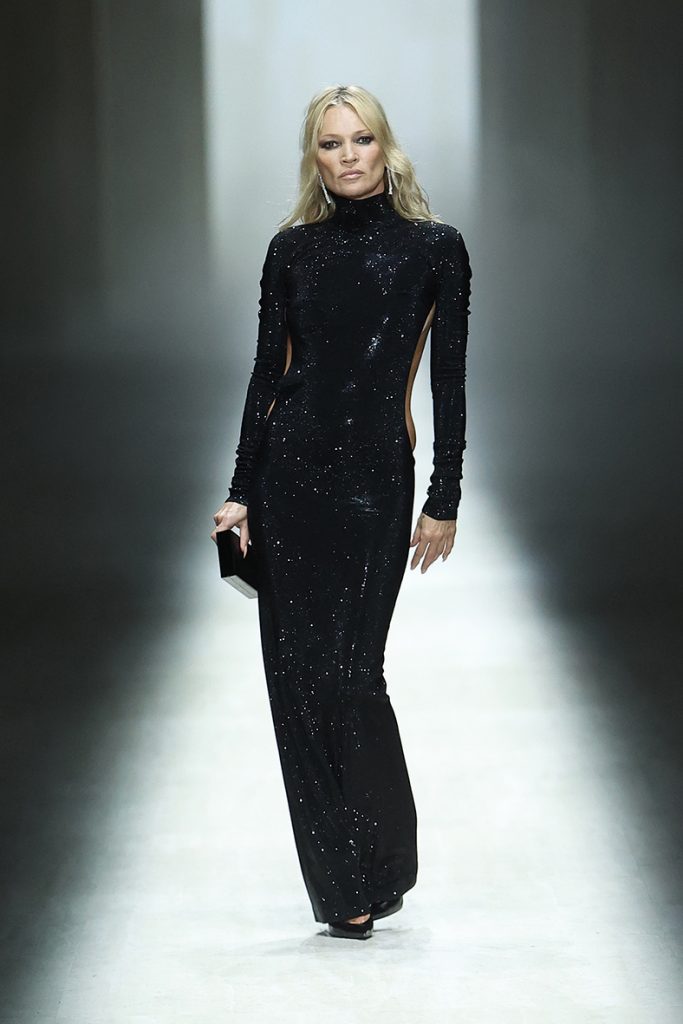
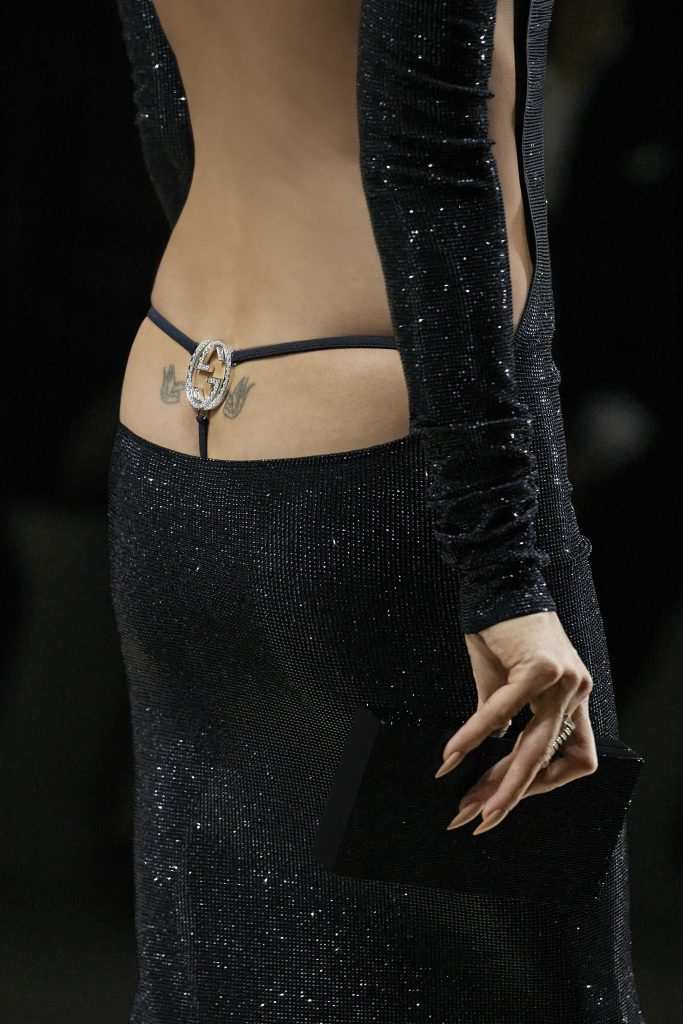
Sinuous dresses emulating the birth of Venus reinforced the sexy atmosphere of the show. The collection also introduced a heavily embroidered purple dress that was not only voluptuous but also covered arms and neck. In juxtaposition, a long, backless dress worn by Kate Moss culminated in a thong, with a white gold GG covered in 10 karat diamonds.
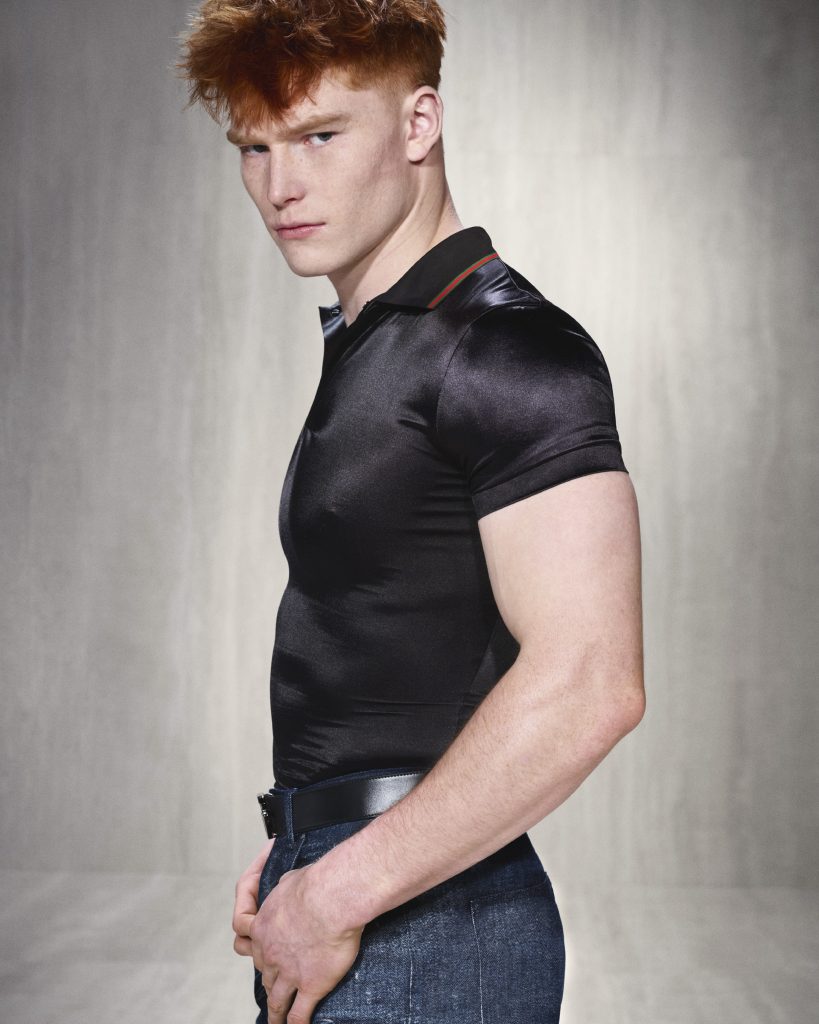
Moving on to the shapes, Demna gave us tight, incredibly tight clothes. These were presented through godly bodies, proving that protein chic is in this season. This coincides with a moment in history in which leanness is more accessible than ever with Ozempic. Now, the status symbol is being strong and having muscles that show the discipline and time required to exercise them.
The garments of the collection are easily merchandisable; on the baseline, the clothes are easy to understand, no fake pretenses. A collection intended for anyone who wants to enjoy it without fake intellectualisms. The craft is there. The shine is also there. And the logo, ultimately, is also there. You do not need to love Demna to understand what he is doing; he is a cultural commentator who sees fashion through his own lens.
Luxury brands often detach themselves from their customers; they try to appropriate a customer that is not, nor will ever be, theirs. We see it with every wrong ambassadorship placement. Or with every celebrity wearing a dress that does not align with the brand DNA. However, Demna knows what he is doing. And he is using those codes to reclaim the Gucci customers that we know and the brand ambassadors Gucci needs right now.
Gucci was never about discretion; it has always been a brand rooted in quality, luxury, and Italian heritage, with the right doses of shine and luster that Italians are known for loving. And Gucci Primavera gave us all that.
Text by @EDUGILHURTA