
The second life of paper: material, memory, and form in the universe of Issey Miyake
There are materials that seem exhausted before we even take the time to truly look at them. Paper could easily be one of them: ordinary, fragile, destined to disappear. And yet, in the hands of Issey Miyake, it becomes something else entirely. Folded, compressed, carved, molded, and reworked, it shifts from waste into possibility.
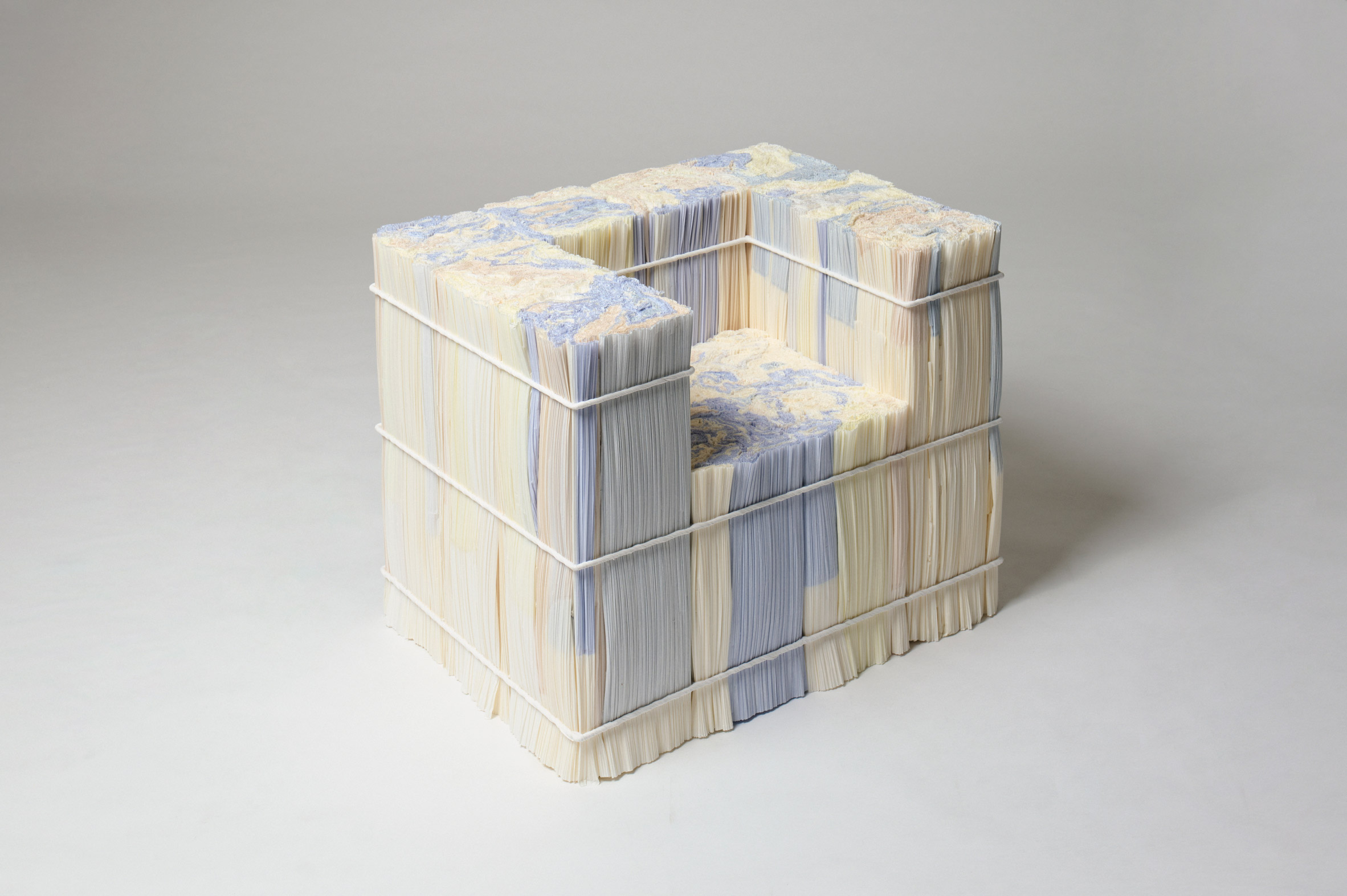
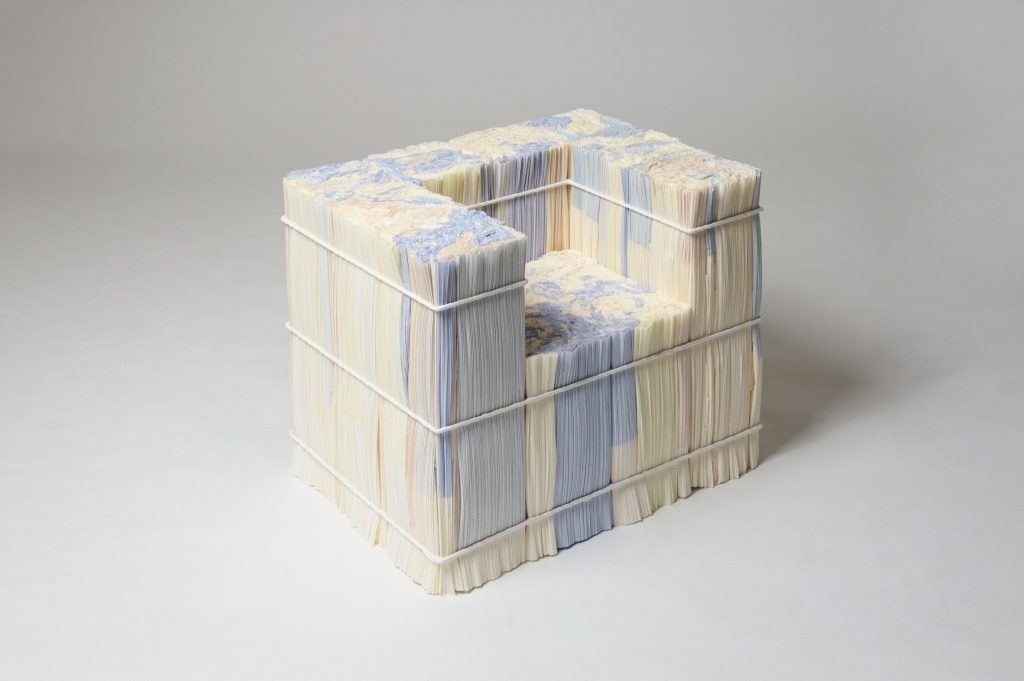
This is the premise behind The Paper Log: Shell and Core, a project presented during Milan Design Week that proposes a different way of understanding industrial processes, not as endpoints, but as beginnings. Developed in collaboration with the Madrid-based practice Ensamble Studio, the research focuses on dense rolls of compressed paper generated as a byproduct of the brand’s signature pleating technique.
These large cylinders, compact, layered, and marked by subtle streaks of color, hold more than just material presence: they hold time. Each layer records the passage of garments through the pleating machines, the heat, the pressure, the repetition of movement. It was Satoshi Kondo, design director at Miyake Design Studio, who first recognized their almost organic quality, comparing them to tree trunks whose rings quietly narrate a hidden story.
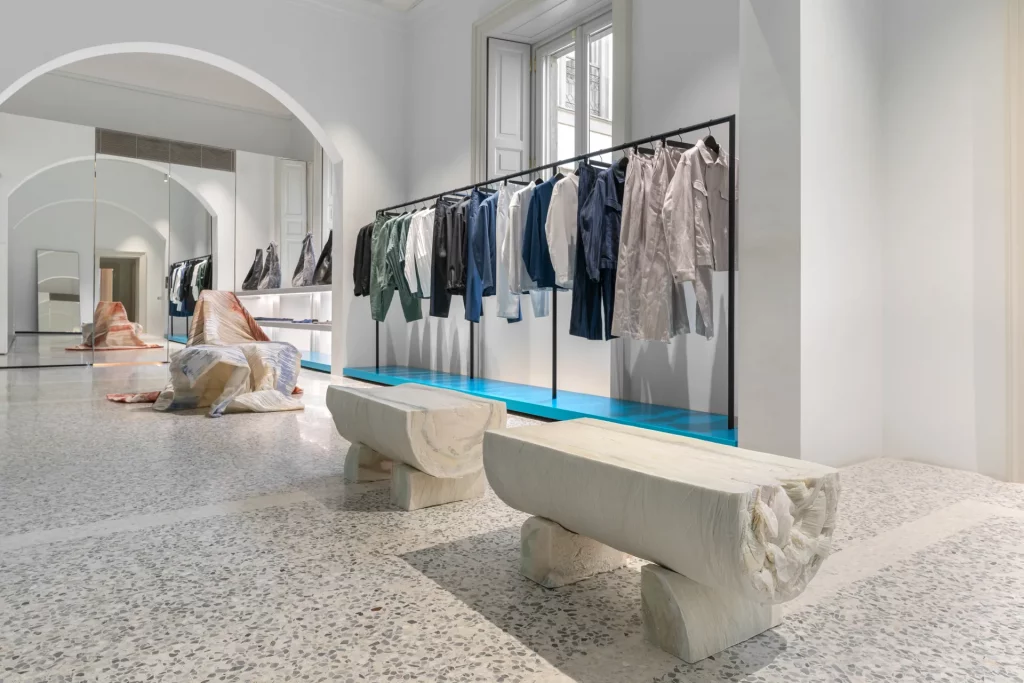
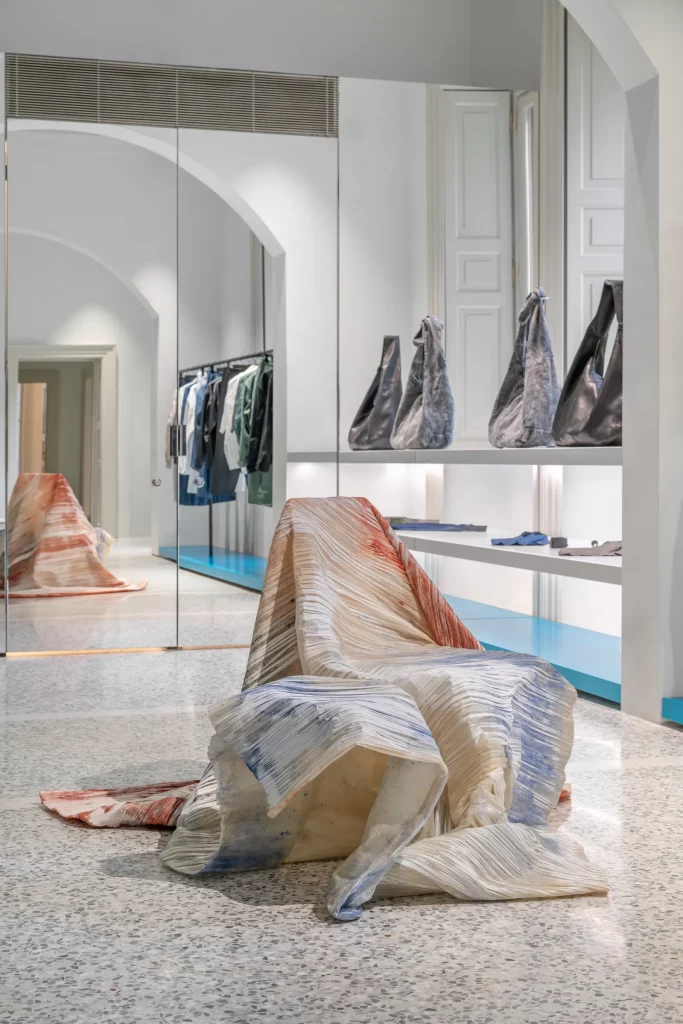
From that observation emerges an exploration that moves between design and architecture. The project unfolds in two complementary directions. On one side, “Core,” where the in-house team works directly with the structural density of the logs to create furniture, chiselled stools, solid benches, and tables that retain the weight and presence of the original material. On the other, “Shell,” developed by Ensamble Studio, which treats the paper as a surface, a kind of skin that can be peeled, reinforced, and reshaped.
In this second approach, the gesture becomes almost sculptural. Drawing inspiration from the folds of classical works such as the Pietà by Michelangelo, the architects explore how texture can define form. By separating layers and fixing them with hardening agents, they freeze each crease and curve, transforming something fleeting into something enduring. The result is a series of light, almost ethereal pieces, lamps, abstract structures, surfaces that seem suspended in time.
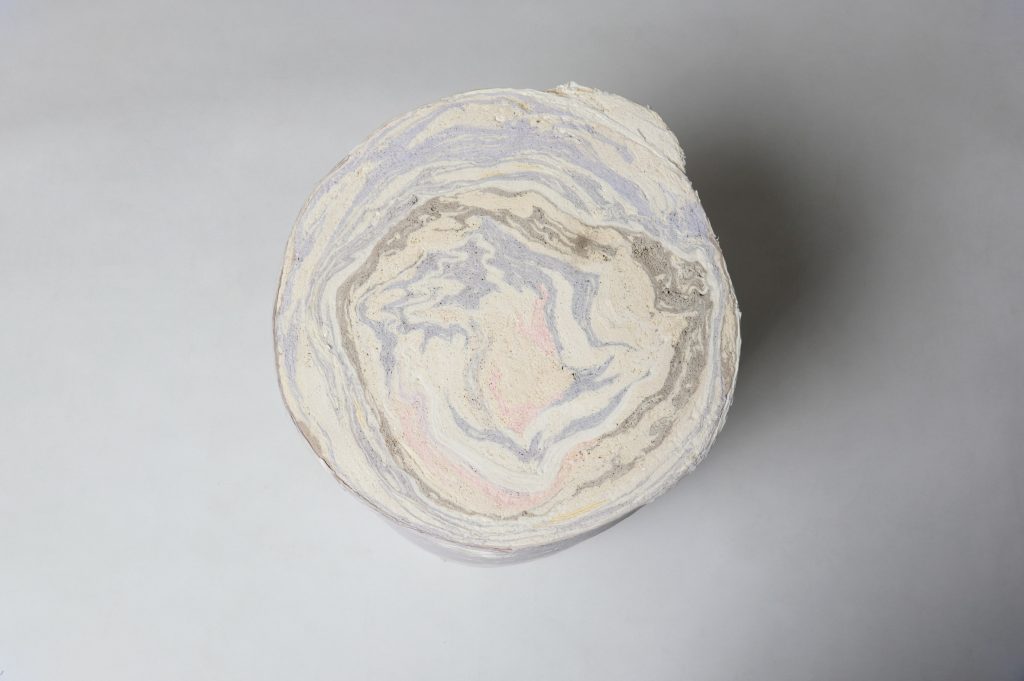
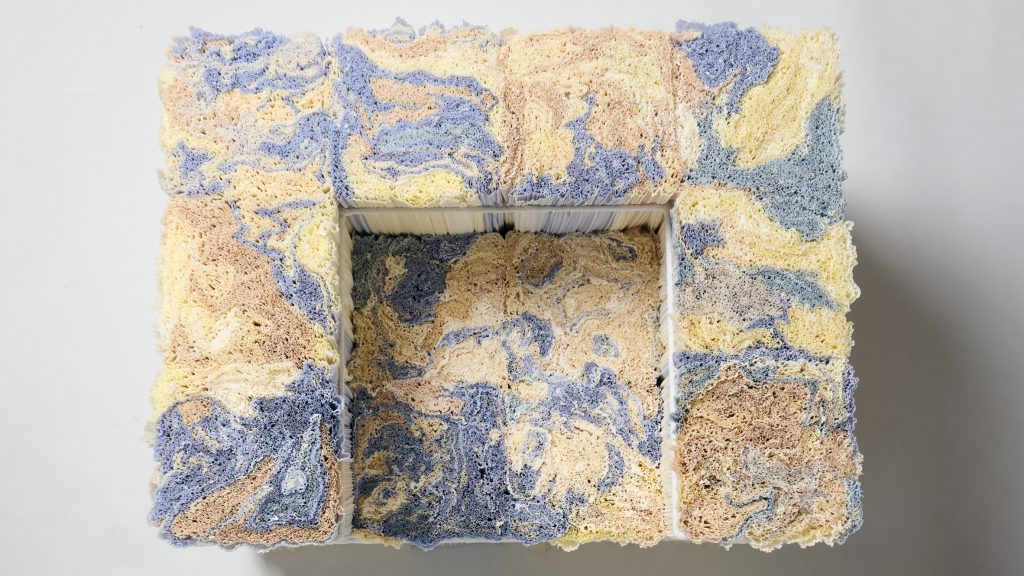
Beyond the objects themselves, the project ultimately reflects on the memory embedded within materials. As architect Antón García-Abril explains, the aim is not simply to reuse, but to preserve the traces of the process. Even when the paper is unfolded or transformed, it continues to carry the essence of its origin.
There is something deeply poetic in this idea: that a material once destined to be discarded can accumulate history, become an archive, and finally, an object. At a time when sustainability is constantly discussed, The Paper Log does more than propose recycling, it suggests reimagining. It invites us to assign value not only to what is created, but also to what remains.
In doing so, paper ceases to be a passive support and becomes the protagonist. And perhaps in that shift in perspective lies the project’s most meaningful innovation.
Words: @annaamaso